
Can Fresh Juice Make You Sick?
Yes, fresh juice can make you sick when it is made from spoiled produce, run through dirty equipment, left warm too long, or kept past the point it stopped being safe to drink. Most fresh juice made cleanly and chilled fast is fine. The worry starts when you feel unwell after drinking a bottle and the real question is whether the juice caused it.
That worry is fair, because fasting nausea and sickness from a bad juice can feel similar in the moment. A queasy hour that squares with nausea during a juice fast is a different problem from one that follows a bottle you had doubts about.
Poor Handling Is What Makes It Risky
Homemade juice is raw and unpasteurized. Store-bought juice is nearly always heat-treated for shipping and shelf time; the bottle you make at home is not, which is not a flaw but does mean produce, equipment, and storage are the only safeguards it has.
Getting sick from juice is not the juice detoxing you or being too potent. The cause is food safety, plain and simple. Juice becomes risky through contamination, spoiled produce, time on the counter on a warm day, dirty juicer parts, or a dirty bottle — the same handling that makes any raw food risky.
Where It Goes Wrong
Raw fruit and vegetables can have bacteria from soil, water, handling, transport, and damaged skins. Washing lowers what is on the surface, but it does not make spoiled produce safe. Start off with clean produce, put anything soft or moldy back on the shelf. Check how to prep produce for juicing before anything goes in the juicer. Bruised, slimy, or rotten produce does not belong in the juicer regardless of how it is washed.
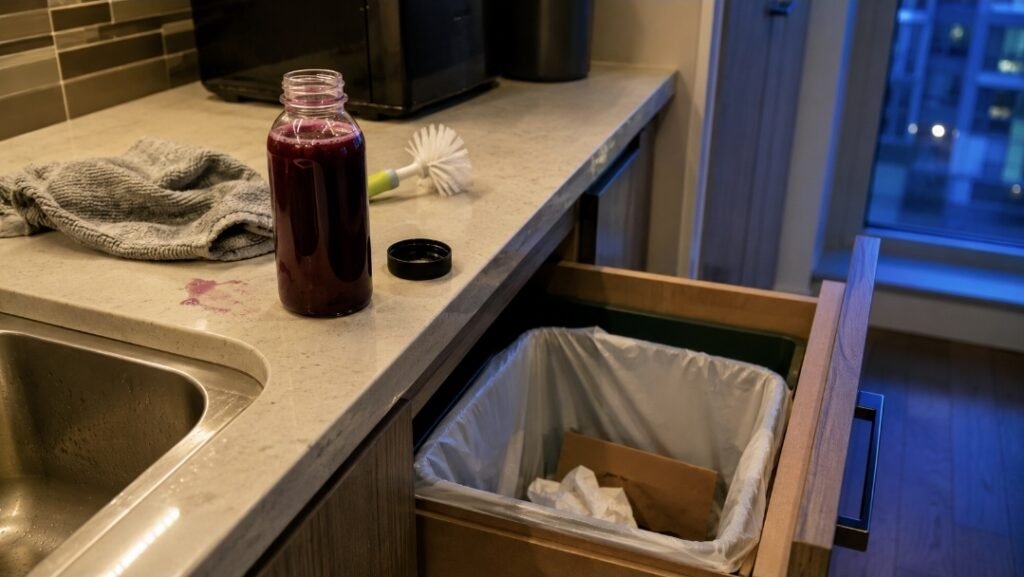
The machine is the next source of contamination. Pulp left drying in the juicer outlet or screen from the last session can grow bacteria that gets into the next batch, and a bottle or cap with old residue around the thread can do the same. Both look clean at a glance.
Time spent in warm conditions makes it worse. Any bacteria left from the produce grows fastest at room temperature, so juice left standing on the counter is not just losing color — bacteria has hours to build. A bottle that has sat a while makes every handling mistake worse; the longer it sits, the more time bacteria have to build up.
Bad Storage vs Bad Juice
Storage mistakes can undoubtedly spoil your juice, but they do not make every dull or cloudy-topped juice unsafe by itself. Cold bottles, tight lids, and fridge timing make a difference. Check the fresh juice storage article and also why fresh juice turns brown or separates.
So appearance tells you the least. Ugly juice can be perfectly safe; bright juice can still need pouring out. Smell, pressure, taste, warm counter time, and fridge age decide whether the juice stays or goes; if the bottle is past the limits in how long fresh juice lasts, or has sat out for hours, pour it away whatever it looks like.
The decision is not always clear in the moment. I have opened a bottle that looked fine, after paying for the produce and cleaning the machine to make it. Then got a sour whiff off the cap, and argued with myself because the produce was not cheap. That decision is rarely as tidy as the rule.
Signs You Should Throw Fresh Juice Away
Some signs are enough on their own. Throw the juice away if you notice any of these:
- a sour or sharp smell as the cap comes off
- fizzing, hissing, or bubbling
- a swollen or pressurized bottle
- slime or an unusual thickness
- any mold
- a fermented or off taste
- juice left out warm for hours
- juice made from produce that was already spoiled
- juice kept in a bottle that was not properly clean
The sign that matters most is doubt: if you are second-guessing whether the juice is still okay, pour it out. Do not try to save questionable juice.
Symptoms That May Mean the Juice Was the Problem
After a bad batch, the warning signs are nausea soon after drinking, vomiting, diarrhea, stomach cramps, fever, or chills. They feel stronger and more physical than the light nausea a fast can bring on its own.
Timing and context help show whether the juice was likely involved. Be more suspicious of the juice when symptoms follow juice that smelled sour, tasted off, sat warm, or came from questionable produce — and more suspicious again when more than one person who drank the same batch feels ill. That shared pattern is the strongest single clue that the juice, not the fast, caused the illness.
The same check can also rule out bad juice. Nausea that appears during a fast when the juice was fine on every count and left nobody else sick is much more likely to be ordinary fasting queasiness than anything else. The nausea is real either way; why it came about changes what you do next.
Who Has Higher Risk From Raw Juice
Raw, unpasteurized juice carries higher risk for pregnant women, older adults, young children, people with weakened immune systems, and anyone recovering from serious illness. US food-safety guidance recommends that these groups avoid untreated juice because the same bottle that gives a healthy adult an unpleasant day can put them in real danger.
Vomiting and diarrhea are also riskier for anyone who dehydrates easily or struggles to replace fluids. Careful juicing does not change this — the most spotless raw juice is still raw, and it is the raw part, not the handling, that puts these groups in danger. Anyone told to avoid unpasteurized juice should treat a homemade bottle the same as one from a juice bar.
When to Get Medical Help
Do not try to diagnose the cause from how soon it came on. Foodborne illness can hit within an hour or take two or three days, so timing alone settles nothing.
WARNING: Get medical help for serious symptoms
Repeated vomiting, diarrhea that will not stop, blood in stool or vomit, severe pain, fainting, confusion, or dehydration signs need medical help now. So does illness after a suspect bottle in anyone from the higher-risk groups above. Do not debate it.
How to Lower Fresh Juice Risk
Start with fresh, undamaged produce and wash it well before juicing. Clean the juicer parts properly between sessions, and wash bottles and lids all the way around the thread, not just the inside.
Temperature and time matter after juicing. Chill juice the moment it is made, keep bottles sealed, and do not let them sit warm on the counter. When a bottle is questionable, throw it away — that single habit prevents most of what makes homemade juice unsafe.
Fresh Juice Sickness Questions
Can homemade fresh juice give you food poisoning?
Yes, homemade fresh juice can cause food poisoning if it is contaminated, made from spoiled produce, run through dirty equipment, or stored badly. Clean produce, clean equipment, and cold storage lower the chance of illness, but homemade juice is raw and unpasteurized, so the risk is never zero.
Can bad juice cause nausea?
Yes — especially when the nausea comes with vomiting, diarrhea, cramps, fever, or chills, or follows juice that smelled, tasted, or looked wrong. Nausea on its own during a fast is more likely ordinary fasting queasiness when the juice was fresh and cold.
Is fresh juice safe if it has turned brown?
Brown color on its own does not mean unsafe. Fresh juice can brown after air gets into it. Smell, taste, fizz, pressure, mold, slime, and how long it sat around tell you far more than color does.
How do I know if fresh juice is spoiled?
A sour or sharp smell, fizzing, hissing, bubbling, slime, mold, a pressurized bottle, an off taste, or hours left warm are all signs to throw the juice away. Any one of those signs is enough. If you are unsure, pour it out.
Is fresh juice riskier than pasteurized juice?
Yes. Raw fresh juice carries more handling risk because it has not been pasteurized. Being raw does not make fresh juice automatically unsafe; it means clean prep, cold storage, throwing out suspect bottles, and taking symptoms seriously matter more for anyone in a higher-risk group.