

How to Prep Produce for Juicing Without Wasting Time or Money
A juicing shop looks simple at the checkout. The trouble starts once the bags are home and the produce sits there until juicing. Mint loses its shape, soft herbs go flat, and the vegetables meant for the juicer look past their best when it is time to actually juice. Check out storing the juice when you are dealing with bottling; first, the shopping has to be sorted, dried where needed, and put away properly.
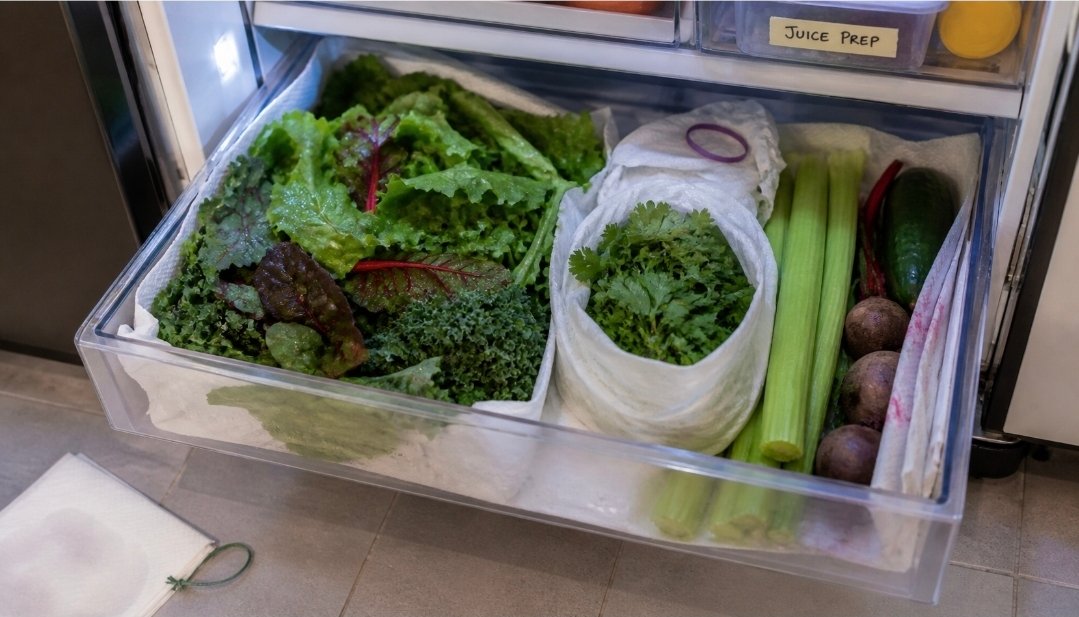
| Prep the night before | Prep just before juicing |
|---|---|
| Carrots | Apples |
| Beetroot | Soft herbs (mint, coriander, parsley) |
| Celery | Cut citrus |
| Cucumber | Spinach and loose leafy greens |
| Ginger (peeled, kept whole) | Wheatgrass |
Rinse Firm Vegetables Early, But Do Not Store Them Wet
Firm roots and sturdy vegetables cope with being washed early; delicate leaves do not. Carrots, beetroot, cucumber, and celery handle a rinse after shopping and still hold their shape the next day as long as they are dried before storage.
Getting roots ready early is a separate issue from washing produce for safety; how to wash produce before juicing is worth a read for the safety step.
Washing firm produce the evening before leaves less to do the next day. A simple evening sequence that works: rinse and scrub the firm vegetables as soon as they come out of the shopping bag, spread them on a towel while you sort the rest of the shopping, roll celery lightly in a cloth once the worst of the water has run off, let beetroot sit until it no longer marks the surface underneath, then pack everything dry into containers and clear a shelf in the fridge before bed. The next morning the produce is already waiting.
Things go wrong when everything goes into the fridge still wet. Water gathers under the carrots, beads along celery ribs, and leaves rings under the cucumber, leaving the container wet enough to soften the vegetables around it.
Delicate greens are to be dealt with differently. Spinach, coriander, parsley, mint, and loose leafy bunches should wait until closer to juicing unless they are dried well and kept loose. A rinsed bunch stuffed into a bag goes limp while it waits in the fridge.
NOTE: Dry before you store
Washed produce should feel dry on the outside before it goes back in the fridge. Cold and wet is not the same as clean and ready.
Chop Tough Produce, Leave Fragile Produce Whole
Chopped carrots keep better than chopped apples. One holds its shape in the fridge, the other starts browning on the cut face within minutes of being cut.
Carrots, celery, cucumber, and beetroot keep enough firmness after chopping when they are chilled and dry. They stay firm enough for the juicer, which means less chopping when you are ready to juice.
Cut beetroot separately from the other vegetables. The cut surface stains the knife, towel, and storage lids, so it is easier to chop carrots, celery, and cucumber first, then deal with beetroot at the end.
Apples, pears, and cut citrus should stay whole until the last minute. Apples brown within minutes of being cut. Pears go grainy at the exposed face. Cut citrus dries at the edge and the smell flattens before the morning is done. Keep them out of the early prep.
How to Store Washed Greens Without Losing Them Overnight
A container of greens fails from the bottom up. The top layer looks fine, while the leaves trapped underneath turn dark, thin, and limp.
A paper towel or cloth helps by absorbing extra moisture. Line the container, add greens loosely, place another dry towel over the top, and close the lid without packing the leaves down.
Herbs bruise even faster than greens. Parsley and coriander collapse at the stems first when moisture is still trapped inside — they feel soft before they look dark. A loose bundle wrapped in a wrung-out cloth holds its shape longer than a heavy bunch trapped in a plastic bag.
Greens that have flattened by morning need sorting before they go into the juicer. They smell dull and grassy instead of fresh, the stems bend, and the leaves stick together. The handful meant for the chute has to be picked over first. The cloth should stop the leaves drying out, not press moisture into them.
What Loses Quality Fastest
Soft herbs fail first. A bag of coriander turns dark at the stem ends, then the leaves slump into the corners of the bag.
Loose leaves come next when moisture clings to the leaves. They stick together, lose spring, and give off a stale leafy smell when the container opens. Cut fruit follows, especially apples and citrus, because the exposed edges dry or brown even when the remaining fruit still looks usable.
Leafy greens hold a little longer when they are loose, but fruit at its peak needs using sooner. Soft pears, bruised apples, and cucumber softening at the ends all slow the next juicing session because each piece has to be checked, trimmed, used straight away, or thrown out. Delicate produce should not sit under heavier vegetables or sit for several days.
WARNING: Smell Helps With Prep, Not Food Safety
A sour, stale, or off smell means the produce is no longer worth juicing. Do not keep it for juice.
Safety is a separate decision; fresh juice safety will guide what gets kept. Roots and firm vegetables last longer, but even they lose texture when they are washed and forgotten.
Buying for Two or Three Days at a Time
A full drawer feels efficient on the day it gets filled. Three days later, the same drawer has tired mint at the side, a cucumber going soft at the end, and spinach leaves stuck together.
Buy for two or three juicing days at a time. That schedule gives firm vegetables enough time to be juiced. Overbuy the sturdier vegetables only when they are part of the next few juices. Do not overbuy soft herbs, loose greens, ripe fruit, or citrus.
ACTION: Shorten the buying window
Buy enough for the next round of juices, then stop. Leave the extra herbs in the shop instead of letting them spoil in the fridge drawer.
For a three-day fast, work out the shopping with how much produce for a 3-day juice fast. Then match the fasting days to a 3-day juice fast plan instead of guessing at the checkout. If the whole fast still feels unplanned, start with how to do a juice fast properly and shop only for ingredients with specific juices in mind.
Buying less feels inefficient. Buying too much wastes herbs, greens, and fruit by juicing time. It catches up with you later, when the extra bunches have flattened and the ripe fruit has to be used all at once.
What to Sort the Night Before and What to Leave Alone
Does everything need to be finished the night before? No. The night-before work should remove the jobs that slow the morning down, not force every ingredient into a container too early.
Firm chopped vegetables go together. Delicate greens and herbs stay loose, dry, and protected from weight.
The juicer should already be clean when the machine comes out. If old pulp is drying in the screen or the parts smell stale, clean that first with how to clean a juicer. If several juices are planned, get the roots, greens, and herbs ready first; read over batch juicing for a juice fast for the actual juicing run. Once the juice is bottled, how long fresh juice lasts becomes the next question.
Check the basics: firm vegetables together, leafy bunches kept clear of heavy items, herbs loose, fridge space cleared, waste bag ready, and washed vegetables close to hand. Prepping can still get imperfect. A cloth holds too much moisture at the bottom of a container. One bunch of herbs gets washed too early. Beetroot stains the board after everything else looks finished. The fridge can stay a little messy, but make sure the vegetables and greens you plan to juice are close enough to reach without shifting bags around to find what you need.