
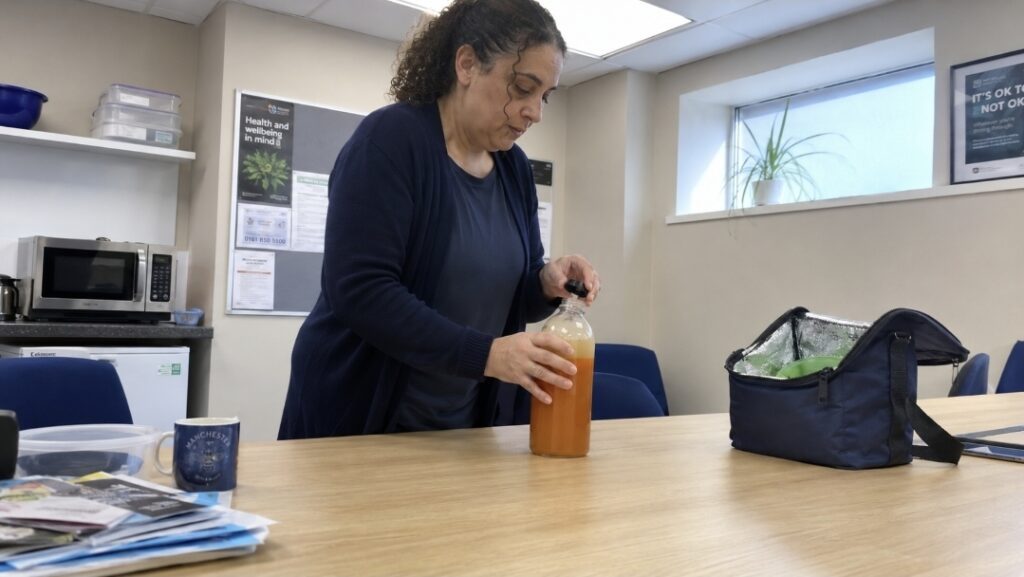
You make a bottle of apple-celery juice at breakfast, leave it on the desk, and open it at lunch to find a brown layer across the top, a pale foam ring under the lid, and the pulp settled into a line near the bottom. It started bright green and has already dulled toward a khaki color. It looks like something went badly wrong in just five hours.
Most of the time though, nothing really did. Browning and separation are what fresh juice does when it sits, and neither one means the juice going bad. For finished juice handling, keep fresh juice storage in mind. What follows is about the colour change and the layers themselves.
| What you are looking at | Safe to drink? | What to do |
|---|---|---|
| Brown layer at the top, clearer juice below | Yes | Drink it |
| Separated into layers, pulp settled at the bottom | Yes | Shake it back together |
| Pale foam ring under the lid | Yes | Ignore it |
| Khaki or dull colour, lost its brightness | Yes | Check the smell, then drink |
| Sour or sharp smell at the cap | No | Throw it out |
| Fizz, hiss, or bubbling on opening | No | Throw it out |
| Slimy texture | No | Throw it out |
Why the Top of the Bottle Turns Brown First
Browning comes from air reaching the juice. The moment juice leaves the juicer it starts reacting with oxygen, and that reaction dulls the colour and turns the top brown. The top goes first because that is where the air sits — the colour change moves down from the cap rather than happening all at once through the bottle.
Some ingredients brown fast. Apple is the worst for it, going from pale gold to brown within a couple of hours. Pear and banana do the same. Green juices dull toward a flat khaki as the bright chlorophyll colour fades. Beetroot holds its colour far better because the deep pigment masks the change, and carrot dulls more slowly than apple but still loses its brightness over a few hours.
The browning is a colour change, not a safety change. A juice browns long before it spoils, which is exactly why the colour alone does not tell you whether it is still good.
Why the Juice Splits Into Layers
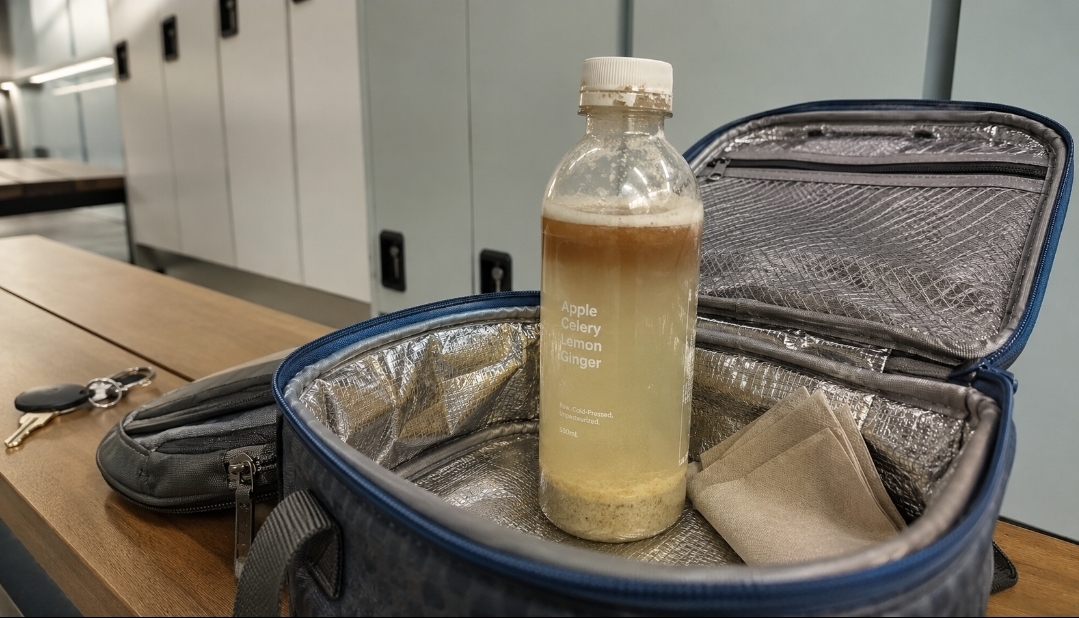
Separation is a different thing from browning, with a different cause. It comes down to density. The heavier pulp sinks, the lighter watery liquid rises, and within an hour or two a bottle that looked uniform has settled into a clearer layer on top and a denser, cloudier layer below.
How much it separates comes down to what is in the juice. A juice with a lot of fine pulp settles into more obvious layers than a thoroughly strained one. Citrus-heavy blends separate quickly. Beetroot juice separates at the edges while staying dark in the middle. The juice has not failed; the pulp, water, and denser liquid are settling at different speeds once the bottle sits still.
A separated juice shakes back together. Give the bottle a firm shake and the layers recombine into something close to how it looked when it was made. The colour will be duller, but the consistency comes back.
Which Colour Changes Are Normal
A brown top over clearer juice below is expected. Visible layers, a pale foam ring under the lid, and slight dulling of the overall colour also happen as fresh juice sits. None of that, on its own, means the juice has turned.
A juice made this morning looks different at lunch because the colour has dulled, the foam has settled, and the pulp has moved. A green juice that has gone khaki, an apple juice that has browned at the neck, a carrot juice that has lost its glow — that is a bottle ageing in appearance, not spoiling.
A common error is expecting fresh juice to look the same hours later as it did coming out of the juicer. It will not.
Telling a Dull-Looking Juice From a Spoiled One
Colour is the least reliable signal. A juice sometimes looks ugly — brown, separated, dull — before smell, texture, or timing says it has gone off. Just as often, a bright juice smells off while the colour says nothing is wrong. The two do not go hand in hand, and that is the part that genuinely catches people off guard.
The final decision comes down to smell, texture, and timing. A sour or sharp smell at the cap, a fizz or hiss when you open it, a slimy feel, or bubbling that was not there before all mean it has turned, whatever the colour indicates. For spoilage timing, check out how long fresh juice lasts in the fridge.
WARNING: Do not use colour alone to decide
Brown and separated is not the final verdict. Smell the cap, check the texture, and account for timing before trusting the colour.
How to Keep Juice From Browning and Splitting So Fast
Citrus slows browning. A squeeze of lemon or lime into the juice keeps the colour brighter for longer — the acidity slows the reaction with air that turns the top brown. It does not stop it entirely, but an apple-based juice with lemon in it holds its colour noticeably better than the same juice without.
Fill the bottle close to the top. The air gap at the shoulder of a half-empty bottle is where browning starts and spreads fastest. A bottle that seals tight, filled near the lid, browns slower than a half-full one — and best bottles for fresh juice goes through which ones do that.
ACTION: Fill it full and add citrus
Fill the bottle close to the lid to keep the air out, and add a squeeze of lemon or lime when it suits the juice. Both slow the brown top from forming as quickly.
Keep it cold and drink it sooner. Cold holds the colour change back the same way it holds back everything else in the bottle. Time matters too: a juice drunk within a few hours has barely browned, while one left until late afternoon has had all day for the top layer to dull.
When you open the next bottle, look at the top layer, smell the cap, and shake it if it smells clean. If the colour bothers you more than the taste does, fill the next bottle closer to the top and drink it earlier in the day.