
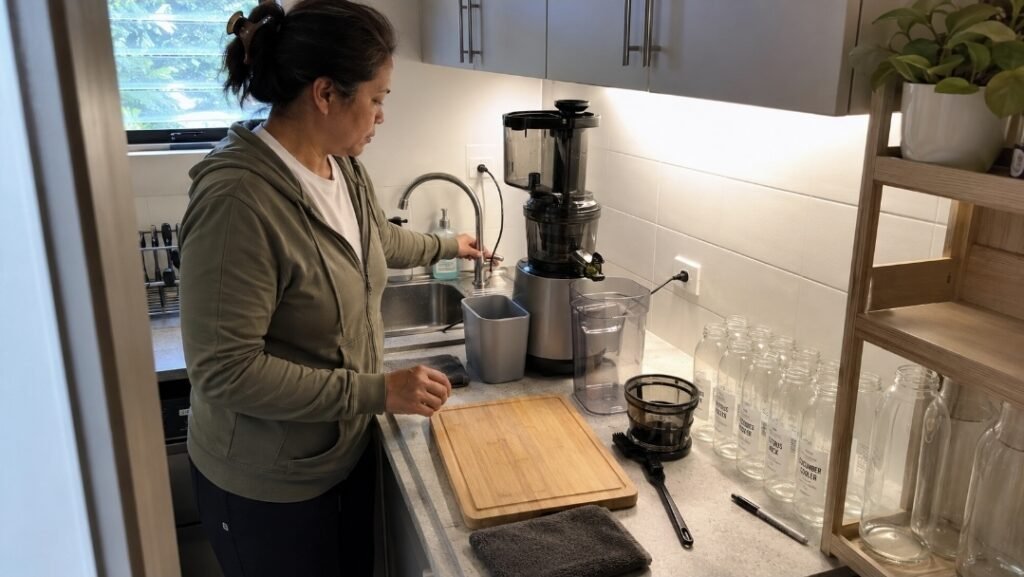
Getting the juicer was the easy part. The buying research, the comparison, the order — all of that took days. Then the package arrives on your porch and the real question turns out to be counter space, cord placement, and where the brush goes, none of which appear in the manual or in the guide here that helped pick the best juicer.
Where to Put the Juicer
Where it goes on the counter determines whether the juicer gets used every morning or becomes a something used only on weekends. A juicer stored in a cabinet requires a decision to lift it out, clear a space, find the parts, and plug it in before every session — and that’s a lot less likely to happen on a rushed morning. The machine should be placed on the counter, visible, and already facing the way it will be used. If it has to go in a cabinet, the fast is faced with a hurdle before the first carrot even reaches the chute. That extra step does not feel like much when you first start juicing, but it is the thing that slowly but surely stops happening, especially when the cutting board is already out, the bottles are waiting, and the screen still needs checking before the morning juicing starts.
Close to the sink is the right place. The sink has to be within a short reach — not a walk across the kitchen carrying wet components after every juicing session. The cord is worth a thought too: it should not stretch toward the power point across water or sit too near the edge where sink splash reaches it. The best counter spot is where the sink is reachable without moving other appliances to get there. Every kitchen is different though and the tradeoff between cord reach, splash distance, and working space rarely works out perfectly.
Before the first fast morning, run a dry test. Place the empty bottles where they will stand while filling, set the pulp bin where it will sit during the session, put the cutting board beside the chute, and note how far the wet components go to reach the sink afterward. If any of those items has nowhere obvious to sit, or if placing one pushes another out of reach, the layout needs more work. Skip the dry run and the problems show up mid-session instead, with pulp building up and no fix left but improvising around the layout each time you juice.
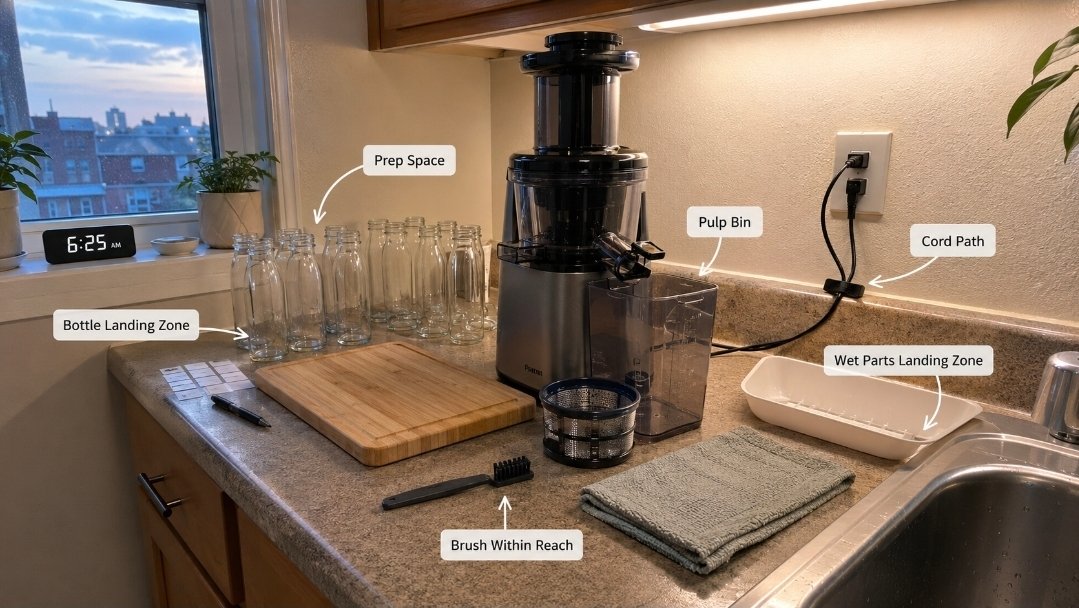
Where the nearest outlet sits matters. A cord long enough to reach without coming into contact with any liquid beside the machine does not become a hazard mid-session. If the nearest outlet leaves no safe route for the cord, an extension lead put in place before the first fast saves more trouble than than rerouting the counter setup later.
Enough clear space beside the juicer is part of the working out where it goes. Prepped produce has to sit somewhere before it reaches the chute. The bottles have to stand upright without being knocked over while juicing. A counter top that has room for the juicer but leaves no working space beside it creates the same delay as a juicer in the cabinet — the machine is technically out, but the session still ends up cramped.
What to Keep Beside It
All of this sounds like more preparation than a juice plan needs, right up until the first rushed morning leaves pulp drying in the screen, bottles on the other side of the kitchen, and no cloth nearby for the beet drips already marking the counter. Everything that needs to be within reach should be there before the produce goes in. I still set it up the night before on longer fasts because that 6:30am counter is never as organized as the night-before setup.
The cleaning brush goes next to the machine, not in a drawer. A cloth or paper towels for drips belongs on the counter surface before juicing starts — beet and carrot drips mark counters quickly and dry faster than expected. A pulp trash bag or compost container has to be open and positioned before the first piece of produce goes in, not retrieved after the pulp bin is already full.
Bottles need to be uncapped and standing in the workspace before juicing starts, not retrieved from a cabinet after the first pour. Labels and a pen belong beside the bottles — on a longer fast, unlabeled bottles from different sessions create confusion about what was made when. The labeling happens a lot faster when the pen is already there than when the juice is sitting in an open bottle waiting.
Produce Order Basics
Loose greens work better when firmer produce moves with them through the machine. Running carrots, beets, celery, or cucumber alongside or before leafy greens produces more juice from the greens and leaves less residue in the screen. Citrus fed at the end helps clear remaining pulp from the chute and leaves a clean smell in the machine. If you haven’t already done so, have a read through produce prep before introducing the first piece to your machine; the principle here is narrower greens need something firm around them, and citrus works better late than early.
Pulp, Mess, and Cleaning
Put the pulp bin beside or under the outlet before the session starts, where it can be reached without moving the machine. A cloth on the counter handles drips as they happen. Wet parts after juicing need a spot to drain near the sink clear of the produce and bottles.
The placement is sorted above; the washing itself is a separate routine in how to clean a juicer. The setup question here covers where the bin sits, where the wet parts go, and here the brush and cloth go when the session ends. If pulp comes out wetter than expected, why a juicer leaves wet pulp addresses that. If the volume of pulp itself becomes a problem, read what to do with juicing pulp before it piles up faster than you can clear it.
Which Problem to Solve Next
With the juicer well placed and the tools are within reach, the next sticking point in a juice fast usually comes from one of five places: the machine itself, the cleaning routine, the bottles for the juice, the greens, or the batch timing.
If the juicer feels slow, noisy, or wrong for the volume being made during a fast, the machine type is worth comparing in cold press vs centrifugal for juice fasting. If cleaning slows you down, speeding up the routine is the fix – how to clean a juicer handles the how. If the bottles create problems — wrong size, poor seal, smell building up — best bottles for fresh juice works through it.
If leafy greens are barely producing juice, how to juice leafy greens goes into the technique that gets more out of them. If you are planning to juice several bottles at once, batch juicing for a juice fast goes over the timing, cold storage, and the order they get filled.
The counter setup only has to be done once. After a few sessions the layout stops being something you think about, and the juicing itself is the job that takes little effort.