
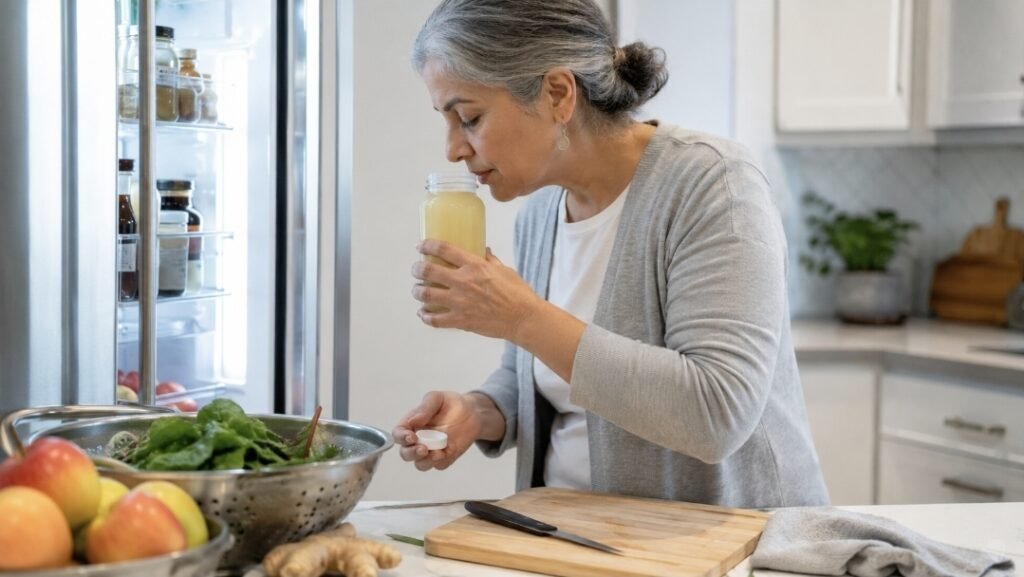
Fresh juice gets judged like any other drink — by color, taste, and how bright it looks in the bottle. Everything in that glass or bottle came off a shelf, through hands, across a cutting board, and into a machine without ever being heated. That means the wash is the only thing taking germs off the produce. Greens can leave dirt in the sink even after a second rinse, which is why how to wash produce before juicing should be read before the start of any juicing plan.
None of that makes the juice dangerous. It just means a few extra steps that are about safety, not taste.
Fresh Juice Is Uncooked Food
A bottle of homemade juice is raw produce in liquid form.
Juicing removes the chewing, some peels, and some prep from the glass, but it does not replace heat. Nothing in a home kitchen pasteurizes juice.
Nearly all juice sold in a US grocery store has been heat-treated. Homemade juice is not heat-treated, so the same caution you would apply to sprouts or unwashed berries applies to your morning juice too. That is not fear; it is an accurate label for the drink in front of you.
Why Washing and Cold Storage Matter for Safety
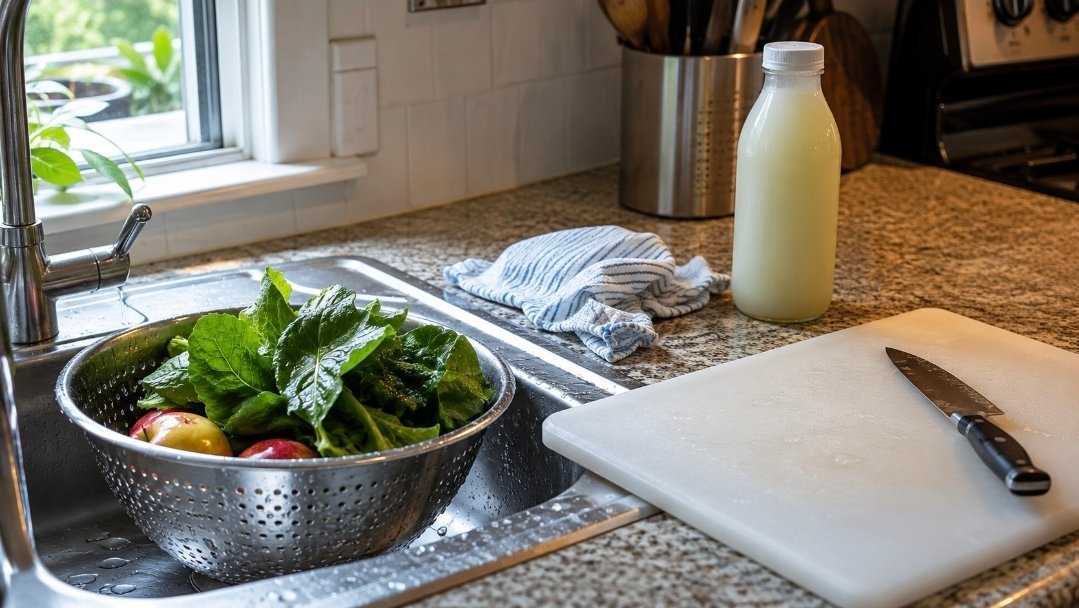
Washing produce and keeping juice cold often get treated as quality habits — cleaner taste, longer freshness. With raw juice they also affect safety. Any grit or contamination from the produce surface, sink, board, knife, or juicer parts can end up in the bottle with no cooking step afterward, so the prep order in how to prep produce for juicing matters for safety as well as speed.
Cold storage matters after juicing. Once the juice is made, temperature is the main thing slowing whatever bacteria may have survived the wash, and effective fresh juice storage is a safety concern as well as a freshness one. Juice left on the counter is not just losing freshness — it is warming up.
When to Throw Juice Out
You can give pasteurized juice more leeway. Raw juice gets no such slack. When juice smells sour, fizzes, turns slimy, or changes color beyond normal browning, throw it away, especially once it has passed the safe storage time outlined in how long fresh juice lasts.
The problem is that appearance rarely gives you a clear answer. I have picked up juice that sat out from breakfast to nearly lunch still looking bright and as fresh as the moment I made it, only for the first sniff to make the problem obvious. How the juice looks and whether it is safe to drink do not always agree. I still stand there talking myself into keeping juice I know I should dump.
Pasteurized vs Fresh Juice
Pasteurized juice has been heated to reduce harmful microbes so it can make its journey through trucks, shelves, and days in a store fridge. Homemade juice is not heat-treated. That is the entire difference. Not a verdict on taste or nutrition, just two different safety profiles.
With fresh juice, you control the produce, freshness, and handling. That also means the safety work happens in your kitchen, because there is no heat step later to make up for a skipped step. For a healthy adult who washes produce properly, keeps juice cold, and drinks it fresh, the risk is tiny and easily kept that way. That changes for the groups in the next section.
Who Should Be More Careful With Raw Juice
Four groups need more care with raw, unpasteurized juice: pregnant women, people with weakened immune systems, older adults, and young children. An illness that gives a healthy adult a rough day can be much harder on these groups, which is why US food-safety guidance recommends pasteurized juice instead of untreated juice for them.
That guidance has nothing to do with technique. The most carefully made raw juice is still raw, and for these groups raw juice carries more risk. Anyone having treatment, living after a transplant, or dealing with a condition that lowers immunity should ask their clinician about raw juice specifically.
None of the above is fasting advice. Whether someone should fast is a separate question. People told to avoid or limit raw foods should treat fresh juice the same way, whether it comes from a juice bar or their own kitchen.