
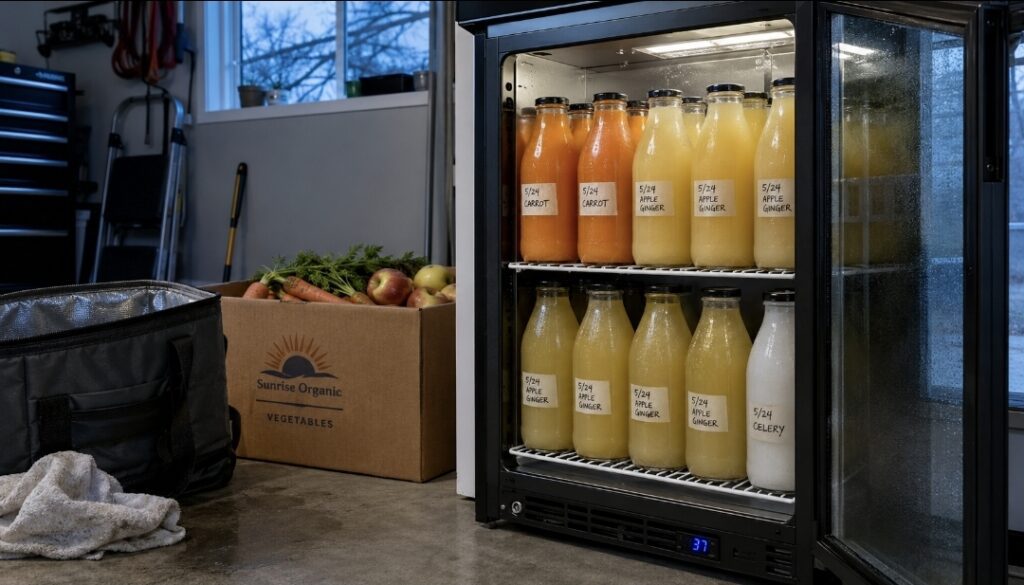
Fresh juice tastes best five minutes after it is made. Work, family, travel, and cleaning the juicer get in the way of making every bottle fresh. Store it in a full, sealed glass bottle and get it straight into the fridge.
Bad storage ruins the juice before you even get to drinking it. The colour dulls, the taste goes flat, and the cap gives off something sharp. That bottle is done.
How Long Fresh Juice Holds Up in the Fridge
The best juice is still the one made and drunk straight away. At 10:20pm, with pulp stuck in the juicer basket, making tomorrow’s first bottle fresh is not always happening.
A short fridge window is enough for same-day bottles and the next morning. Same day tastes best. Next morning still works if the juice went straight into a cold fridge in a full, sealed bottle.
The fridge slows the damage. It does not make the juice fresh again. Green juice turns dull after a day, a juice heavy with apple starts tasting flat, and the half-empty bottle tastes worse even before anything smells wrong.
Taste and colour change before the juice becomes obviously bad. A bottle can look drinkable and still taste tired.
If the exact window matters, how long fresh juice lasts in the fridge has the breakdown.
How to Store Fresh Juice Without Ruining It
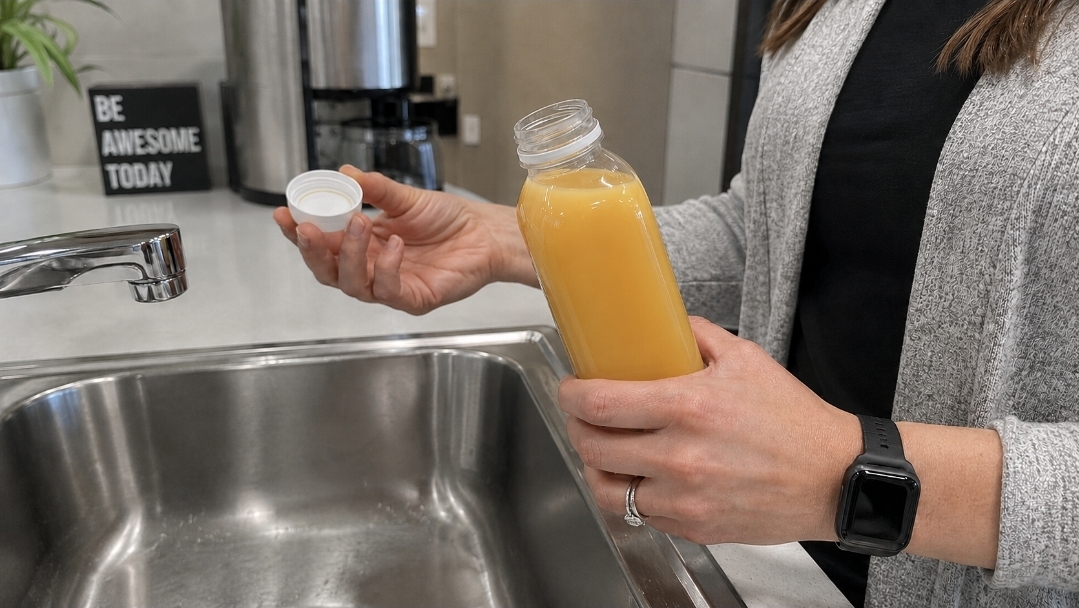
A loose lid is enough to ruin the juice. A bottle that is nearly sealed is not sealed. Air gets in, smell gets out, and the juice starts tasting stale faster than it should.
A big air gap at the top lets too much oxygen sit above the juice. A half-empty bottle sitting in the fridge for hours tastes flatter than a full one. That empty space at the shoulder is where the juice starts losing its fresh taste.
Warm storage ruins fresh juice quickly. A bottle left on the counter while you clean, answer a message, or load the dishwasher is not the same bottle that went into the fridge cold.
A juice heavy with apple, pineapple, or orange tastes good at first, then turns sticky, dull, or sharp when it sits too long.
Labels stop stupid mistakes. At 6:40am, before the first bottle comes out of the fridge, “Tuesday 7pm” beats trying to remember which one came first.
ACTION: Fill, seal, chill, label
Full bottle, tight cap, cold fridge, clear label. That beats guessing later.
The label does not need to be pretty. Mine has smeared when the bottle sweated on the counter, which is annoying, but still better than opening three bottles and guessing by smell.
Guessing bottle age is how old juice ends up getting drunk. The colour looks dull, the lid gives off a stale smell, and you talk yourself into it because you need one more bottle for the day. Not worth it.
Fresh, Fridge, or Freezer: Which One Fits the Day
Fresh is the best choice when the timing works. Make it, drink it, rinse the parts, and move on. The flavour is brighter, the smell is cleaner, and nothing sits in the fridge losing taste.
Fridge storage is for the short gap between making juice and drinking it. It makes sense when you need a bottle for work, a drive, school runs, or an early morning where juicing before leaving is not realistic.
Freezing is for juice made several days ahead. Making several days at once is no longer ordinary fridge storage. At that point, freezing fresh juice is the better answer than stretching the fridge window.
NOTE: Stored juice is practical, not fresh-made
A cold sealed bottle gives you juice for work, travel, and early mornings. It does not make yesterday’s juice identical to juice pulled straight from the juicer.
Freezing gives you more time, but the bottle needs different handling. You need space for expansion, a slow thaw in the fridge, and a shake before drinking because separation still happens.
The colour can lie. I still do the smell check even when the label says it should be fine.
Airtight Glass Bottles Keep Air Out
Airtight glass matters because fresh juice picks up smells and air fast. Old plastic holds smells. Loose caps leak. A bottle that is hard to clean ends up with old juice hiding under the lid.
Fill close to the top. Not overflowing, not sloppy, but close enough that no air pocket sits above the juice.
Easy to clean matters as much as the lid. Narrow necks look neat, then turn annoying when pulp dries inside the rim or old juice smell stays trapped under the cap.
If the bottles are the weak point, best bottles for fresh juice is the right place to sort that out.
Batch Prep Works Only If the Bottles Stay Cold and Full
Batch prep helps because cleaning the juicer every single time gets old fast. A long day runs smoother when the bottles are already cold in the fridge.
The storage rules do not change. They still need to stay full, sealed, cold, and labelled. A batch sitting warm while you tidy the kitchen is already losing freshness.
If you are prepping for a fast, batch juicing for a juice fast covers bottle count, fridge space, and the order that works.
Produce prep saves the morning. Washed greens, trimmed celery, peeled citrus, and ready carrots make juicing faster without getting into recipes. Soft greens and tired fruit are not storage failures. How to prep produce for juicing sorts that before the batch starts.
Cleaning is what makes batch prep worth repeating. If the pulp basket sits in the sink until later, later becomes tomorrow. If the sink is full of pulp parts every night, how to clean a juicer before the next batch is the actual problem to fix.
A slow, awkward machine is where the juicer choice becomes a practical question, not a shopping hobby.
Before the fridge fills up, how many juices per day stops you making too many or too few.
Throw Juice Away When It Smells, Fizzes, or Builds Pressure
Bad juice gives signs before you need to taste it. The smell goes sour, the cap hisses instead of opening cleanly, or the bottle gives a little push back when you twist it.
Fermentation is not something to work around. Pressure buildup, strange fizz, foam that was not there before, or a sharp smell means the juice is done.
Mould, slime, and a bad taste are not close calls. By then you have already put suspect juice in your mouth, which is too late.
WARNING: Fizz, pressure, sour smell, mould, or slime
Throw it away. Do not shake it, dilute it, chill it again, or try to rescue it because the fast needs another bottle.
Opening a juice and knowing immediately it is done is annoying. It wastes produce and time. Drinking it anyway is worse.
A suspect bottle does not get a second chance because the label says it should still be fine. Labels help. Smell, pressure, and texture matter more.
Match the Fix to the Storage Problem
If the fridge window is still unclear, how long fresh juice lasts goes further than colour alone.
Several days of juice ahead means the freezer enters the plan — freezing fresh juice before the fridge window runs out.
A fast built around work or travel lives or dies by bottles, timing, fridge space, and cleaning. Batch juicing for a juice fast handles that side.
If the containers are the problem, best bottles for fresh juice is where to start.
Soft produce is already a problem before it reaches the juicer — prepping produce before juicing stops that earlier.
Dirty parts hold up the next juice before storage even starts. Cleaning the juicer is the thing to fix before making another batch plan.
Stored juice gets bottles into work bags, car cup holders, and early mornings where fresh juicing is not happening. It gives you something cold and ready when fresh juicing is not realistic. But it never becomes the same as juice made and drunk straight away, and that gap never fully closes.