
How Much Produce Do You Need for a 3-Day Juice Fast?
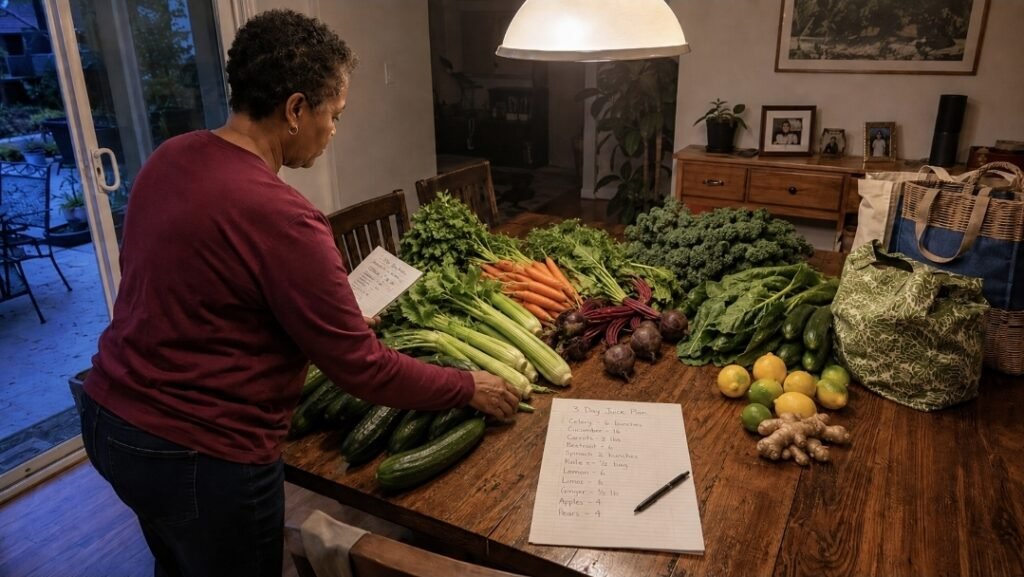
The first big decision for a 3-day juice fast happens at the shop, before you make a single juice. Buy by guesswork and one of two problems usually happens: half the produce softens in the drawer before you get to it, or the second or third morning comes with no cucumber left for the next juice.
Three days is short enough that either mistake knocks the fast off course. There is a fairly reliable amount for three days, and it is closer to a set number than most first-timers expect. Have a look at the juice fast shopping list for the wider ingredient list; what follows is the quantity for a 3-day shop.
Start the 3-Day Produce Estimate With 4–6 Juices a Day
For a 3-day fast at four to six juices a day, buy roughly this much:
- 3–4 heads of celery
- 6–9 cucumbers
- 10–15 medium carrots, or about 3–5 lb / 1.5–2.5 kg
- 6–9 medium beetroot
- 3–5 bags or large bunches of leafy greens
- 6–9 lemons or limes
- 1–2 large pieces of ginger
- 6–9 pieces of fruit total
Those are buying amounts, not juice recipes. The range is there because four juices a day and six juices a day need different amounts — buy the lower figure for four juices, the higher for six. Use 3-day juice fast plan to set the daily rhythm, then match the shop to how many juices per day on a juice fast.
Start with the number of juices, then match the produce amounts to that count. A four-juice day buying the smaller amount of each will get you through three days without much waste. Six juices a day requires the higher number on every item.
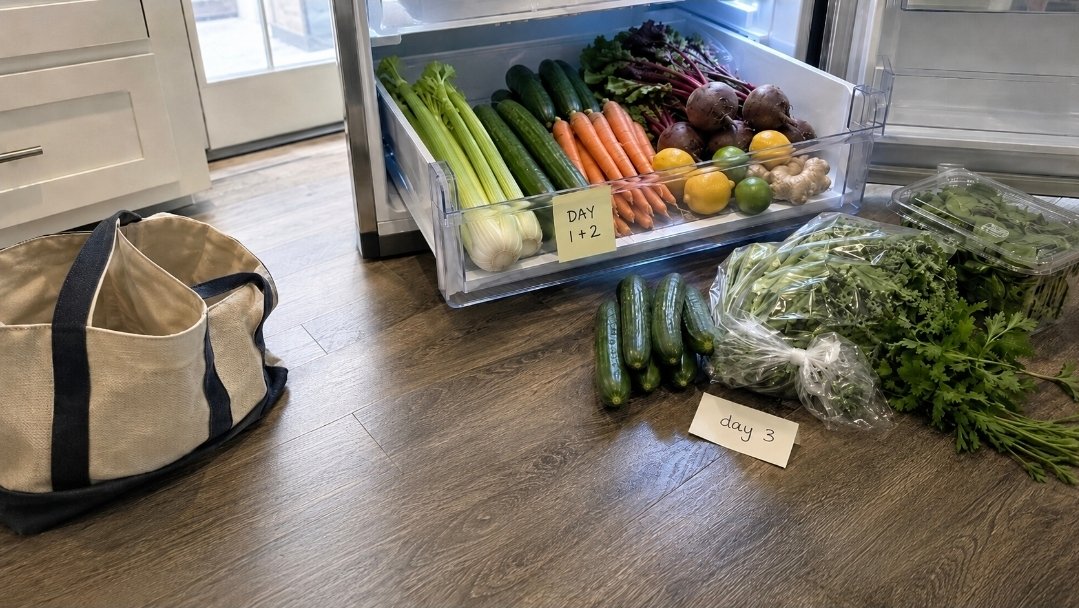
ACTION: Buy days 1 and 2 first, then adjust day 3
Buy the full amount for the first two days up front, but hold back on the day 3 produce until the fast is underway. By the second morning, you will know how quickly the produce is going, and the day 3 shop should match the pace you are juicing at.
The Exact Amount Changes With Yield, Produce Size, and Appetite
The estimate here gets you most of the way there. Three things change the amount you’ll need: juicer yield, produce size, and how much you drink once the fast starts.
Juicer yield is the first. A slow masticating juicer pulls more out of the same carrots than a fast centrifugal one, so the same bag of produce makes more juice on one machine than another. If less juice comes out per batch, the produce runs down faster than the estimate predicts. Juicer yield depends on the machine, so use best juicer for juice fasting if you haven’t already decided on a juicer.
Produce size is the second thing to look at. A “medium” cucumber in one shop is not the same size as a “medium” cucumber in another, and nine small apples do not match six large ones. The third factor is how much you drink — a full glass each time obviously uses produce faster than a small one. You do not know all this on shopping day, so use the estimate to start the shop, not to finalise it.
Base Vegetables Make Up Most of the 3-Day Shop
Celery, cucumber, carrots, and beetroot are the bulk of a 3-day shop by weight and also by fridge space needed. They also keep well, which is why you buy them in full up front and leave the delicate produce for later.
Plan on three or four heads of celery across the three days — it goes into most green juices and gets used faster than you may expect. Plan on six to nine cucumbers, depending on size, and expect cucumber to run short first because it supplies the watery base for so many juices. Carrots are the heaviest item: ten to fifteen medium carrots, or a few pounds, and they keep firm right through the three days. Six to nine beetroot gives you denser, sweeter juices, and beetroot keeps as well as carrots.
By the second evening, the carrot bag is likely to be nearly full while the cucumbers have already been juiced. This difference is normal. Lean toward nine cucumbers rather than six.
Put Tighter Limits on Greens, Ginger, Citrus, and Fruit
These four categories are where overbuying happens, and each one should be kept lower for a different reason.
Leafy greens seem like the obvious thing to stock up on, but three to five bags is plenty for three days, and they take more fridge space than the juice they provide. They also soften fast — one bag too many is a bag lying flat and yellowing in the drawer by the third day. A small amount of ginger is enough for several juices; one or two pieces cover the whole fast. Six to nine lemons or limes will sharpen the flavour and help stop the juice browning so quickly, but they are for flavour, not volume. Keep fruit to six to nine pieces across the three days — use it only to sweeten bitter green juices.
NOTE: Keep Fruit Well Below Vegetables
Divide the six to nine pieces of fruit across three days and several juices — a little in each to soften the greens. Do not load up on fruit, and do not add extra pieces just to make the juices sweeter.
The Produce That Gets Overbought
The same ingredients always get overbought: soft herbs, berries, bags of greens, extra fruit, and a handful of extras thrown in to pad the shop.
The problem is the short length of the fast. You look at a half-empty trolley and feel under-prepared, and you add more — even though the sturdy vegetables already cover most of the fast and the extras will likely go to waste. On a longer fast, shopping in stages makes sense; on a three-day fast, it feels unnecessary, and that is a mistake.
Buy for Days 1 and 2 First, Then Buy Day 3 Fresh
Buying in two rounds keeps fragile produce from sitting in the fridge too long. Buy the full amount for days 1 and 2 up front — the sturdy vegetables and a first round of greens and fruit. Then buy the day 3 produce on the first evening or early on the second day, once you know how quickly you are using everything.
Buying day 3 later keeps those greens and fruit out of the fridge for the two days they would otherwise sit softening. It also allows for the second shop match what you are actually juicing rather than the amounts you assumed. Free up fridge space for the first shop and the day 3 top-up before buying anything — a full first shop plus the day 3 top-up takes more room than a normal food shop, and the filled bottles take space too, so leave room for fresh juice storage not just the shopping.
Buying day 3 a day later gives you fresher greens and fruit than buying everything at once. It is the difference between day-old greens and three-day-old ones.
What to Set Out Before the First Morning
Before the first morning, the produce should be washed and close to hand, the bottles labelled, the juicer clean and assembled, the fridge space cleared, and the day 1 produce easy to reach. Do the washing and chopping before the first morning using how to prep produce for juicing. If you are making more than a day at a time, read batch juicing for a juice fast before you start.
Use the estimate to get the first shop close enough, then buy in stages to keep waste down. The amount you really need becomes clearer during the first fast — what your juicer yields, how big your glasses are, how much you drink by the afternoon in day three. Use the table to make the first shop. What is left on day three tells you what to buy next time.