
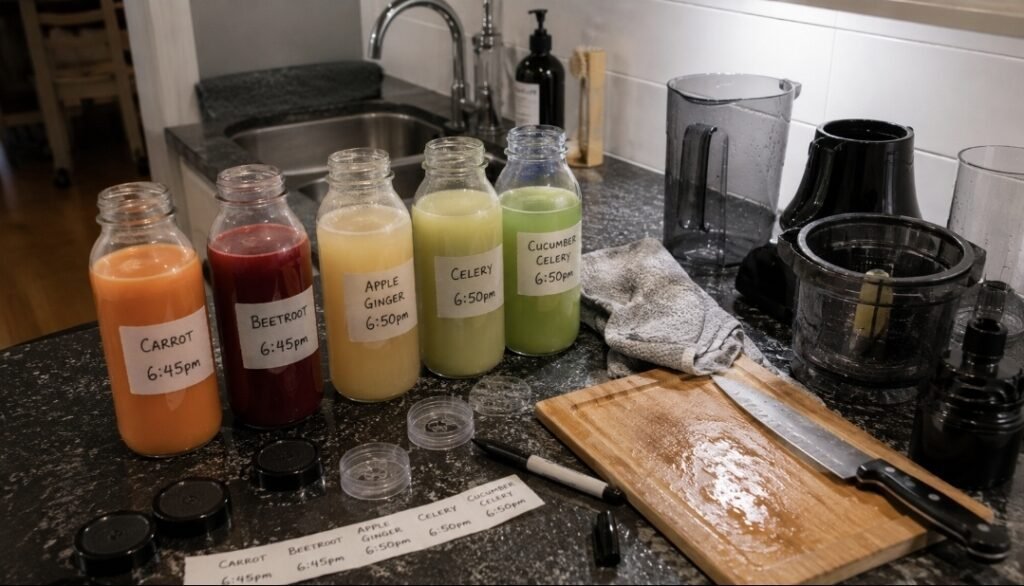
Cleaning the juicer three or four times in one day gets annoying fast. Batch juicing helps because you make several bottles in one session, but bad prep still leaves you with problems: too many bottles, warm juice, dull flavour, and more cleanup than expected.
Before making six or eight bottles, get the fresh juice storage basics right. Check how long fresh juice lasts before you decide how many bottles to make. If you are making more than the fridge can hold safely, decide whether the extra bottles need freezing before you start: whether fresh juice can be frozen.
| Batch need | Best move |
|---|---|
| Tomorrow’s juice | Make it tonight, fill the bottles close to the top, and keep them cold. |
| Two days of juice | Use the fridge only if the bottles are sealed properly and chilled straight away. |
| More than two days | Freeze the extra bottles instead of forcing everything into the fridge. |
When Batch Juicing Is Worth Doing
Batch juicing helps on workdays, early starts, school runs, travel days, or any day when there is only one realistic time to juice. The point is simple: set up once, juice once, clean once.
The setup takes longer than it looks. Produce needs washing, the juicer needs assembling, bottles need filling, and the pulp bin fills quickly which prolongs the process.
The first filled bottles should go straight into the fridge while you finish the rest. Leaving them on the counter while you finish the rest means the first bottles are already warming.
By the fifth bottle, the job is messier. The pulp bin is heavy, the counter is sticky, and the last label ends up with wet tape or juice on the rim.
NOTE: Do not make extra bottles just because you can
Make the bottles you will actually use. Extra bottles just leave you with more juice to get through later.
The Batch Size Has to Match What You’ll Actually Drink
Start with the number of bottles you need, not the number you feel like making. A full fridge looks organised at first, but every extra bottle still has to be drunk before it loses its fresh taste.
Before the first batch, work out how many juices per day on a juice fast you need, then turn that into a bottle count. After that, match the batch to the shelf space and the next day or two of drinks.
A 3-day juice fast plan does not need a fridge packed with extra bottles. A 7-day juice fast plan needs more than one batch because a full week of juice should not sit in the fridge at once.
Do not try to juice the whole fast in one session. The first bottles get used easily. The later bottles are past their best before you get to them.
Smaller batches work better. Make enough to avoid dragging the juicer out again too soon, not so much that the last bottles are being opened only because they are there.
Morning Juice Tastes Fresher, Evening Prep Saves Time
Juice tastes best soon after it is made. The foam is there, the smell is sharper, and the first sip still tastes like it has just come out of the juicer.
Morning prep is harder when you leave early. The machine needs assembling, the produce needs washing or cutting, bottles need filled, and the juicer still needs cleaning before anyone gets out the door.
Making the batch the night before removes that morning scramble. The bottles are filled, the fridge is stocked, and the first drink is ready without switching the juicer on before work.
The tradeoff is simple. Juice made at 8:30pm has already been stored overnight before breakfast. Juice made at 6:30am tastes fresher but costs time when time is already tight.
Neither option is perfect.
The fresher option takes longer. The easier option gives you older juice by morning. That is the tradeoff. A neat label does not make evening juice taste like morning juice.
Set Out the Bottles Before You Start Juicing
Put the bottles, lids, labels, and marker out before you start. Do not leave the bottles in a cupboard, the lids in a drawer, or the labels somewhere you have to hunt for with wet hands.
Once juice starts coming through the machine, stopping halfway becomes messy. A half-filled bottle sits on the counter while you look for another cap. The jug fills again before you have cleared space for the next one.
Fill each bottle close to the top, seal them properly, and label them with the time as well as the date. The bottle made at 7:15pm is not the same as the one made at 10:40pm, even when both labels say Tuesday.
Put each filled bottle straight into the fridge. Do not leave the first bottles warming on the counter while the last ones are still being made.
Choose the right containers before batch day; the best bottles for fresh juice guide can help if you are unsure what to use. During the session, the problem is stopping halfway for caps, labels, or space on the shelf.
Anything leaving the house needs a cooler bag. A cold bottle packed properly for work is different from one that warms around the sides before lunch.
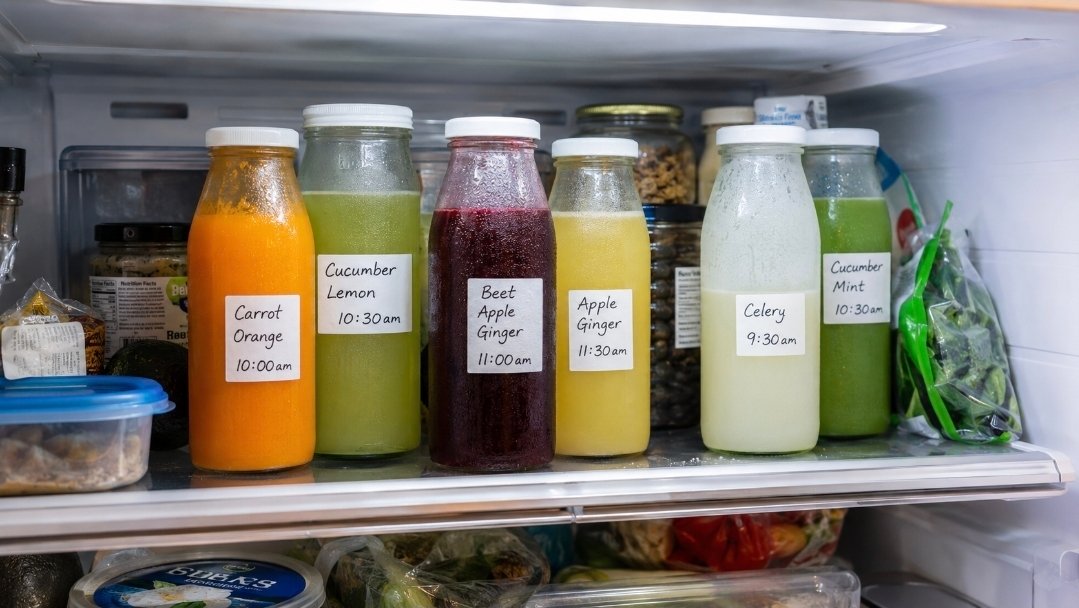
ACTION: Set the bottles before juicing
Line up bottles, lids, labels, tape, marker, and cooler bag, and clear shelf space before the first piece of produce goes in.
Some Juices Do Not Hold Up Well in a Batch
Not every juice holds up well in a batch. Delicate greens lose their fresh taste quickly. Sweet fruit-heavy juices are not good choices for a long batch because they ferment quickly and turn sharp when they sit too long.
Juice that already separates quickly is not the best choice for a long batch. You can still drink it after shaking, but it looks worse as it sits, and it is harder to enjoy by lunchtime.
Produce that is already soft, bruised, or tired makes a poor batch from the start. Soft greens, tired celery, bruised fruit, and carrots that already bend do not become better because they went through the machine.
Do not make more juice than you can chill and drink in time. That is just too much juice made at once.
WARNING: Do not batch tired produce
Produce that already looks tired makes tired-tasting juice. Juicing does not make tired produce taste fresh.
A juice does not have to be spoiled to be a poor batch choice. It only has to lose enough bite that the last bottles feel like something you are forcing down.
The Next Batch Is Easier When You Clean Up Straight Away
The next batch depends on how you left the juicer last time. A full pulp bin, dried strainer, and sticky cutting board mean you start the next batch by cleaning yesterday’s mess.
Washing produce before you start saves more time than stopping every few minutes with wet hands. Use how to prep produce for juicing before batch day if washing and chopping are what slow you down. For this batch, have enough washed and ready before the machine turns on.
Firm produce is easier when it is cut before you start juicing. That keeps the juicer moving while juice is already sitting in the jug.
Clean the juicer immediately after the batch. Check how to handle the full cleaning routine at how to clean a juicer before the next round. After this session, do not let pulp dry in the screen.
Before the next batch, have everything ready before you switch the machine on. Put the first bottle in the fridge as soon as it is filled.
Set everything out first, then switch the juicer on.