

How Much Does a Juice Fast Cost?
A juice fast can seem expensive until you break the cost down. The price looks steep when four different costs are added together: the produce you press at home, the store-bought juice you buy instead, the juicer and bottles, whether you own them or have to buy them, and the produce that spoils before you juice it. Separate those costs and the total is less than the lump sum may suggest. Use the juice fast shopping list for the produce list, then price those ingredients before adding bottles, extras, or ready-made juice.
Homemade Juice Costs Far Less Than Buying Every Bottle Ready-Made
The biggest price gap is between juice you press yourself and juice you buy already pressed. They are the same drink and nowhere near the same price.
Pressing at home, the produce for a day of four to six juices runs about $10 to $16, depending on how much beet and greens you use. Across three days that is roughly $30 to $50 in produce, with no other cost if you already own a juicer.
A ready-made cold-pressed cleanse costs far more. Mail-order juice cleanses run about $90 to $200 for three days, which works out to roughly $30 to $65 a day. At a local juice bar, five or six bottles at $8 to $12 each top $50 a day.
Supermarket juice is cheaper, often around $3 to $7 for a bottle or carton, but most of it is pasteurized and sweeter than fresh juice; check pasteurized vs fresh juice for fasting before even considering building a fast around store-bought juice.
NOTE: Compare cost per day, not per bottle
One $9 bottle looks like a manageable expense on its own. Five or six of them a day for three days runs well over $100. Add the daily total first, then compare the three-day total with the $35 you would spend juicing your own.
Extras, Convenience Buying, and Waste Push the Cost Up
After you decide between homemade and ready-made juice, the extra spending comes from the add-ons, not from the basic vegetables purchase.
Exotic ingredients are the first extra cost. Wheatgrass, specialty powders, and imported fruit add up quickly and rarely end up in the juices you actually drink. Buying daily at convenience-store prices is the second extra cost. Small markups on each trip add up compared with one planned grocery run. Buying every ingredient organic is the third extra cost, and it gets its own section below.
Waste is the cost you only see after the fast has finished. Produce bought for all three days at once goes off while you use the first day’s ingredients, and softened items get thrown away instead of juiced. Too much fruit and a pile of soft herbs are where most of the wasted money goes.
Plain Vegetables Keep the Daily Cost Down
The cheapest fast uses produce that costs less and lasts longer. Celery at about $2 a head, cucumbers under a dollar each, carrots around a dollar a pound, and beets a couple of dollars a bunch are the bulk of every juice, and all of them keep fresh for days.
Leafy greens in smaller amounts, a few lemons, and a knob of ginger fill in the gaps without adding much to the bill. Buying produce in season keeps the bill lower again, and buying in bulk helps only where the produce gets used, not left to spoil. For a cheaper cart, consider budget juice fasting to keep the cost down from the start.
Prepping produce so it lasts, and buying close to what you will use, keeps more of what you pay for.
Most First-Fast Spending Goes Wrong at the Store
The first fast is where people waste the most money, and most of that waste happens before a single juice is made. The same mistakes keep showing up: buying more than three days needs in one trip, and a few ready-made bottles thrown in because you are rushing in the morning.
The add-ons come next: jars, extra bottles, bags, powders, and “just in case” items that sit unopened past day three. The biggest added cost comes when there is no juicer in the house already: the machine itself, which adds an equipment cost on top of the produce, and best juicer for juice fasting helps narrow the choice before buying a machine.
The cheapest-looking cart still goes wrong when it is filled with badly thought out items: the cheapest shopping trip does not always mean the lowest three-day cost. A basket of wasted herbs, two convenience bottles, and three unopened items costs more once the waste is counted.
Buying Organic Pushes the Bill Up Sharply
Buying every ingredient organic adds thirty to fifty percent to the same produce in many US shops. Over repeated fasts, the organic price difference adds up to more than a one-time basic juicer purchase. If you want to know where organic actually matters, have a look at organic vs non-organic juicing.
A Basic 3-Day Homemade Juice Fast Cost Estimate
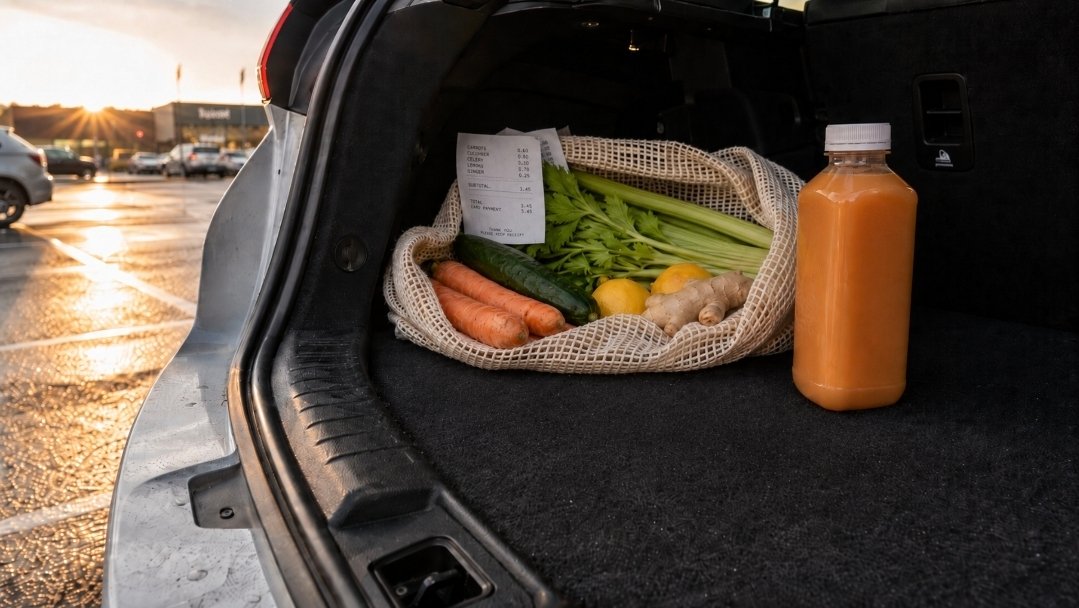
The least costly plan: plain vegetables and fruit, homemade juice only, a juicer you already own, and basic glass bottles – the produce for three days is about $30 to $50.
A six-pack of 16oz glass bottles, if you need them, is about $20 to $35, and that is a one-time purchase, not a cost for every fast. Those produce costs match the amounts in how much produce for a 3-day juice fast.
If you already have a juicer and bottles, the produce is all you pay for. If you need bottles, the first fast runs closer to $50 to $85. Buying a basic juicer for the first time adds $60 to $150, which brings the first fast to around $110 to $235 the first time only.
Bought ready-made, the same three days comes to $90 to $200 for the juice and nothing else, paid again for every fast, with no juicer, bottles, or leftover ingredients for the next fast.
A juice fast is not automatically cheap or expensive. The final cost depends on a few choices: ready-made juice instead of homemade, buying every ingredient organic, buying more produce than you use, and whether you already own a juicer. Make those decisions before shopping, and you know what the fast costs before it starts.