

Best Bottles for Storing Fresh Juice
The bottle looks clean until the lid seal comes off. The glass itself smells fine. The rubber ring inside the cap carries a stale celery smell.
That is where the problem starts. The juice is not always the problem. The fridge is not always the problem. A lot of the time, the bottle is. Loose lids, oversized bottles, plastic odour, and pulp trapped in narrow necks all make a difference once fresh juice has been sitting for a few hours.
The broader storage setup can be read at fresh juice storage. How long fresh juice lasts is also worth reading before you decide how many bottles to fill.
A Good Juice Bottle Needs Four Things
A good juice container needs to seal tightly, hold juice without adding odour, clean properly, and match the amount you drink in one serving. Miss one of those, and the juice goes off sooner than expected.
Start with the lid. Nearly sealed still means unsealed. A weak lid lets air in and makes the bottle unreliable before the juice has even been in the bottle very long.
What the bottle is made from matters too. Fresh juice picks up odour quickly. Garlic dressing, protein shake, and old celery juice leave odour behind in a container that never quite rinses clean. .
Cleaning is just as important as the seal. A bottle with pulp trapped in the curve below the neck is not clean enough for fresh juice, even when the glass looks clear. Size matters too: use a bottle you finish in one serving, not leave half the juice sitting with a large air gap above it.
NOTE: The bottle has to pass every check
Airtight, food-safe, easy to clean, and the right size. Your bottle choice can still do a poor job if the seal, size, or cleaning is inadequate.
Glass Stores Juice Better, Plastic Travels Better
Glass is better for keeping juice in good condition. It does not hold old juice odour, makes dull juice easier to spot, and it seals reliably when the lid fits properly. A glass bottle also makes it easier to see separation, or residue around the neck.
The tradeoff is weight and breakage. Glass is heavier. Glass breaks. A full glass bottle in a bag needs more care than a lightweight plastic one.
Plastic is useful when the bottle has to travel. It is lighter, less likely to smash, and easier to carry around work, school runs, or errands. The problems with plastic start after repeated washing and reuse.
Plastic scratches. Those scratches hold residue. Old plastic also holds odour, especially after celery, ginger, beetroot, or strong-tasting green juices. I have washed plastic bottles that looked clean and still smelled like celery once the lid went back on.
WARNING: Old plastic holds smell
If a plastic bottle smells after washing, do not use it for fresh juice. The odour comes back once the bottle is sealed.
At home, glass wins. Outside the house, plastic is harder to ignore. There is no perfect bottle for every situation.
Single-Serving Bottles Beat Half-Empty Large Bottles
Bottle size changes how the juice keeps. A half-empty 1-litre bottle leaves more air above the juice than a full 350ml bottle. The larger bottle looks efficient, but the second serving is left with too much air above it.
Single-serving bottles work better because the juice gets opened and finished in one go. No pouring half out, closing the lid again, and putting the rest back under a pocket of air.
For most fresh juice storage, 350ml to 500ml is the best range. Pick the size you know you will drink at once.
Shot bottles are worth keeping for ginger shots, turmeric shots, and other concentrated juices. For a full serving, use a proper bottle.
Which Lids Hold Up Best Outside the Fridge
A bottle packed for the day needs more than a decent body. The lid has to stay closed when the bottle is tipped, packed, and moved around.
Screw lids are the simplest option. They seal well when the thread is clean, they are easy to check by hand, and replacement lids are easier to find than special clips or hinges.
Flip-tops look secure at first, but the seal still needs checking. The wire hinge and rubber seal both need to sit cleanly. One flip-top bottle leaked in my bag because the seal looked shut but had a tiny piece of pulp on the rim.
Clip lids work when the seal closes firmly against the glass. They create more cleaning than a simple lid when the hinge traps juice or the rubber ring holds odour. The more parts a lid has, the more places juice hides.
For travel, test the lid with water before trusting it with beetroot juice. Fill it, seal it, turn it upside down over the sink, and leave it there for a minute. A lid that fails with water should not go in a work bag.
Wide Mouth Bottles Clean Better, Narrow Mouth Bottles Are Easier To Drink From
A brush fits properly, the sponge reaches the base, and residue around the shoulder is visible. They also dry faster because the inside airs out properly.
The downside comes when you try to drink straight from it. A wide mouth bottle is awkward to drink from on the move and easier to spill. It works much better when you pour the juice into a glass.
Narrow mouth bottles are easier to drink from. They are less awkward to hold, pour cleanly, and work better for taking outside. Cleaning is more difficult though.
Pulp hides near the neck and under the shoulder of narrow bottles. A quick rinse misses it. The bottle looks clear from the outside, then the brush comes out with green or orange residue on the tip.
A narrow neck is fine until thick juice leaves pulp where the brush struggles to reach.
Freezer-Safe Bottles Need Space at the Top
A freezer-safe bottle needs glass or plastic that can handle freezing and room for expansion. Juice expands as it freezes, and glass filled too high cracks, pushes at the lid, or leaks as it freezes. Look for freezer-safe wording, use wider openings where possible, and leave space at the top. The full freezing method can be found at freezing fresh juice.
ACTION: Smell the lid, not just the bottle
Wash the bottle, dry it, then smell the lid seal. If the seal still smells, the next juice will carry that odour.
Bottle Cleaning Is Not The Same As Juicer Cleaning
Juicer parts include pulp screens, chutes, and baskets. Bottles have necks, lid seals, threads, and trapped odour.
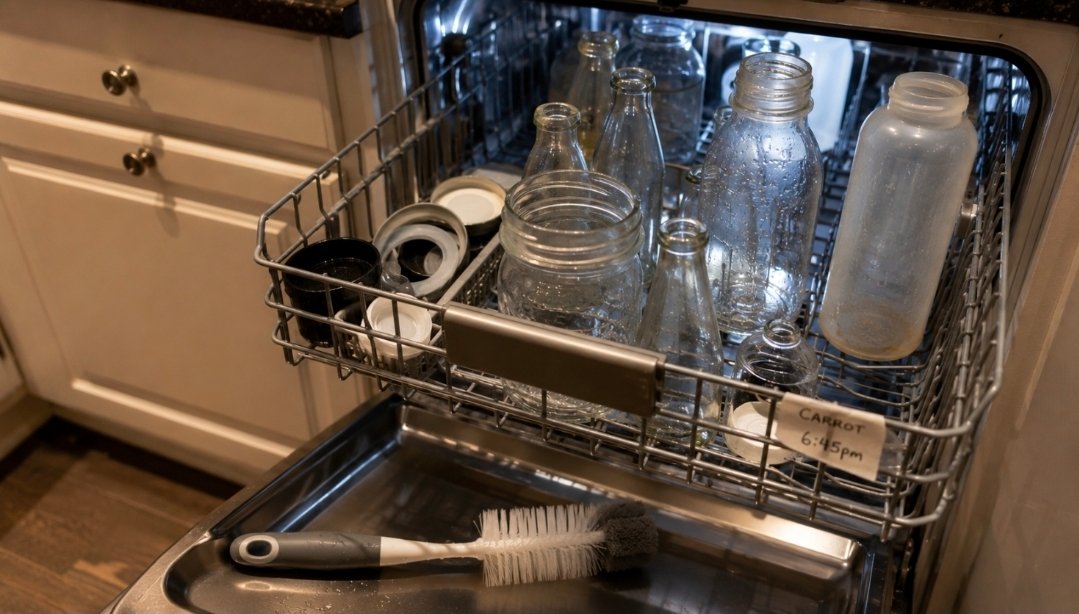
The full juicer cleaning routine is at how to clean a juicer. Bottles need their own brush, especially narrow-neck bottles and jars with shoulders.
The lid needs as much attention as the glass. Remove silicone seals when the lid allows it. Wash the thread. Dry the seal fully before putting it back. The bottle is not ready until the lid smells clean as well.
Smell buildup is easy to miss. Warm water, baking soda, and a proper brush are the first things to try when a lid or bottle still smells. Let the bottle and lid dry fully before putting them away.
Pulpy juice leaves more residue in bottle necks. If every bottle ends up with heavy pulp under the shoulder, the juicer may need looking at — best juicer for juice fasting has some alternatives if your juicer is playing up.
The best bottle is the one that gets the basics right. It seals tightly, cleans properly, fits one serving, and does not smell after drying. That is the one to keep using.