
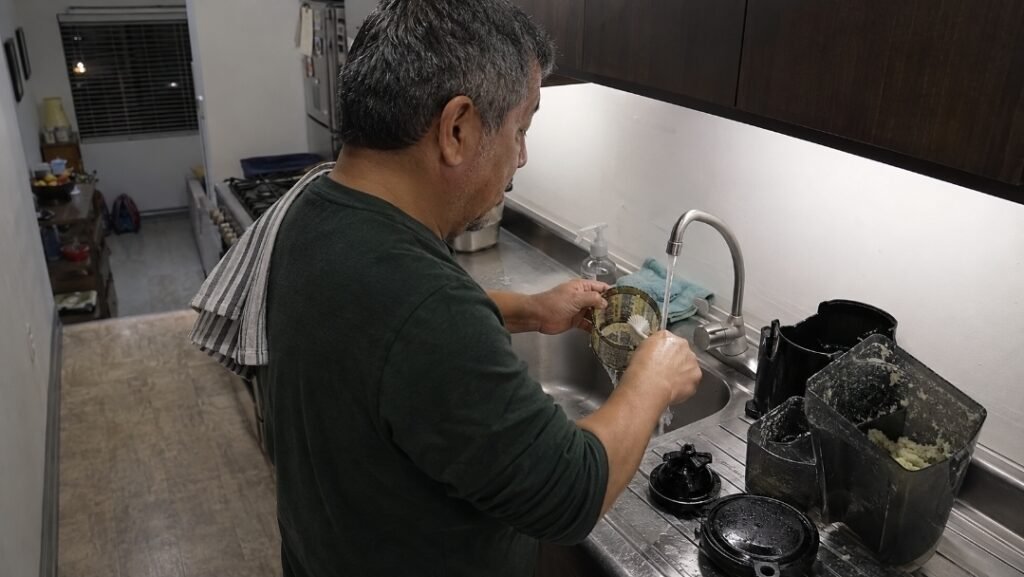
Most juicers end up back in the cupboard within a month — not because juicing is hard, but because nobody wants to face a mesh full of dried celery fibre after a long day, and the machine sits there getting harder to clean every time it gets skipped.
Where the machine sits and how easily the wet parts reach the sink also matter; the juicer setup guide covers that before daily use begins.
Once the juice is bottled, the component parts need rinsing while the pulp is still loose. What happens to the juice after that is a different matter entirely — fresh juice storage picks up from there.
NOTE: How long this actually takes
Done straight after juicing: 3 minutes. Left until the pulp dries: 15 minutes of scrubbing.
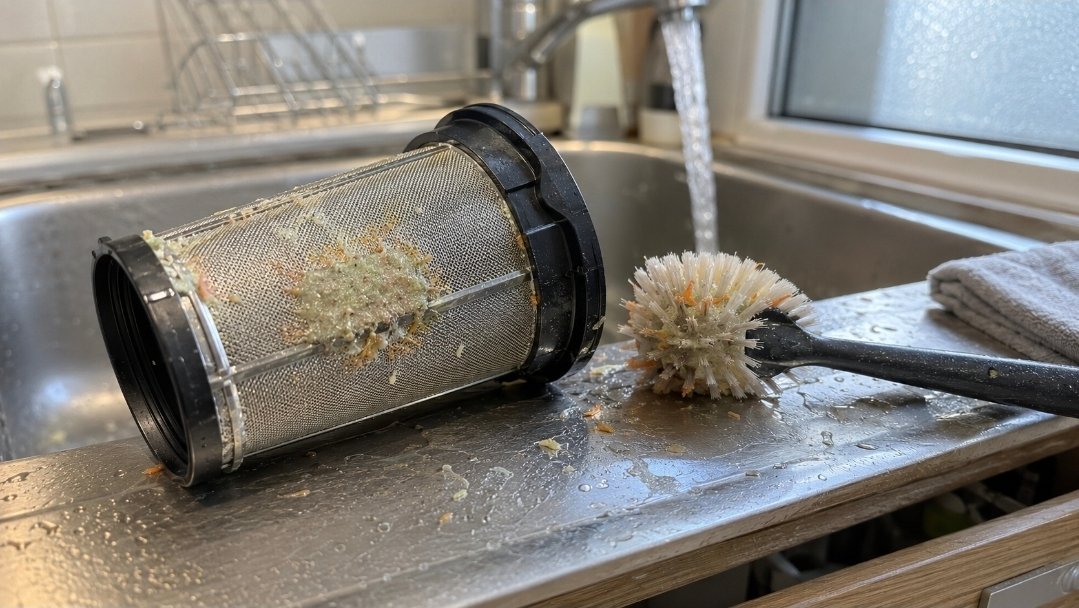
Clean It Before the Pulp Dries
At 8pm, after the last juice, the machine looks like an hour’s work when it is not. The pulp is still wet, the screen is coated, and the fibres still come off under running water. The pulp bin is full but still loose, and it comes out in one pull provided the liner is still sitting right.
Leave the same parts until later and the pulp sets into the screen — it dries in the holes, sticks inside the chute, and collects around the spout. The brush has to scrape instead of lift the fibres away. Corners that would have rinsed clean now need picking at instead.
Rinse the screen before you drink the juice, while the residue is still soft enough to come off under the tap.
ACTION: Rinse the screen first
Empty the pulp bin, then screen straight under the tap before you sit down with the juice.
A Partially Blocked Screen Changes How the Next Juice Pours
A quick once-over under the tap leaves the screen partially blocked — the mesh holds fine fibres that a rinse alone does not shift, and those fibres cut the amount of juice you get and leave the pulp wetter than it should be. The bowl, lid, and chute look just as dirty but they rinse clean in seconds. The screen is the only part that needs the brush.
Brush both sides under running water. Use short strokes across the mesh, then turn the filter screen and brush across the holes again. Do not just scrub the stained area. Pulp stays in clean-looking holes too, especially after celery, ginger, leafy greens, and apple skins.
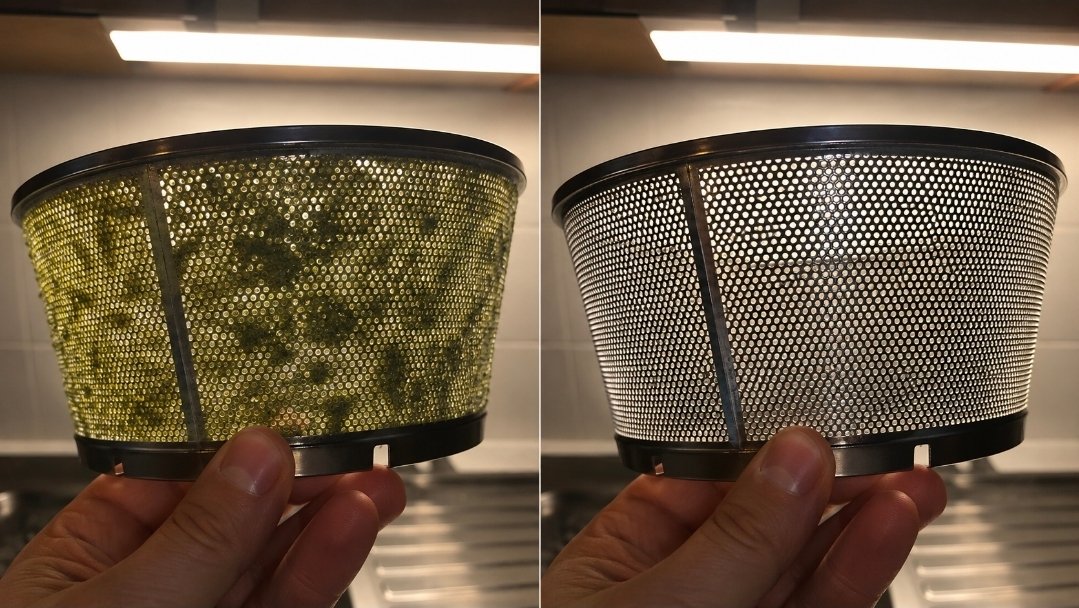
Hold the screen toward the sink light. A clean screen looks even across the mesh. Where residue is still sitting in the holes, the light does not come through — that patch looks flat and dull against the rest. One blocked strip means less juice reaches the jug because it moves more slowly through that section of mesh.
Not every screen needs replacing. A screen with trapped fibres, dull patches, or stained mesh needs scrubbing both sides and a soak. Bent mesh, cracked plastic, split seams, or holes that no longer line up evenly are different — that is not a cleaning problem.
The Quick Cleaning Routine Starts With the Pulp Bin
Clean the parts in the same order each time so nothing gets missed and the screen does not sit dripping while you get to the chute and bowl.
- Unplug the juicer and take off the removable parts.
- Empty the pulp bin into compost or the waste bag. If the liner has slid down, pull it out before the pulp spreads into the corners.
- Rinse the filter screen under running water straight away.
- Brush the screen until the holes look clear when held to the light.
- Rinse the chute, bowl, lid, spout, blade or auger housing.
- Wash all the contact parts with dish soap.
- Leave every part spread out on the rack until fully dry before reassembling.
Wipe around the controls and anywhere juice has landed on the base. Keep water away from the motor housing. A damp cloth clears wet splashes before they dry around the controls.
Bottle necks, lids, and seals are not a juicer problem — if the smell is coming from the bottle rather than the machine, best bottles for fresh juice is the right place to start.
The Dishwasher Cleans Parts, Not the Screen
Use the dishwasher only for parts your manual lists as dishwasher-safe. Even then, the screen still needs brushing. A dishwasher makes the parts look clean but does not clear fine pulp from the mesh.
The dishwasher works for parts that have already been rinsed: lids, bowls, cups, and pulp bins. Dried pulp in corners will not shift without it. Pulp trapped near a spout or gasket needs the brush directly on it — the dishwasher cannot reach that spot.
Wash by hand after celery, ginger, leafy greens, turmeric, beetroot, or anything fibrous — the dishwasher will not clear those fibres from the mesh.
Dishwasher heat also leaves some plastic parts smelling stale when they are put away before they are fully dry. Let parts air dry fully after any wash. A part that feels dry on the outside still holds moisture under a seal or inside a folded rim.
Smell Hides Under Gaskets, Spouts, and Closed Lids
A juicer smells when pulp residue stays trapped and damp parts are closed inside the machine — the open bowl rinses clean in seconds, but pulp residue sits under the gasket, around the spout, under the lid, and near the pulp outlet, and that is where the smell builds.
Pull out the rubber seal on models where it comes free. Rinse the groove, wipe the seal, and leave both pieces separate on the rack. The smell does not hit until the lid comes off or the gasket is pulled out.
The same problem appears when parts go back together still damp. Wet parts closed together make the next session smell stale before the first piece of produce goes through. Leave the lid off, keep the spout open, and let the screen dry upright.
If the smell remains, the gasket, spout, pulp outlet, screen rim, and underside of the lid are the places to go back to. Rinse the brush and stand it bristles-up in a pot or against the tap, not flat in a wet sink.
Clear the Sink Before Juicing So Cleaning Takes Less Time
Fast cleaning starts before the first piece of produce goes in — sink cleared, brush beside the juicer, waste bag or compost bin open, and space left on the rack for the screen, bowl, chute, lid, and pulp bin.
Keep cut produce and washed greens away from the draining board — everything coming off the juicer needs somewhere to land. Washing and chopping is its own job before any of this, and how to prep produce for juicing is where that sits.
When several juices are planned back to back, the brush and waste bag need to be ready before the first bottle is filled, not after the last one. Running several bottles from one session is a different kind of planning — batch juicing for a juice fast handles the timing and bottle count side of that.
The juicer you buy changes how long cleaning takes, but it does not replace rinsing the screen straight away. Every juicer still needs components that come apart cleanly, a screen you can reach, and a spout that does not trap pulp. If the machine is the problem rather than the cleaning, best juicer for juice fasting is where that question belongs.
Fill the bottle while the machine is still wet — dried pulp is a different job entirely.