
Budget Juice Fasting: Spend Less Without Switching to Sugary Juice
A container of berries already soft at the edges, a chilled fruit juice from the cold section, a bag of lemons bigger than the fast requires, and a bunch of celery and a bag of carrots that nearly got left back on the shelf when the register showed the damage. Of everything in that basket, the celery and the carrots are the only things that should have reached the checkout. Everything else is where the spend went wrong.
For details on the full shop, check juice fast shopping list, but the cost question here is more specific: which low cost ingredients still give you juice that lasts the day. Cheap juicing and decent juicing are not opposites. The fast goes wrong when cheap means swapping the vegetable base for diluted juice, or sweet bottled blends — not when it means buying plain carrots instead of expensive extras.
The Budget Mistake Is Removing the Vegetable Base, Not Buying Cheap Produce
A basket built around carrots, celery, and cucumber costs less per bottle than one built around fruit, cold-pressed additions, and store-bought juice cartons. At the register the fruit-heavy basket looks like a proper fast. It is not.
By day two, the juice runs thinner, the afternoon is harder to get through, and the cheap bottled shortcut picked up on the way out of the supermarket is already gone. The receipt total looked good. The fast did not make it through the second afternoon.
Fresh vegetable-heavy juice supplies the liquid and body a juice fast runs on in a way that fruit-heavy or diluted juice does not. The mistake is removing the vegetable base, not buying cheaper produce.
Where to Spend and Where Not To
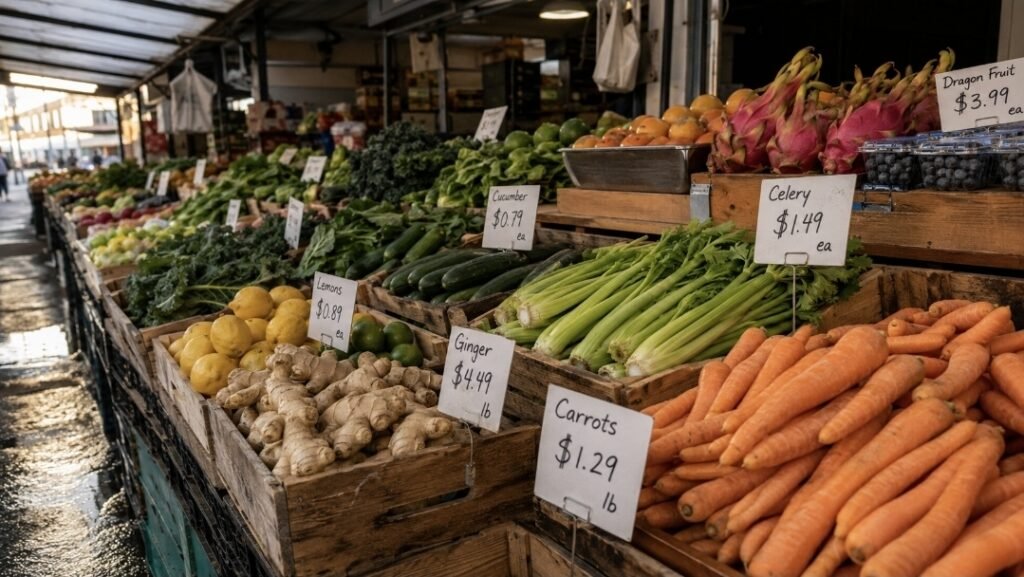
Carrots are the highest-yield budget vegetable for juice fasting. A bag produces more usable liquid than the same weight in berries, stone fruit, or most exotic additions, and at a fraction of the cost per bottle. A pound of carrots yields roughly 8–10oz of juice; a pound of berries yields around 3–4oz. They also last. The carrots still look firm in the drawer on the third morning while the expensive fruit has bruised and the berries have gone soft in the container.
Celery supplies liquid volume that fruit cannot match at the same price point. A bunch of celery runs through the juicer and produces a significant amount of clean, thin liquid that forms the base of most green blends without pushing the daily spend up. It holds in the fridge for several days without going soft, which means it is still usable on day three of a fast where cut fruit would already be past its best.
Cucumber does the same job as celery from a liquid standpoint. It juices high, costs low, and adds a clean taste that balances heavier vegetable blends.
Loose greens — kale, romaine, spinach — add depth to the juice when bought in a larger bag and used steadily across the fast. The saving only holds when the whole bag gets used. A large bag pushed behind the carrots in the drawer is wet at the bottom by day three and half-wasted. Buy the amount that fits the fast, not the amount that looks like good value per ounce.
Ginger earns its place in a budget shop because a small amount goes a long way. A single piece the size of a thumb changes the taste of several bottles. The ginger root bought on day one should still be almost untouched after three bottles — a small slice is enough each time, which makes it one of the few additions that genuinely justifies its cost per use.
Berries are the opposite. They produce very little liquid for what they cost, soften before the second juice of the day is made, and what comes through the machine is a small amount of sweet, thin liquid that adds almost nothing to the bottle’s volume. A container of berries that cost four or five dollars at the store might produce a quarter of what the same money spent on carrots would yield.
Exotic fruit — mango, papaya, pineapple bought in any quantity — raises the total spend quickly without filling enough bottles for a full day. The juice yield is low relative to the cost, the sugar content pushes the blend sweet, and the fruit does not last more than a day or two once bought. A large bag of lemons bought because it looked like a deal sits half-used on the counter by the time the fast ends. Cold-pressed shots and powders cost more per serving than the plain produce for several homemade bottles combined and add nothing to juice volume.
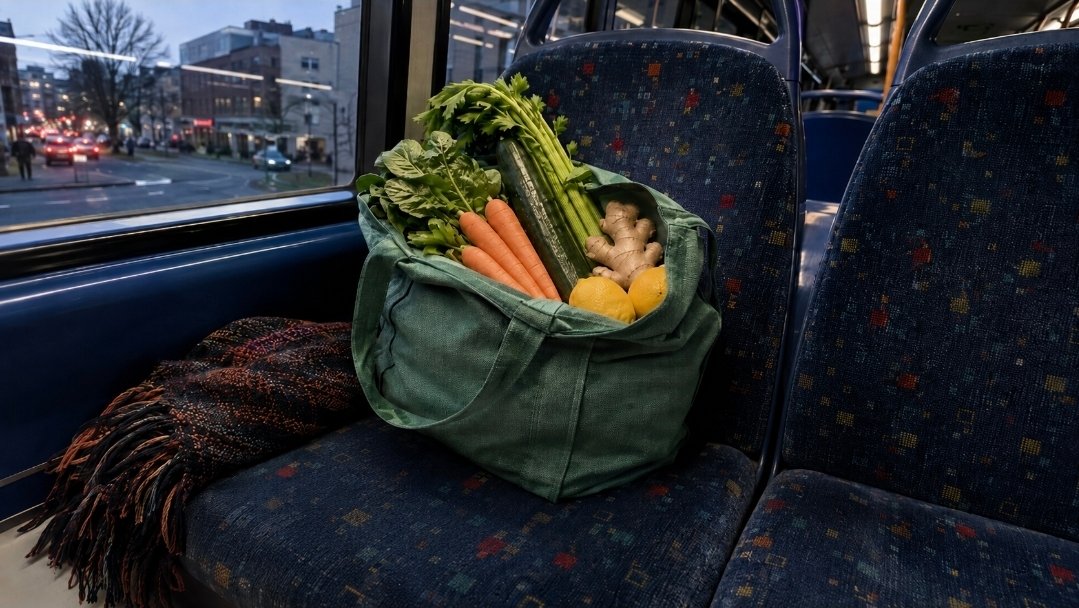
The less exciting basket: carrots, celery, cucumber, greens, a small piece of ginger, one or two lemons — makes stronger juice for less money than any combination of premium extras. Build each juice around those vegetables, keep fruit small and deliberate, and vary the citrus or the greens slightly so the bottles do not taste identical across three days. The cost stays low because the high-yield vegetables are doing most of the work.
Buying organic across the whole shop pushes the bill up fast and forces the wrong trade-off — dropping the vegetable base to keep within your budget. Make that decision ingredient by ingredient with organic vs non-organic juicing rather than applying it across the whole shop by default.
Supermarket Juice, Diluted Juice, and Fruit-Only Blends
Supermarket juice costs less per liter than homemade fresh juice at first glance. The comparison falls apart when the fast runs more than a day. A carton that looks cheap on the shelf does not last a full day the way fresh vegetable juice does — the volume feels similar but the fast does not hold in the same way. Most supermarket juice is pasteurized, so check pasteurized vs fresh juice fasting before treating cartons as a budget substitute for fresh vegetable juice.
Diluted juice — fresh juice watered down to make it stretch further — removes the point of making it fresh. A bottle that is half water costs less and does less. The juice goes further in the sense that there is more of it, but what the fast runs on is fresh vegetable liquid, not volume for its own sake. Watering it down does not reduce cost in any meaningful way once you account for the extra juice needed to get through the day.
Fruit-only blends bought as a replacement for vegetable-heavy fresh juice are sweeter, lighter on vegetable volume, and gone faster than the carrot-and-celery base they replaced. They run out quickly because they do not carry the same volume of usable liquid per bottle, and they push the blend sweet in a way that makes the fast harder to sustain across the day.
None of these substitutions save money on the fast. They save money on the receipt and spend it on a fast that does not hold up. Waste costs as much as bad ingredient choices, so check how to prep produce for juicing and batch juicing for a juice fast before the shop gets bigger than the fridge can hold.
A budget juice fast is not built from the cheapest liquid. It is built from the cheapest fresh produce that still makes juice worth fasting on.