
Organic vs Non-Organic Produce for Juicing: What Matters Most?
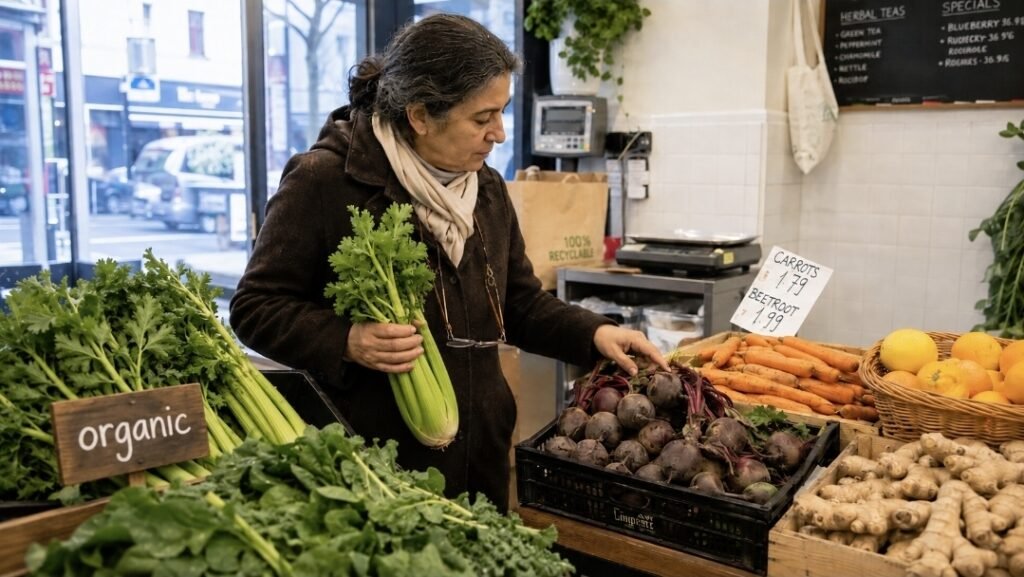
Organic produce matters for juicing, but not equally for every item you buy. A bunch of organic celery and a bag of non-organic carrots in the same cart is not a contradiction — it is the only way to spend the organic budget sensibly when money is tight.
Unfortunately the juice fast shopping list does not go into which ones are worth paying organic prices for. Treating them all the same way spends your budget where it matters least and does not always improve the finished juice.
The Practical Answer
Organic purchases matter more for some produce than others. The split comes down to what goes into the juice and what gets removed first. With firm produce like carrots and beets, scrubbing removes what was on the surface before juicing — pesticide residue, sprays, and handling residue come off with the outer layer. With celery, cucumber, apples, and leafy greens, nothing comes off first. Whatever was applied to the crop during growing goes into the juice directly, because the outer surface goes straight in with everything else.
| Buy Organic First | Non-Organic Is Fine |
|---|---|
| Celery | Carrots |
| Leafy greens (kale, romaine, spinach) | Beets |
| Cucumber | Citrus (lemon, lime) |
| Apples | Ginger |
When Organic Makes More Sense
Celery goes into the juicer in larger amounts than almost any other ingredient on a juice fast. None of it gets peeled away before juicing, which means whatever is on the outside goes straight into the juice. Celery ribs are still gritty at the base after the first rinse — that grit is on the surface. So, organic celery makes the strongest case for spending extra.
Leafy greens — kale, romaine, spinach — fall into the same category. They are used whole, rinsed rather than peeled, and go through the juicer in quantities that add up across the fast. Greens leave a ring of sand in the sink after washing — there is more exposed surface going into the juicer chute than the weight suggests. Organic greens make sense here for the same reason as celery.
Cucumber is put through the juicer whole — it is not peeled or trimmed when used as part of the liquid base. Apples are juiced with the skin on as well. Neither ingredient should take priority over celery or leafy greens, but both go in with the skin on and that puts them above roots, citrus, and ginger in the organic buying order.
When Non-Organic Is Fine
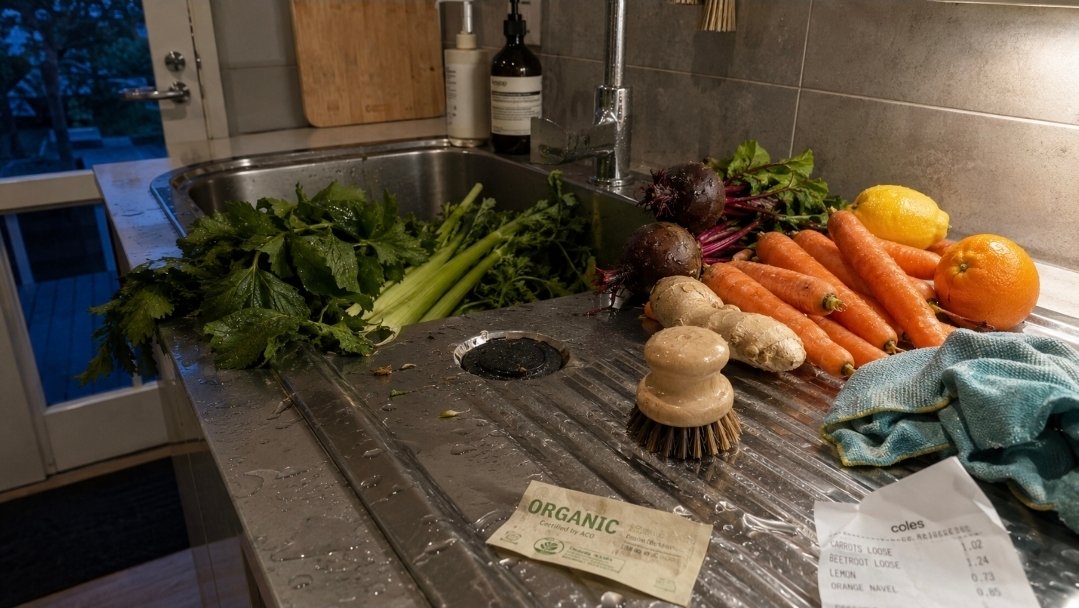
When you scrub carrots and beets before juicing, the pesticide residue on the surface comes off with the outer layer. That does not happen with celery or greens — nothing comes off before they reach the juicer. That difference is what moves carrots and beets down the organic priority list.
Citrus peel does not form the juice base or any volume at all. A lemon or lime goes in to take the sharp edge off the juice, not the peel, and the peel itself rarely gets juiced. The juice comes from the flesh, not the outer skin. Used this way, non-organic citrus is a lower-risk non-organic choice.
Ginger goes in as a small piece — a thumb-sized amount across several bottles. That puts it low on the organic spending list unless you are using a lot of it every day. Kale, romaine, cucumber skin, and apple skin all go in at far greater volume, and they are the better place to spend organic money first.
Washing Non-Organic Produce Properly
That non-organic choice only holds when you actually wash it: firm produce scrubbed under running water, leafy produce rinsed more than once because one pass under the tap does not get into the folds. Wash firm produce properly under running water and rinse leafy produce thoroughly; how to wash produce before juicing gives you the full washing regime, and how to prep produce for juicing covers the rest of the prep.
On the whole, the non-organic choice holds until the 6am wash gets reduced to a quick rinse, celery ribs still feel gritty at the base, and leafy greens go straight to the machine with dirt lodged between the leaves. At that point the non-organic choice and the unwashed choice are the same thing.
Where to Spend Your Organic Budget First
If the organic budget does not extend to every item you buy without the cost running away, look at how much a juice fast costs before paying organic prices across the board. Spend first on celery, then leafy greens, then cucumber and apples, then carrots and beets, with citrus and ginger last. That keeps the organic spend on produce that goes through the juicer intact and with the skin on, rather than produce that gets scrubbed, peeled, or measured out in small pieces.
Buying everything organic seems like the cleaner option in the store. But a mixed basket with organic greens and non-organic roots, washed properly, uses the organic budget better than an all-organic shop that forces the vegetable base to shrink. For the wider low-spend shop, keep budget juice fasting in mind, but spend organic money on celery and greens before beets and carrots or the budget gets used up on the wrong purchases.
Don’t Let Perfect Stop You Starting
A fast that does not start because the shop is not entirely organic is not a more careful fast; it is no fast at all. Fresh vegetable juice made with imperfect items still counts when the decision is sensible: organic celery or greens where the budget allows, non-organic roots scrubbed hard, and non-organic greens rinsed until the residue is cleaned. That basket is not all-organic, but it gets the first juice made.
Start with the produce the shop has, spend organic money on the items that go into the juice with the skin or leaves intact, and wash the rest before it goes in. It is a workable juicing basket when the washing is done and the organic money lands on the ingredients where it changes what reaches the juice.