

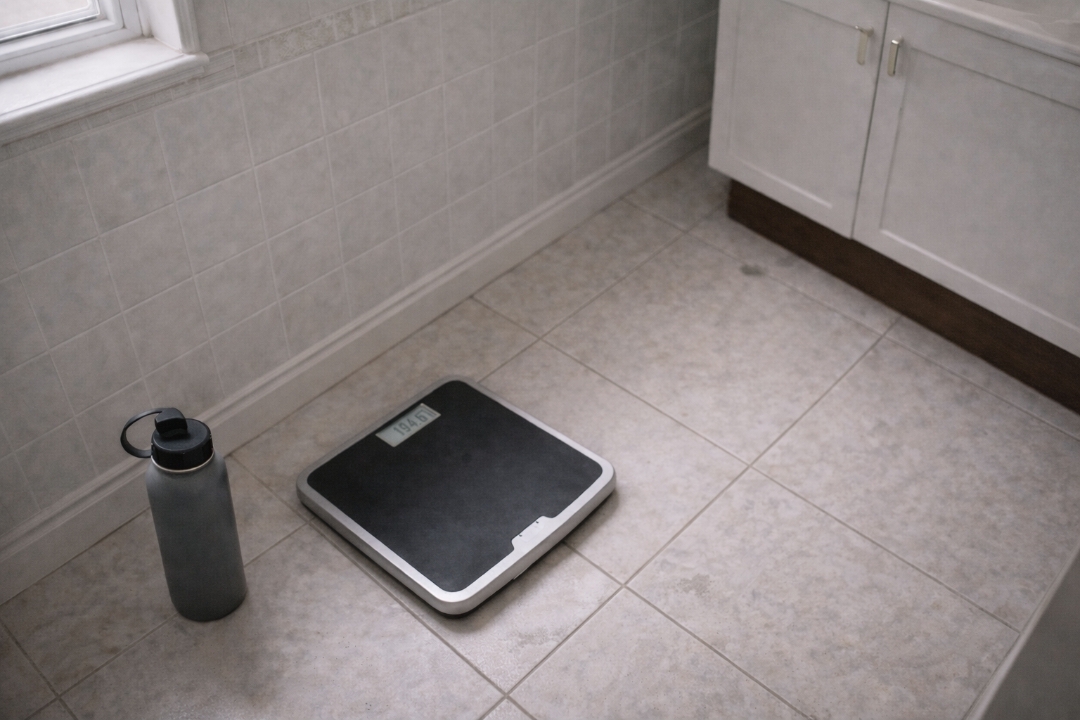
The scale drops during a juice fast, then solid food comes back and the number jumps. That jump kills a lot of momentum because it feels like the fast stopped “working” the moment it ended. Most of the time, that is not what happened. The early rebound is usually food, water, and stored fuel returning — not instant fat gain. If you’ve already read the broader guide on juice fasting for weight loss, the same rule applies here: the lowest number is not always the meaningful one. What matters is how you refeed, what happens over the next few days, and whether the scale settles or keeps climbing.
Why Weight Regain Happens After a Juice Fast
Weight regain after a juice fast is common. That does not automatically mean body fat came back. Several things happen quickly once solid food returns, and all of them can move the scale before any meaningful fat gain shows up.
The first is glycogen refill. During the fast, stored carbohydrate gets used down. Once you eat normally again — especially if carbohydrates come back fast — those stores refill. Water comes back with them. That alone can move the scale within a day or two.
The second is simple food volume. During the fast, there is very little solid mass moving through the digestive system. Once meals return, there is immediate physical weight in the stomach and intestines again. That shows up fast and has nothing to do with body fat.
The third is appetite overshoot. After several days of juice, food often tastes stronger, looks better, and feels easier to keep eating than expected. Portions that would normally feel moderate can feel strangely small. That is where rebound starts to turn from normal restoration into actual overconsumption.
So the short version is this: a quick jump is usually restoration. Fat regain happens when that first jump is followed by several days of eating above your needs.
What the First 48 Hours Usually Look Like
The first 48 hours after a juice fast are where most of the visible rebound happens. This is the stretch that spooks people, and it is also the stretch most likely to be misread.
The first meal often feels controlled. You eat something light, chew slowly, and it does not feel excessive. The scale may even stay close to the post-fast low that day. Then the next morning or afternoon is where things shift. Stored fuel starts refilling, water follows, food volume is back in the system, and appetite is often stronger than expected. That is why the second day back on food is often where the jump becomes obvious.
It is common to see a few pounds return quickly. That does not automatically mean fat. The important question is not whether the number rose. It is whether it levels off once eating normalizes or keeps climbing because the refeed turned into several days of overeating.
When the Rebound Turns Into Real Fat Gain
Fat regain rarely comes from one careful meal or even one larger meal. It comes from the pattern that follows.
A celebratory dinner can move the scale through water, sodium, and food volume. That looks dramatic, but it usually settles. What adds actual fat is running a surplus for several days in a row because appetite is loud, portions drift upward, and the rebound gets mistaken for “normal eating” again.
This is where people get caught. They do not think they are overeating. It looks small from the inside. A second serving because the first meal did not feel like enough. Snacking while cooking. Dessert because the fast is over. Restaurant food the next day because cooking feels like too much. None of it feels extreme in isolation. Across five to seven days, it adds up.
That is why the first week matters more than the first meal.
Why Appetite Feels Different After a Fast
Appetite rebound is not the same as ordinary hunger, and if you do not recognize that, it is easy to think the body “needs” more food than it actually does.
After several days without solid food, food can taste stronger and feel more rewarding. Meals do not always produce the same clean “done” feeling they usually would. You can finish eating and still feel some pull toward more food, not because you are empty, but because appetite is still switched on. If that part tends to trip you up, read appetite after a juice fast; the older guide on juice fasting hunger gives useful context for the fasting side.
That is why breaking a juice fast can feel surprisingly difficult even when the meal itself was reasonable. The issue is not just hunger. It is that food stays appealing longer than expected. Fullness can lag. Portions that look normal on the plate can disappear quickly. That is also why people describe the first day or two back on food as the point where things can quietly go wrong.
If appetite rebound tends to hit you hard, it helps to expect it instead of treating it like a sign that the fast left you depleted. Appetite often settles once regular eating resumes. The danger is reacting to that first surge as if it needs to be followed wherever it goes.
How Starting Conditions Change the Rebound
The rebound does not look the same for everyone. What you were eating before the fast changes what happens after it.
If your baseline diet was high in carbohydrates, sodium, restaurant meals, snacks, or alcohol, the first few days back on food will usually produce a bigger visible swing. A person coming off bread, pasta, desserts, and takeout is more likely to see stored fuel refill fast, water come back fast, and the scale respond fast.
If your usual eating is already simpler, lower in sodium, and more moderate in portion size, the rebound tends to be smoother. The same is true when the break is controlled and the first two days are built around simple meals instead of a “finally I can eat again” mindset.
This is why two people can break a fast in broadly similar ways and see very different scale movement. The rebound is not just about the fast. It is also about what the body is returning to.
How to Break a Juice Fast Without Regaining Weight
The main job is not to keep the scale frozen at its lowest number. That is not realistic. The job is to keep the rebound from turning into several days of overeating.

Start with smaller, simpler meals than instinct wants. Not tiny meals that leave you unsatisfied and send you scavenging an hour later. Just moderate ones that give the body time to catch up. Vegetables, fruit, soup, potatoes, oats, eggs if you eat them, yogurt if you tolerate it, fish or lean protein if that fits how you eat — plain food works better than rich food here.
Keep the first 48 hours boring on purpose. The more rewarding and hyper-palatable the food is, the easier it is to overshoot before fullness lands. The first few meals are not the time for restaurant food, dessert, alcohol, heavy sauces, or the high-fat-plus-high-carb combinations that make portion control almost impossible.
Use meal spacing instead of grazing. Grazing is where rebound often hides. A planned meal pattern keeps the day readable. Constant “small” eating after a fast is rarely small by the end of the day.
Protein helps. It slows the meal down and makes it easier to stop once the edge comes off appetite. That matters more in the first few days back than people expect.
And do not treat the first big appetite wave as proof you need to keep feeding it. Eat the meal, wait, and let the body register it. A lot of overeating after a fast happens in the first fifteen minutes after a meal should have been enough.
Common Mistakes That Lead to Regain
Jumping straight into big carbohydrate meals. This refills stored fuel quickly and brings water back with it. Combined with large portions, it can also push calories higher than intended.
Going too light, then overeating later. This is one of the most common patterns. Someone breaks the fast with a token meal, feels virtuous for an hour, then appetite surges and the next meal gets much bigger.
Reward mentality. The fast ends, so the meal becomes a celebration. Then the next meal becomes one too. That thinking can turn one indulgence into a whole weekend of rebound.
Grazing all day. Repeated bites feel harmless because there was no single “big” meal. But by the end of the day, total intake is often well above what a few structured meals would have been.
Misreading the first scale jump. The number rises, panic kicks in, and the reaction is emotional instead of practical. Some people respond by giving up and eating whatever. Others crash back into unnecessary restriction. Neither helps.
What Regain Is Normal (And What Isn’t)
Normal regain looks like this: the scale jumps within the first 48 hours, then levels off once eating becomes steady. The number is higher than the lowest post-fast reading, but it does not keep climbing day after day.
Concerning regain looks different. The scale rises, then continues drifting upward across five to seven days or more. Portions are still loose. Appetite is still running the day. Meals are getting richer instead of steadier. At that point, you are no longer just seeing restoration. You are seeing continued overconsumption.
A simple way to read it:
- Fast jump, then plateau: usually water, food volume, and stored fuel coming back
- Gradual rise across several days: usually a sign that intake is still above your needs
The goal is not to keep the post-fast low forever. The goal is to reach a stable number once normal eating is back.
What to Do If the Scale Jumps Right Away
Do not react to the first spike like it is a verdict. Give it 48–72 hours before deciding what it means.
Keep meals moderate. Keep them plain. Keep spacing regular. Drink water. Avoid the “I ruined it” spiral that leads to a second bad day after a normal rebound. The scale is often telling a temporary story in the first two days back on food.
If the number rises sharply after one heavier meal, that still does not prove fat gain. A single restaurant dinner, dessert, or salty meal can move the scale fast. What matters is what the line does next. If it settles, the rebound was mostly restoration. If it keeps climbing because the next few days also go off, that is when you correct.
What Stabilization Actually Looks Like
Stabilization does not mean the number keeps dropping. It means the scale rises from the artificially drained post-fast low and then holds within a relatively tight range for several days.
That stabilized number is usually higher than the lowest weight seen during or immediately after the fast. That does not mean the fast failed. It means the body is no longer in a temporarily depleted state.
A lot of frustration comes from treating the lowest number as the goal instead of the plateau that holds once normal eating resumes. The useful number is not the most dramatic one. It is the one that proves intake and appetite have settled down again.
FAQ
How much weight comes back after a juice fast?
Some rebound is very common. A quick return of a few pounds is often stored fuel, water, and food volume rather than body fat. The important part is whether the number stabilizes or keeps climbing.
Can you gain fat from one big meal after a juice fast?
One big meal can move the scale quickly, but meaningful fat regain comes from eating above your needs for several days, not from one moderate or even one fairly heavy meal alone.
How long does rebound weight last after a juice fast?
The biggest visible rebound usually shows up in the first 48 hours. By about a week, most of the water and food-volume shifts have already played out. After that, the line mostly reflects how you are eating.
Why does appetite feel so strong after breaking a fast?
Food often tastes stronger and feels more rewarding after restriction. Fullness can also lag for a bit. That combination makes it easy to keep eating after the meal should have been enough.
What is the best way to break a juice fast without regaining weight?
Keep the first few days simple. Use moderate portions, regular meals, enough protein, and avoid rich, high-sugar, high-fat meals that make overshooting easy. The goal is steady refeeding, not a perfect zero-rebound fantasy.