
Can You Freeze Fresh Juice? What Changes and How to Do It Properly
Once you make several days of juice, the whole setup changes. Extra bottles start stacking up, and “I’ll just make more” starts causing problems. The basics of keeping fresh juice in the first place are at fresh juice storage.
Not every fast fits neatly into a two-day fridge window. A five-day fast, a week of batch juicing around a busy work schedule, or simply making a larger session on Sunday to cover the week ahead — all of these push past what fridge storage can cover.
For how long fresh juice actually keeps in the fridge, the how long fresh juice lasts article covers in detail. Freezing starts when the fridge has done all it can.
What Freezing Does to Fresh Juice
Freezing fresh juice works, but the texture and taste both change. After thawing, it is still drinkable, but the just-made taste is gone.
The first thing you notice is the flavour. Stronger juices hold up better than light, delicate ones, but every thawed bottle loses a bit of that fresh snap.
Separation looks worse after thawing. The pulp settles at the bottom and watery juice sits on top, and the bottle can look unappetising.
Bright juices go duller, greens turn murkier, and darker juices lose their colour.
The juice feels different when you drink it. Fresh juice has more bite at the end of the sip. Thawed juice loses that thicker fresh-pressed feel, sometimes slightly watery, especially after it has been shaken and left sitting again.
The foamy top does not come back properly after freezing.
Freezing buys time. You pay for it in taste and texture.
How to Freeze Fresh Juice Without Ruining It
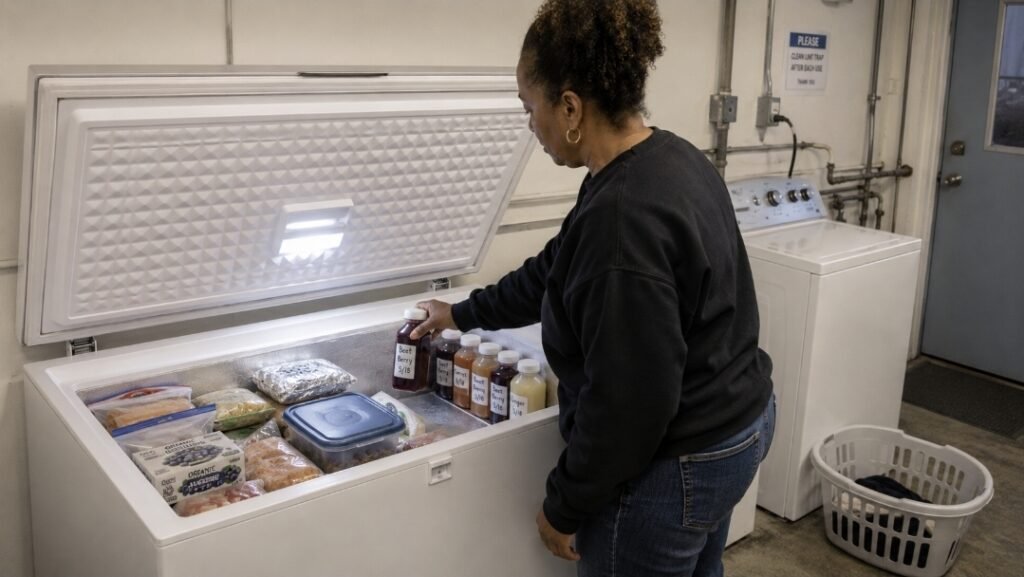
The bottle has to be freezer-safe. Not every glass bottle is. Standard glass bottles are not made for the pressure of freezing — they can crack at the shoulder – the curve below the lid – when the juice expands. Borosilicate glass is safer than ordinary glass for freezing. If you are using plastic, look for a snowflake symbol on the base — that marks it as freezer-rated. Wide-mouth bottles make it easier to leave a gap at the top and check it before sealing.
Leave 2–3cm of space at the top. Juice expands as it freezes. The first time a bottle is filled too high, the shoulder pushes upward and the lid starts looking tight before the juice is even thawed.
Seal the bottle tightly, but a tight lid does not fix overfilling. Expansion still needs somewhere to go.
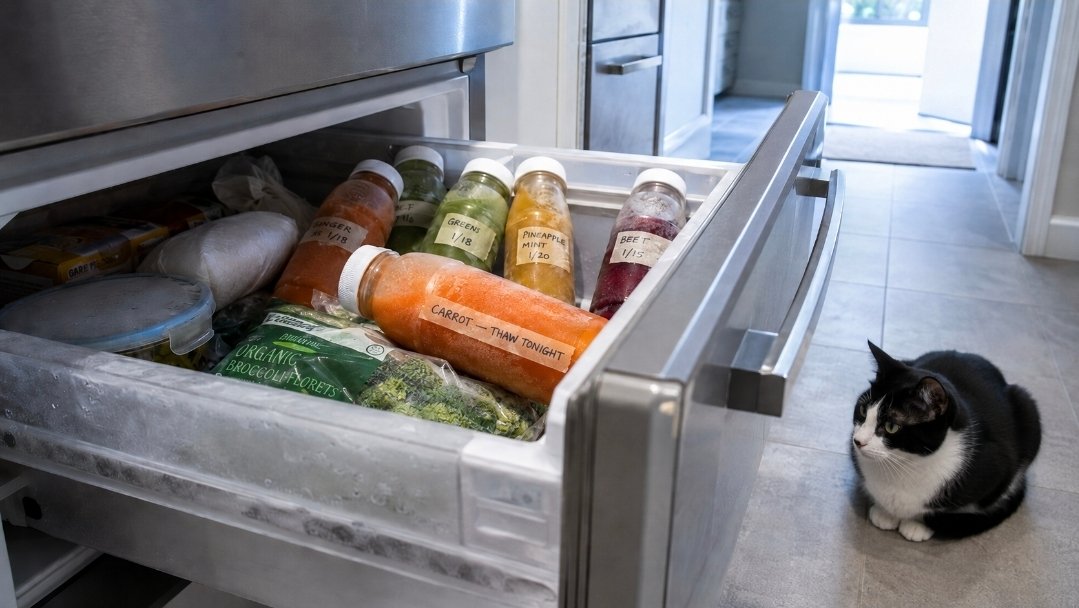
Label the bottle with the date and contents before it goes into the freezer. Once the bottles are frozen, dark juices start looking more alike.
Freeze as soon as possible after juicing — not after an hour on the counter. Freezing preserves the juice you made; it will not make old juice taste new.
If the bottle type is the thing to fix, best bottles for fresh juice compares different options — for freezing the only thing that matters is whether it has room to expand safely.
When the question becomes how many bottles to make and when, check outbatch juicing for a juice fast.
ACTION: Leave room in the bottle before freezing
Empty space at the top is not optional. Juice expands in the freezer, and a full-to-the-lid bottle is not freezer-ready.
How to Thaw Frozen Juice Without Making It Worse
Thaw frozen juice in the fridge. Not on the counter. Not beside the kettle. Not in the microwave.
How long it takes depends on the bottle size. A 250ml bottle moved into the fridge in the evening is usually fully thawed by morning — around eight to twelve hours. A 500ml bottle needs eighteen to twenty-four hours. Anything larger needs closer to two days. If the fast starts tomorrow morning and the bottle needs to be ready, it goes into the fridge tonight, not in the morning.
Counter thawing warms the outside while the centre stays frozen. That gives you a half-thawed bottle sitting too warm for too long.
The microwave ruins the drink quickly. It heats unevenly, changes the taste, and leaves you with warm patches in a drink that should be cold.
Shake hard once it has thawed. A quick swirl is not enough. A proper shake.
Once thawed, keep it cold and drink it that day. Do not refreeze it. It does not go back into the freezer.
WARNING: Do not thaw it on the counter
The outside warms while the centre stays frozen. Thaw in the fridge, then drink it cold within 24 hours.
Which Juices Come Back Best After Freezing
Beetroot freezes well because it keeps colour and body. It still has depth after thawing, especially compared with lighter juices.
Carrot still works but loses some of its fresh sweetness. It becomes more watered down and less bright than fresh carrot juice.
Green juices lose some bite and the grassy smell all but disappears — parsley, wheatgrass, and spinach worst of all.
Citrus changes the most. Lemon, orange, grapefruit, and pineapple lose sharpness after freezing — the zing does not come back.
Celery freezes better than it looks. It separates heavily, then comes back enough after shaking. The consistency is more watery than fresh celery juice.
Ginger holds up better than citrus. It still has heat after thawing, but the sharp kick fades.
If you are freezing several bottles for a longer fast, beetroot and carrot are the most reliable choices to freeze — they lose less flavour and become better after thawing. Citrus-heavy blends and delicate green juices are better made fresh on the day or the day before and kept in the fridge rather than frozen. Freeze the robust ones, refrigerate the delicate ones.
NOTE: Separation is expected after thawing
Thawed juice that separates does not mean it has gone bad. Mix it properly first; judge it after it looks mixed again.
When Freezing Beats the Fridge
Freezing is worth doing when next-day storage is not enough: workdays, travel, longer fasts, or when you have purchased more produce than the next two days need.
The freezer keeps extra juice out of the waste bin without stretching bottles past their best.
Freezing also helps when you only have one clear time to juice. That is better than juicing again late at night just to keep up.
For a three-day fast, keep it simple: make the bottles in one session, put day one and day two in the fridge, and put day three straight in the freezer.
Before filling the freezer, work out the daily bottle count — how many juices per day on a juice fast — then freeze only the extras.
When Freezing Fresh Juice Is the Wrong Move
Juice that is already past its best should not be put in the freezer. If it smells sour, fizzes, builds pressure, or tastes strange, that is a fridge-life problem — have a look at how long fresh juice lasts.
A bottle that is not freezer-safe is asking for trouble. Cracked glass, stressed lids, and glass under pressure are not worth keeping the juice.
For tomorrow morning, use the fridge. Freezing adds thawing time and makes the drink worse than it needs to be.
Delicate greens do worst in the freezer. Freeze them only when they will be thrown out otherwise.
Freezing is worth doing when the alternative is waste or no juice ready at all. It still tastes less fresh. Frozen juice saves you time. It will not come back like new.