
How Long Does Fresh Juice Last in the Fridge?
The fridge buys you some time, but not a lot. A bottle made last night is not the same as one made three days ago. Bottles, batch prep, and freezing are separate storage considerations; fresh juice storage handles that wider setup. For now, consider the juice in front of you: how old it is, how it smells, and whether it is still worth pouring.
How Long Fresh Juice Really Lasts
A day in the fridge is the safest limit for fresh juice. Made tonight and drunk tomorrow morning, the juice still smells clean, tastes close to newly made, and doesn’t give you much to worry about.
At forty-eight hours the juice will still be viable if it was sealed properly and chilled straight away. By that stage though the taste is flatter, the colour has softened, and it needs a proper check before pouring.
Seventy-two hours is the point where I’d start being very cautious. A three-day bottle requires a tight lid, very little air at the top, and cold storage from the start. At that point, the quality checks matter more than the duration.
NOTE: Do not trust the time alone
The clock helps, but it does not override the bottle. Smell, pressure, fizz, colour, and taste matter more as the juice gets older.
What Fresh Juice Is Like After 12 Hours
After 12 hours in the fridge, the juice should still look close to newly made and smell clean. The colour is mostly bright, and the bottle opens without pressure or sharp smell at the neck.
Separation is normal at this point. Carrot settles, beetroot darkens at the bottom, greens leave a cloudy layer, and citrus pulp shifts towards the lid. A firm shake should mix it again without any fizz.
The taste is close to freshly made but not 100 per cent. Apple has lost a bit of snap, ginger tastes less sharp, and green juice has less bite than it would be straight from the juicer.
Making juice the night before is fine. Twelve hours in the fridge is still well within a normal storage window.
What Changes Around 24 Hours
Around 24 hours, the first real changes show. The juice still smells fine, but the colour has dulled a little. Orange juice loses some of its brightness. Purple beetroot looks darker. Green juice starts to taste duller.
Fruit-heavy juices show the change faster. Apple-orange starts tasting less sharp, more rounded, sometimes slightly sticky. Vegetable-heavy juices keep their smell and flavour longer, but they still lose the clean edge they had when made.
The lid should still open cleanly at 24 hours. If pressure has built up in the bottle, the age of the juice does not matter.
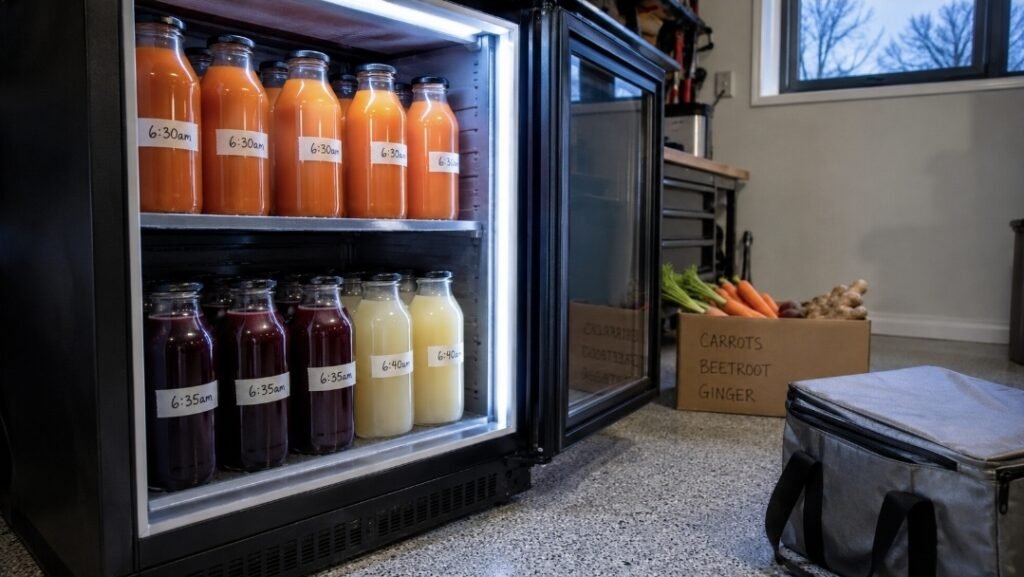
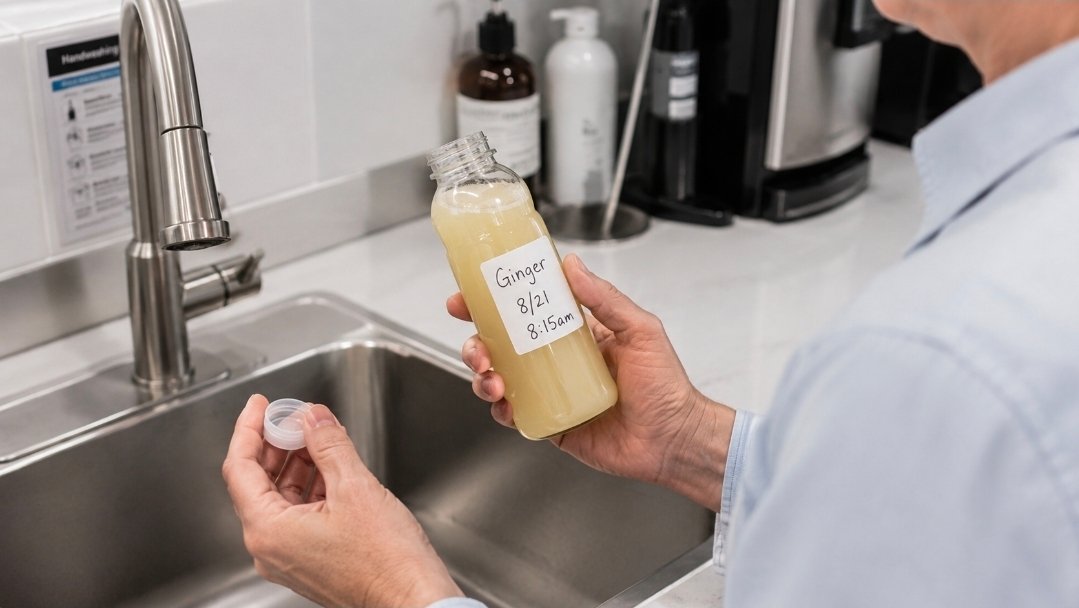
This is where the time on the bottle helps. “Monday” is vague. “Monday 7:30pm” tells you whether the juice is one day old or drifting toward two.
ACTION: Label the hour, not just the day
“Monday” is not enough when one bottle is 26 hours old and another is close to 50. Write the time it was made.
Why 48 Hours Is the Practical Limit
Forty-eight hours is where a glance is not enough. The juice is no longer truly fresh, but it is not automatically bad. It may still be drinkable, but only under the right conditions: if it was sealed, filled close to the top, and chilled straight away; not worth trusting if the lid was loose, the bottle was half-empty, or it sat in a warm room before chilling.
The smell check matters more now. Open the lid before pouring and pause there. A dull smell is one thing. A sour, alcoholic, sharp, or oddly sweet smell is another.
The first sip, if the smell and lid are fine, still tells you a lot. Juice that smells fine and opens cleanly will taste flatter after two days. That does not make it bad. During a juice fast, flat juice may not be worth forcing down.
Vegetable-heavy juices hold up better at this point. A beetroot-carrot bottle still smells cleaner than apple-orange under the same fridge conditions. Still, ingredients do not make up for a loose lid or a half-empty bottle.
If lids leak, seals loosen, or the bottle leaves too much air at the top, consider the type of bottle at best bottles for fresh juice before assuming the juice will last two full days.
Why 72 Hours Needs Extra Caution
The problem with “72 hours” is that it sounds safer than it is. In practice, it is the far end of safe fridge storage, not a target to build a fast around.
By three days, the juice has lost most of what made it taste clean and sharp. Technically drinkable does not mean it still has a place in your fast. Juice that has lost its edge halfway through a fast is not worth keeping just because it is ready and available.
Take more time to scrutinise a three-day bottle. Look at the wall of the bottle. Smell the neck before the juice goes anywhere near a glass.
Pushing to 72 hours because you do not want to waste produce is a bad trade. The produce is already spent. The question is not whether you can save it. It is whether you should drink it.
Quick Check Before You Drink It
Check the lid, smell, surface, colour, and taste before drinking stored juice. Normal separation is fine. Pressure, fizz, sour or alcoholic smell, slime, mould, or a strange taste means the bottle goes in the bin.
When Fresh Is Better Than Stored
Delicate juices are better fresh. Spinach, parsley, wheatgrass, and soft herbs lose their clean taste quickly. Citrus-heavy blends also lose brightness after a night in the fridge.
The first juice after a fast is worth making fresh when possible. Delicate juices and restart juices both suffer when they sit too long. If you keep making more bottles, see how many juices per day on a juice fast before you make more juice than you can drink in time.
If you plan to prepare juice beyond three days in advance, do not rely on the fridge. Once a bottle needs to last beyond the fridge-safe window, freezing fresh juice is the better route than stretching a three-day bottle further.