

Juicer clogging can describe several different blockage problems, and the right fix depends on where the blockage is happening.
First Work Out Where the Juicer Is Clogging
Before changing anything, identify where the blockage is occurring. There are four common places where produce or pulp can get stuck, and each points to a different likely cause.
- The feed chute — produce jams at the top before it even reaches the blades or auger.
- The auger or juicing chamber (on slow juicers) — produce packs around the auger and stops moving through the chamber.
- The filter or screen — the mesh becomes blocked with pulp and stops material passing through normally.
- The pulp outlet — pulp stops leaving and backs up into the chamber.
A slowing or stopped motor is different. It can be a sign of too much produce in the chamber, a blockage elsewhere, overheating, or another model-specific safety response.
All four blockages can make the juicer seem clogged, but where the material is stuck only gives you a clue to the likely cause. A packed chute often points to feeding, fibrous ingredients can contribute to problems around the auger, and a restricted screen can result from dried residue or fresh fine pulp. Identifying the blockage location helps narrow down the likely cause and the appropriate fix.
Feeding Produce Too Quickly Can Pack the Juicer Solid
A common cause is feeding produce faster than the juicer can clear it. Pushing several pieces in before the last batch has cleared, forcing produce down hard with the pusher, and keeping the chute full all leave the machine with more than it can process, and it packs solid rather than working through.
Pushing harder does not fix a slow feed — it packs more produce into the chamber. The produce needs time to move through and the pulp needs time to leave before the next handful goes in.
Slower feeding can prevent many feeding-related jams. Feed smaller amounts, let the machine finish each handful, use the pusher to guide produce rather than force it, and pause the moment pulp output starts slowing.
Fibrous Produce Can Cause Juicer Clogging
Celery, kale and chard stems, pineapple core, and ginger all carry fibers that do not break up cleanly — instead they wrap around an auger, gather around internal parts, or collect at the pulp outlet until they form a compact plug that blocks everything behind it.
You can usually see it when you open the machine: a wad of celery string wound around the auger instead of passing through the machine. Cut long fibrous produce into shorter pieces so the fibers cannot span the chamber, avoid feeding large bundles at once, alternate difficult ingredients with firmer produce where it helps, and stop adding produce if the pulp flow noticeably slows.
Very Soft or Overripe Produce Can Cause a Different Kind of Blockage
Not every clog is stringy. Very ripe pears, soft apples, berries, and overripe fruit can break down into thick pulp that collects in the chamber or smears across the screen instead of passing through normally.
Softer produce responds to smaller portions, slower feeding, and alternating with firmer ingredients that give the pulp something to move against.
Your Pulp Outlet May Simply Be Backing Up
Sometimes the blockage is at the pulp outlet rather than deeper inside the juicing chamber. A full pulp container, pulp around the outlet, or compacted material inside a narrow discharge channel can stop pulp leaving the machine and force it back into the chamber.
Signs of a blocked pulp outlet include little or no pulp coming out, juice slowing to a trickle, a change in the motor sound, pressure building in the chamber, and produce no longer feeding down normally. Adding more produce at this point almost always makes it worse — empty the container and clear the outlet before carrying on.
A Partly Blocked Screen Can Turn Into a Full Clog
A partly blocked screen can restrict juice flow even while the motor is still running. If the screen is packed with fresh pulp or dried residue, clear it before the blockage builds; knowing how to clean a juicer properly also helps prevent dried residue from blocking the mesh openings between uses.
Ingredient Order Can Help Keep Difficult Produce Moving
When one difficult ingredient keeps causing jams, break up long runs of it with firmer produce and pause long enough for the pulp to clear before adding more.
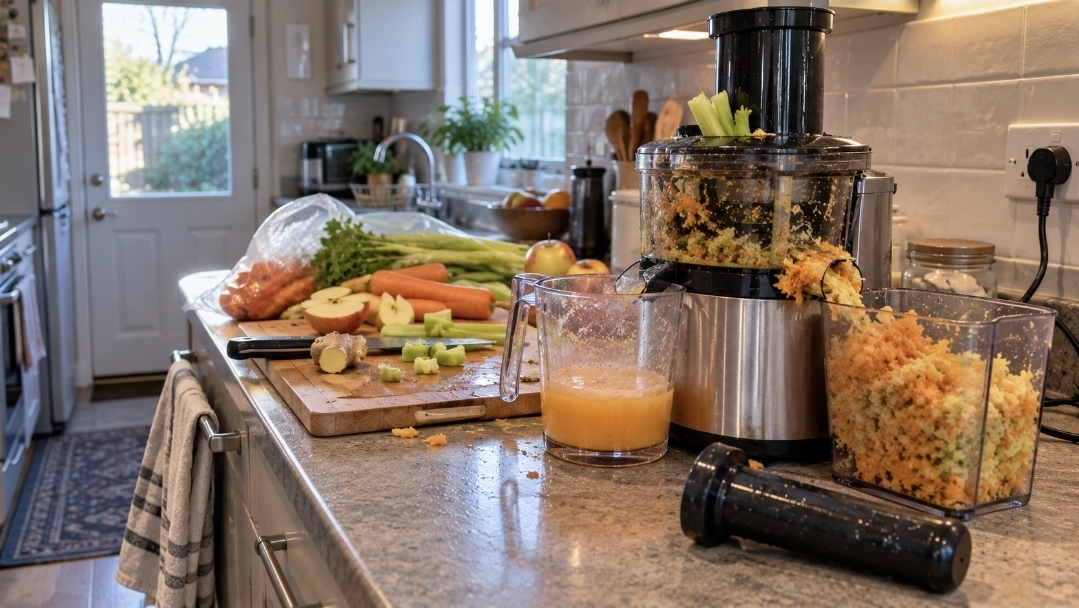
What to Do When Your Juicer Stops Midway Through
When the machine jams mid-juice, stop and clear the blockage in this order rather than forcing more produce through:
- Stop feeding produce.
- Switch the juicer off.
- Unplug it before putting hands or tools anywhere near moving parts.
- Check the feed chute, juicing chamber, and pulp outlet for packed produce.
- Clear the obstruction the way the machine’s design allows.
- Use a reverse function only if your juicer has one and the manufacturer allows it.
- Reassemble the machine correctly.
- Restart with less produce and a slower feed.
Some machines have overload or overheating protection that cuts the motor. If yours stopped because of heat or overload rather than a physical jam, follow the manufacturer’s instructions before restarting it — do not force it, poke objects into moving parts, bypass a safety cut-out, or keep running a stalled motor.
Centrifugal and Slow Juicers Tend to Clog in Different Places
Centrifugal juicers are more likely to have trouble when pulp coats the filter basket, the screen openings become blocked, the pulp container fills, or produce is fed too quickly. Slow or masticating juicers can jam when long fibers wrap around the auger, produce packs into the chamber, the pulp outlet becomes blocked, or thick soft pulp stops moving through.
Choosing between cold-press and centrifugal juicers involves more than clogging, but their different internal parts explain why they tend to jam in different places.
When Repeated Clogging May Be a Problem With the Juicer
Clogging can come from how produce is fed, but repeated jams can also point to worn or damaged juicer parts. Suspect a mechanical fault rather than a feeding problem if:
- it suddenly clogs on foods it used to handle without trouble
- the screen is damaged, bent, or badly worn
- an auger or internal part looks damaged
- parts no longer fit or rotate normally
- grinding, scraping, or other unusual mechanical noises
- repeated overheating
- it stalls even on small amounts of ordinary produce
- the same blockage keeps returning after you have already slowed the feed and cut produce smaller
Continuing to force a juicer that is grinding, scraping, overheating, or repeatedly stalling can cause further damage. If the juicer appears damaged or keeps stalling after the obvious blockages are cleared, follow the manufacturer’s instructions or contact its support team rather than forcing the machine.
If Leafy Greens Are the Main Problem
Loose leafy greens can bunch together, while thick stems add long fibers, and juicer designs differ in how well they move both through the machine. Changing how you prepare and feed leafy greens can help you get more juice from leafy greens while reducing repeated jams.
If Your Juicer Is Producing Wet Pulp Rather Than Actually Blocking
Wet pulp and a clogged juicer are two different problems that sometimes get described the same way. Clogging means produce or pulp is physically failing to move through the machine. Wet pulp means the machine is still processing produce but extracting less liquid than expected — nothing is stuck, but too much juice remains in the discarded pulp. If the machine keeps running normally but the pulp comes out soaked, why your juicer leaves wet pulp becomes a separate extraction question rather than a clogging problem.