
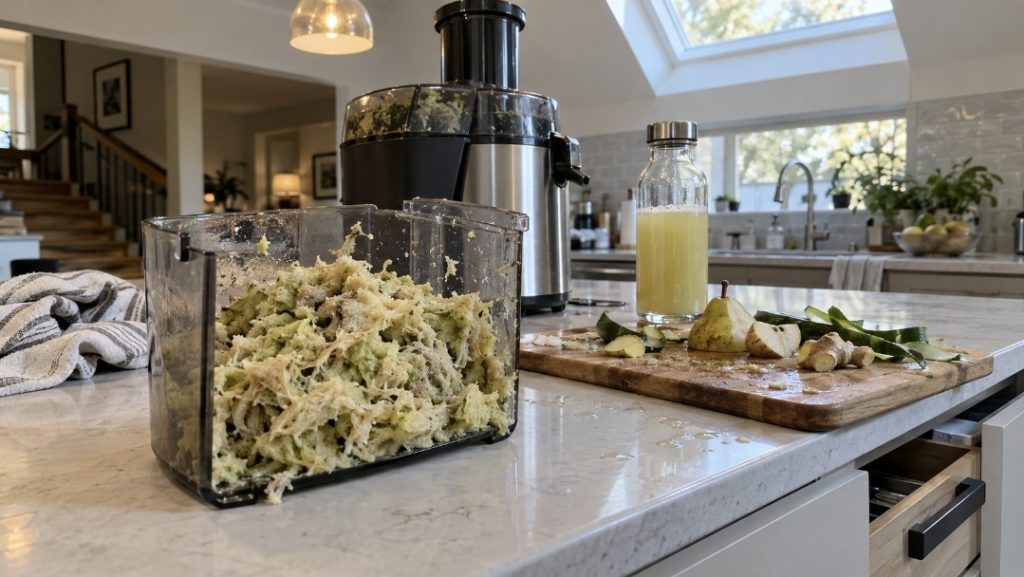
Fresh juice can affect digestion differently depending on the ingredients, serving size, drinking speed, and what the juice is replacing in the rest of the diet. Fiber loss, constipation, bloating, and an unsettled stomach can be related to juicing, but they need to be looked at separately.
What Are You Actually Noticing After Juice?
- Concerned about fiber: look at how much fiber is left after juicing.
- Bloated, gassy, pressured, or unusually full: separate the bloating from other digestive symptoms.
- Constipated while still eating normal meals: consider the change in bowel movements on its own.
- Your stomach feels unsettled after juice: treat general stomach discomfort separately from bloating or constipation.
What Changes When Solid Food Becomes Juice
Put a carrot, apple, or stalk of celery through a juicer and the machine separates the liquid from much of the solid plant material. The juice runs into one container while pulp collects in another.
Much of the insoluble fiber leaves with that pulp. That difference is central to the juicing vs blending comparison, because blending keeps the pulp and fibre in the drink. Some soluble fiber and other plant material can remain in the finished juice, with the amount varying by ingredient and juicer.
Extracted juice is therefore not nutritionally or physically identical to eating the same produce whole. You are drinking the liquid portion without most of the fibrous structure you would otherwise chew and swallow.
When juice replaces whole fruits or vegetables, what happens to fiber when you juice becomes relevant because much of the original fiber is discarded with the pulp.
Why Fresh Juice Agrees With Some People Better Than Others
Removing pulp does not guarantee that your stomach will handle the juice comfortably. The finished drink can still contain a concentrated mix of fruit, vegetables, acids, sugars, herbs, roots, and other ingredients.
Serving size changes how much juice reaches the stomach at once. A small vegetable-heavy juice is very different from a large glass containing several pieces of fruit and citrus, especially when it is drunk quickly.
Individual ingredients can also change how the drink feels in your stomach. An ingredient you eat comfortably as part of a meal may affect you differently when several portions of produce are concentrated into one drink.
If the same discomfort keeps returning, why fresh juice upsets your stomach may come down to the serving size, drinking speed, or a particular ingredient.

If Bloating Is the Main Problem
Bloating means pressure, gas, unusual fullness, or your abdomen looking visibly swollen after drinking fresh juice. Bloating is more specific than simply saying a juice “didn’t agree” with you.
A glass of fresh juice can cause bloating while normal meals are still being eaten, whereas bloating during a juice fast happens after solid meals have been removed.
If Constipation Is the Main Problem
With constipation, fresh juice adds fluid while the juicer removes much of the original produce fiber.
Replacing whole fruit or vegetables with juice means getting less fiber from that produce, even though the drink adds fluid.
With juicing and constipation, what else you are eating and what the juice replaces matter more than the drink in isolation.
Digestive Changes During a Juice Fast Are Different
Removing solid meals for one or more days can change bowel frequency, stool volume, hunger, nausea, and other digestive experiences, so a juice fast is different from adding fresh juice to a normal diet.
Once solid meals stop, bowel changes during a juice fast and nausea during a juice fast need to be judged as fasting symptoms rather than reactions to a single glass of juice.
Digestive Discomfort Is Not the Same as Foodborne Illness
Mild heaviness, gas, or an unsettled stomach after juice can be a tolerance problem. Becoming clearly ill after questionable fresh juice may point to foodborne illness instead.
If illness follows questionable juice, do not assume the recipe itself was the problem; fresh juice can make you sick when contamination is involved.
Know the Digestive Red Flags
Do not keep changing juice recipes if digestive symptoms are severe, getting worse, or not settling. Seek prompt medical care for severe abdominal pain, blood in vomit or stool, repeated vomiting that prevents you from keeping fluids down, fainting, confusion, breathing difficulty, or clear signs of dehydration.
Change One Thing at a Time
If a juice repeatedly leaves you uncomfortable, change one thing at a time so you can tell whether a smaller serving or different ingredient helps.
- Reduce the serving size.
- Use a simpler recipe.
- Change one ingredient rather than several.
- Watch whether the same symptom returns.
- Stop drinking a juice that consistently leaves you uncomfortable.
Do not turn these small changes into a complicated elimination diet.
When a Planned Juicing Schedule Makes More Sense
Once you can drink fresh juice without digestive discomfort, you can focus on what to make, how much produce to buy, and how to avoid choosing another recipe every time the juicer comes out.
A planned set of recipes and quantities can make grocery shopping and daily juicing simpler. A juicing plan should not be used as a way of pushing through persistent bloating, constipation, stomach pain, or unexplained digestive symptoms.