

During a juice fast, you are not limited to juice alone. Plain water, mineral or salt water, unsweetened herbal tea, black coffee (optional), and simple sugar-free electrolytes are all acceptable. The goal is to keep yourself adequately hydrated — not chasing energy, not sweetness, and not sipping all day.
The mistake people make is assuming “more liquid is always better.” It isn’t.
Hydration during a juice fast is about balance — enough fluid to stay clear-headed and support kidney function, enough sodium to prevent dilution, and not so much caffeine or sweetness that sleep and hunger become unstable.
Drink Plain Water
Water is the foundation. On a juice fast, you’re already consuming fluid from juice, so most people end up adding about 1.5 to 3 liters per day, depending on body size, activity level, and climate.
Too little water leaves you sluggish, dry-mouthed, and prone to headaches. Too much water without electrolytes creates a different issue: dilution of sodium levels. When sodium drops too low, symptoms such as headache, nausea, confusion, and fatigue can appear. The Mayo Clinic lists these among common signs of hyponatremia. Mayo Clinic
Overhydration during fasting happens more than expected. Clear urine every hour, persistent thirst despite drinking, and lightheadedness are clues that fluid intake may be excessive relative to sodium.
On longer fasts, ordinary water alone will not do by mid-afternoon. The issue is usually not dehydration, but low salt intake.
Mineral or Salt Water: When and Why
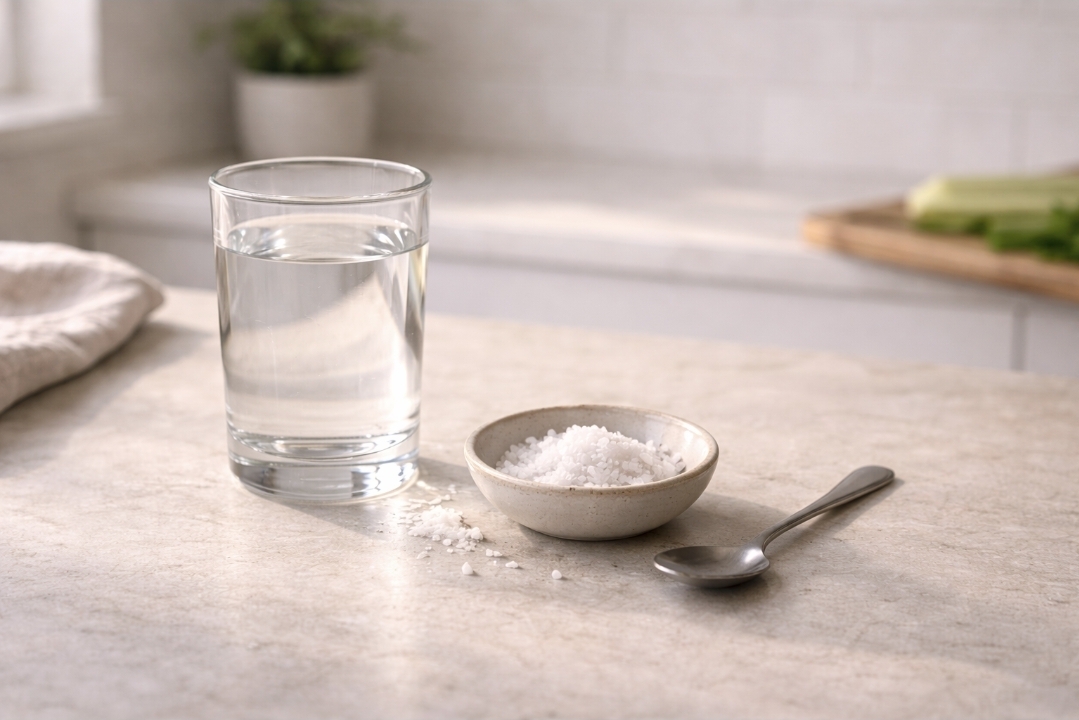
Salt water is not compulsory for everyone, but it becomes important when dizziness appears when standing up, when headaches repeat despite water intake, or when urine is consistently clear.
A practical sodium range during a juice fast is approximately 1–2 grams of sodium per day, divided across juice servings. That can come from mineral water, salted water (a pinch dissolved in a glass), or a clean electrolyte mix.
What does low sodium feel like? Lightheaded when you stand. A headache that doesn’t respond to more water. Irritability and unusual tiredness.
Here’s what’s happening physiologically: low amounts of food being eaten reduces sodium intake. Subsequently high water intake dilutes what salt remains in your system. Blood sodium concentration falls, and symptoms follow. Symptoms ease once sodium and fluid volume are back in proportion.
That doesn’t mean gulping concentrated salt water. It means steady, moderate intake spread throughout the day.
Herbal Tea: Acceptable, With Conditions
Unsweetened herbal tea is fine. Peppermint, ginger, chamomile, rooibos, hibiscus — are all fine, provided nothing is added.
No honey. No maple syrup. No stevia. No monk fruit. No flavored “zero calorie” syrups.
Sweet tasting drinks without calories keeps your brain expecting more sweetness. That can drive unnecessary hunger pangs later in the day. Why make the day harder than it needs to be?
Caffeine-free herbal teas are neutral for sleep. Caffeinated teas count toward your caffeine intake and should be treated like coffee.

Black Coffee: Allowed, But Not Required
Black coffee is permitted on a juice fast, provided it is plain. No cream. No sweeteners. No flavored additives.
Caffeine stimulates the central nervous system and can temporarily blunt appetite. It also increases alertness and can affect sleep. Research reviewed by the National Library of Medicine notes that caffeine consumed even six hours before bedtime can disrupt sleep quality. National Library of Medicine
Therefore, too much coffee can reduce sleep quality that night, even if consumed earlier in the day.
Poor sleep during fasting makes the next day harder. For that reason, many experienced fasters keep coffee in the morning and reduce it during multi-day fasts.
A deeper discussion of boundaries and timing is covered here: Coffee on a Juice Fast.
Electrolytes: Powder, Salt, or Broth?
Electrolytes can keep you steady when water alone isn’t enough. Stick to sugar-free options, as added glucose creates excessive sugar spikes that undermine the cleanse.
Electrolytes matter because sodium, potassium, and fluid balance regulate blood pressure and nerve function. Your kidneys regulate how much water you hold based on sodium levels. Low sodium levels interfere with fluid balance, causing the body to retain water in ways that dilute essential minerals.
Look for simple formulations: sodium, potassium, maybe magnesium. Avoid products with artificial sweeteners or “performance blends.”
Any issues may not be a matter of volume, but a lack of sodium.
What to Avoid Completely
Artificially sweetened drinks complicate a fast because the sweet taste can trigger hunger signals and increase cravings even without the calories. Reviews in the American Journal of Clinical Nutrition discuss the potential for non-nutritive sweeteners to affect appetite and intake regulation.
Diet sodas fall into the same category. Carbonation is not the issue. Sweetness is.
Use care with fruit-infused waters. Even small amounts of fruit steeped for hours can release sugars and flavor compounds that stimulate appetite.
Flavored “zero calorie” sparkling waters vary. If they rely on natural fruit extracts without sweeteners, they are lessof a problem. If they taste sweet, skip them.
Signs Your Hydration Strategy Needs Adjustment
- Dizziness when standing → likely low sodium or excessive water dilution
- Persistent headache → sodium imbalance or caffeine withdrawal — if headaches keep returning despite steady fluids, electrolytes for juice fasting headaches covers what to check
- Excessive urination with clear urine → overhydration
- Swelling in fingers or ankles → sodium intake may be too high
- Persistent thirst despite drinking → imbalance between sodium and fluids
Is it dehydration or dilution? That distinction matters. Dehydration improves with water. Dilution improves with sodium balance.
Safety Considerations
Anyone taking blood pressure medication or diuretics should be careful adjusting fluid and salt. These medications alter how your kidney handles sodium and water.
Kidney disease changes fluid tolerance. Pregnancy and breastfeeding aren’t the time to experiment with fasting. A history of eating disorders requires professional oversight before any fasting attempts.
If confusion, severe weakness, chest pain, or fainting occur, stop fasting and seek medical attention.
FAQ
Can I drink sparkling water during a juice fast?
Plain sparkling water is acceptable. Avoid versions with sweeteners or pronounced fruit sweetness. Carbonation itself does not affect the fast, but sweetness can stimulate appetite.
How much salt should I add to water?
Aiming for 1–2 grams of sodium daily from all sources is a common stabilizing range. Start witha small amount and spread it out throughout your juice servings. Symptoms such as dizziness and headache are feedback that sodium may be insufficient.
Does coffee dehydrate you?
Caffeine has mild diuretic effects, but moderate amounts does not cause significant dehydration in frequent coffee drinkers. Sleep impact is a bigger concern than fluid loss.
Are electrolyte powders better than salt?
They are convenient but not inherently superior. The priority is adequate sodium without added sugar or artificial sweeteners.
Closing Thoughts
During a juice fast, beverages serve a purpose. Water keeps circulation steady and supports kidney function. Sodium stabilizes blood pressure and prevents dilution symptoms. Herbal tea adds comfort without calories. Coffee is optional and requires boundaries.
When hydration and electrolytes are steady, the day runs smoother. When they are not, the day becomes harder than it needs to be.