
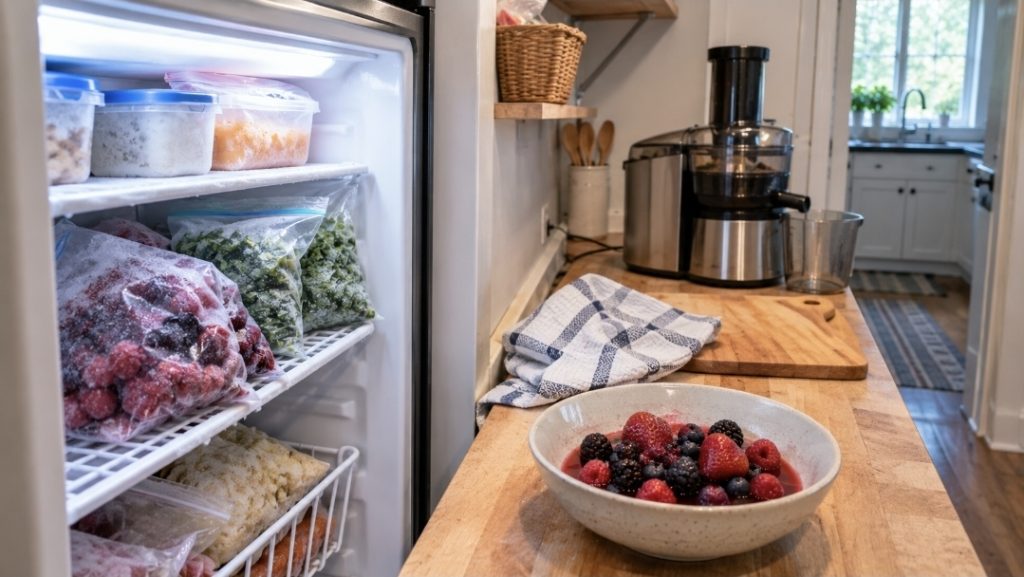
Can You Juice Frozen Fruit and Vegetables?
You can juice some previously frozen fruit and vegetables, but hard-frozen pieces should not automatically go into an ordinary juicer. Most standard juicing parts are intended for produce that can be cut, crushed, or shredded without putting unnecessary strain on the auger, cutting disc, strainer, or motor.
Once frozen produce has thawed, its softer texture changes how it passes through the juicer. Some still juice reasonably well. Other ingredients turn into thick pulp, smear across the screen, or give so little separated juice that a blender makes more sense.
Can You Put Frozen Fruit or Vegetables Straight Into a Juicer?
Do not assume you can feed rock-hard frozen chunks through the same parts used for fresh apples, carrots, or celery. A frozen strawberry or pineapple chunk offers much more resistance than the same fruit fresh, and forcing it through can put extra load on an auger, cutting assembly, strainer, or motor. Partly thawed pieces need the same caution: a soft outside can hide a hard frozen center that can still strain ordinary juicing parts.
Some machines can process frozen ingredients, but only with the correct attachment. Kuvings, for example, directs users to smoothie or sorbet strainers for frozen fruit rather than its regular juicing strainer. Omega’s frozen-fruit sorbet recipes likewise use a blank or homogenizing cone instead of the juice-extraction screen. Even with a compatible sorbet attachment, follow the manufacturer’s directions for piece size and whether the fruit needs a few minutes to soften. Kuvings help center
A frozen-dessert attachment works differently from a regular juicing screen. Instead of separating liquid from pulp, it crushes or homogenizes the whole fruit into a thick frozen mixture. Being able to make sorbet with the machine does not mean its regular juicing screen can take hard-frozen fruit.
Check the manual for your exact model before feeding anything into it straight from the freezer. If the manufacturer says frozen ingredients are not allowed through the juicing screen, thawing them first does not automatically override that instruction.
Should You Thaw Frozen Produce Before Juicing?
For regular juicing, thaw frozen produce first when the manufacturer allows previously frozen ingredients. Thaw the produce in the refrigerator rather than leaving a bag on the counter. USDA guidance lists refrigerator thawing as a safe method, and FDA guidance recommends keeping refrigerated food at 40°F or below. USDA FSIS
Freezing breaks some of the plant’s cell structure as ice crystals form. Once thawed, berries slump, cucumber loses its crisp snap, and leafy vegetables become much softer. USDA produce guidance describes this same loss of firmness as a normal result of ice crystals damaging cell walls. USDA produce guidance
Put thawing fruit in a clean covered container so you do not lose the liquid that runs out. With plain frozen fruit, that liquid came from the fruit itself and can be added to the collected juice if you want it. Check the ingredient list first if the fruit was packed with syrup, sugar, or other additions.
Keep thawed produce refrigerated until you are ready to juice it and refrigerate the finished juice promptly.
Which Frozen Fruits Work Best After Thawing?
Frozen Berries
Strawberries, raspberries, blueberries, and blackberries can be used after thawing if your juicer can process soft fruit. Berries release plenty of liquid while thawing, then leave soft pulp and seeds behind.
Raspberries and blackberries are particularly seedy. Feeding a large amount at once can leave a layer of fine pulp and seeds over the screen.
Frozen Mango and Peaches
Mango and ripe peaches become very soft after freezing. They contain juice, but their thick flesh can turn into puree instead of separating cleanly in a juicer.
If most of the fruit is leaving through the pulp outlet as thick wet mash, stop feeding more fruit through the machine. For ingredients with that texture, juice or blend depending on whether you want separated liquid or want to keep the whole fruit in the drink.
Frozen Pineapple
Thawed pineapple stays firmer than mango. Cut large chunks smaller before juicing and remove any pieces that are still frozen solid unless your machine specifically allows them.
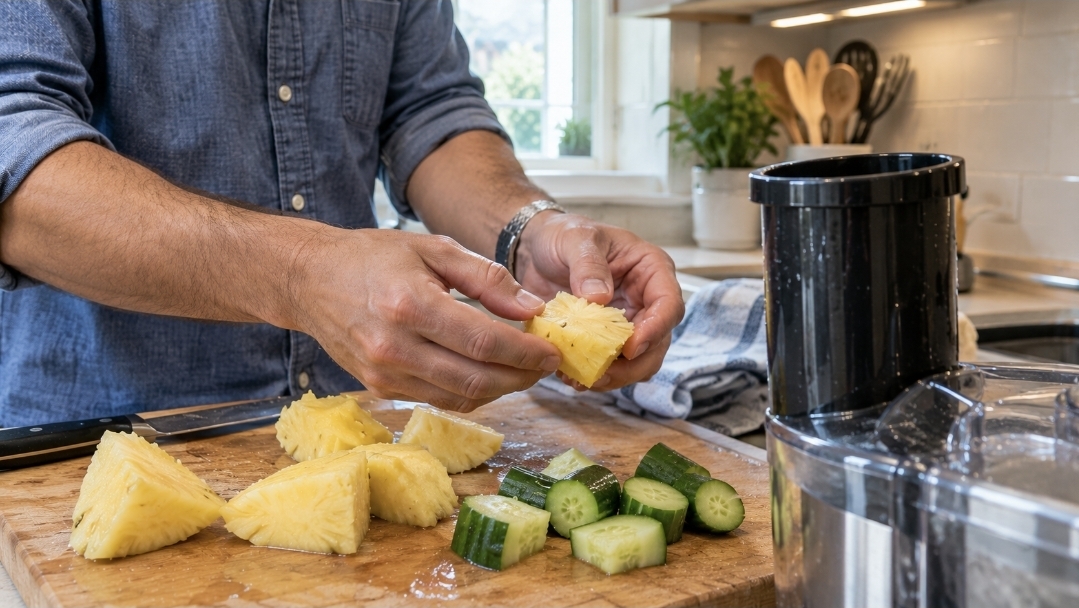
Thawed pineapple can still pass through a slow juicer, although some machines will leave wetter pulp than others.
Frozen Grapes
Grapes soften heavily after freezing, and their skins loosen as they thaw. The released liquid is usable, but there may not be much juice left to extract from the softened grapes because much of it has already escaped into the thawing container.
Frozen Bananas
Bananas are a poor choice for ordinary juice extraction whether fresh or frozen. They contain too little free liquid and too much soft, starchy pulp to separate efficiently through a normal juicing screen.
Frozen banana blends easily into smoothies and can also be used with compatible frozen-dessert attachments, where the whole fruit is crushed instead of separating juice from pulp. Omega and Kuvings both use separate attachments for frozen-fruit desserts. Omega Juicers
Can You Juice Frozen Vegetables?
Read the package before deciding to use a commercially frozen vegetable in raw juice. FDA notes that frozen vegetables often carry cooking instructions and may be intended to be cooked before eating. A bag marked for cooking should not be thawed and treated as a raw-juice ingredient. FDA guidance
| Ingredient | Thaw first? | Likely extraction difficulty | How to use it instead |
|---|---|---|---|
| Frozen spinach | Check package directions | High — soft leaves can compact | Blend, or use fresh spinach for juicing |
| Frozen carrots | Yes | Medium to high after softening | Use fresh carrots for juicing |
| Frozen beets | Yes | Medium — texture softens after thawing | Use fresh beets when you want more juice |
| Frozen celery | Yes | High — thawed stalks lose firmness | Fresh celery is much easier to extract |
| Frozen cucumber | Yes | High — becomes watery and limp | Blend it or use fresh cucumber in the juicer |
A thawed block can pack together inside a machine, while fresh leaves can be fed in smaller bundles with firmer produce.
Frozen kale, chard, and similar leafy greens can also clump around the juicing parts after thawing.
How Different Juicers Handle Thawed Produce
Slow or Masticating Juicers
A slow juicer pulls ingredients through with an auger, so thawed fruit can coat the screen and slow pulp discharge.
Centrifugal Juicers
In a centrifugal juicer, produce hits a fast-spinning cutting disc before the liquid passes through the surrounding screen. Because thawed fruit offers less resistance to the cutting disc, it can form pulp quickly.
The result may be low yield, wet pulp, or a layer of fine fruit over the screen. Adding firmer fresh produce may improve the flow, but mango and banana will still produce little separated juice.
How to Juice Previously Frozen Produce With Less Waste
- Prepare pieces for the chute. Remove pits, tough skins, stems, or oversized pieces as needed. The same basic produce prep before juicing still applies once the ingredient has thawed.
- Feed softened produce gradually. Add small amounts so pulp can leave before more soft fruit goes in.
- Alternate soft fruit with firmer fresh produce. Feed small amounts of thawed berries between pieces of fresh cucumber or apple. Rinse fresh ingredients under running water before cutting them, just as you would when you wash produce before juicing.
Does Freezing Change the Taste, Texture or Nutrition?
The finished juice may have more sediment, separate faster, or come out thinner than the same recipe made with fresh ingredients.
The flavor can change too. Released water may make delicate fruit taste weaker, while fruit stored for a long time can lose some of its fresh aroma. Adding the liquid released during thawing returns some of the fruit’s water and dissolved compounds to the drink. Whether to add all of it depends on the flavor and thickness you want.
Frozen produce is not always lower in nutrients than fresh produce. Studies comparing fresh and frozen fruits and vegetables found that nutrient retention depends on the specific food and nutrient; across the foods tested, frozen samples were frequently comparable with fresh or refrigerated produce. PubMed
Why Thawed Ingredients Can Be Difficult to Juice
Very little juice comes out: The ingredient may be too soft or pulpy to release much juice.
The machine produces thick pulp or puree: Reduce the amount going in at once. If the screen keeps filling with soft pulp, stop the batch and clean the screen before continuing.
The strainer clogs: Stop feeding produce, switch the machine off, unplug it, and clear the screen according to the manufacturer’s instructions. Restart with smaller amounts rather than pushing more softened produce behind the blockage.
The juice foams or separates quickly: Let excess foam settle and skim it off if you want a smoother drink. Stir the juice to mix the sediment and separated liquid back together. Separation on its own does not mean the juice has spoiled.
The juice tastes watery: Check how much high-water fruit or cucumber is in the recipe and add only as much of the saved thawing liquid as gives the texture and flavor you want.
Questions About Juicing Frozen Produce
Can you put frozen berries straight into a juicer?
Only if your juicer is designed to take frozen berries with the attachment fitted.
Can you juice frozen spinach?
Only if the package allows uncooked use and your juicer accepts thawed spinach.
Can you juice frozen carrots?
You can juice thawed carrots in a compatible machine, but choose fresh carrots when you want more juice and drier pulp.
Is it better to juice or blend frozen fruit?
Blend banana, mango, and peaches when they turn too soft for the juicer to separate cleanly.
Can you refreeze thawed produce or the resulting juice?
Produce thawed in the refrigerator can generally be refrozen if it has been kept at 40°F or below and handled safely, although the texture may deteriorate further. Fresh juice made from thawed produce can also be frozen promptly in a clean freezer-safe container. Freezing does not make juice that was handled unsafely safe again. USDA FSIS
Freezing the finished drink is a separate storage question from using frozen ingredients in the juicer. If you plan to freeze what you have made, the handling and container decisions for freezing fresh juice still apply.