

Common Juice Fasting Mistakes (And How to Avoid Them)
Most juice fasts that feel miserable have one thing in common.
Not the length. Not the recipes.
The real problem is usually the mistakes people make during the fast.
Beginners usually repeat a handful of avoidable errors: relying too heavily on fruit-based blends, skipping juices and then overcompensating later, ignoring hydration, or starting the fast without preparing anything ahead of time.
Mistakes in your fasting routine make the process unnecessarily difficult, but they do not make success impossible. These errors simply turn a straightforward process into a more grueling experience.
The broader principles behind fasting are explained in the Juice Fasting Guide, but the day-to-day experience improves dramatically when a few common missteps are corrected.
Starting a Juice Fast Without Preparation
The first mistake usually happens before the fast even begins.
People stop eating abruptly and assume the rest will sort itself out. In reality, the body expects continuity. Going directly from heavy meals, caffeine, and processed foods into a fast tends to produce unnecessary discomfort from day one.
Headaches appear. Fatigue comes early. Irritability follows.
Why?
The body is adjusting to several changes at once. Hunger signals still follow the old eating schedule, caffeine intake drops suddenly, and digestion shifts quickly from solid food to liquid intake.
A short preparation window makes this transition smoother.
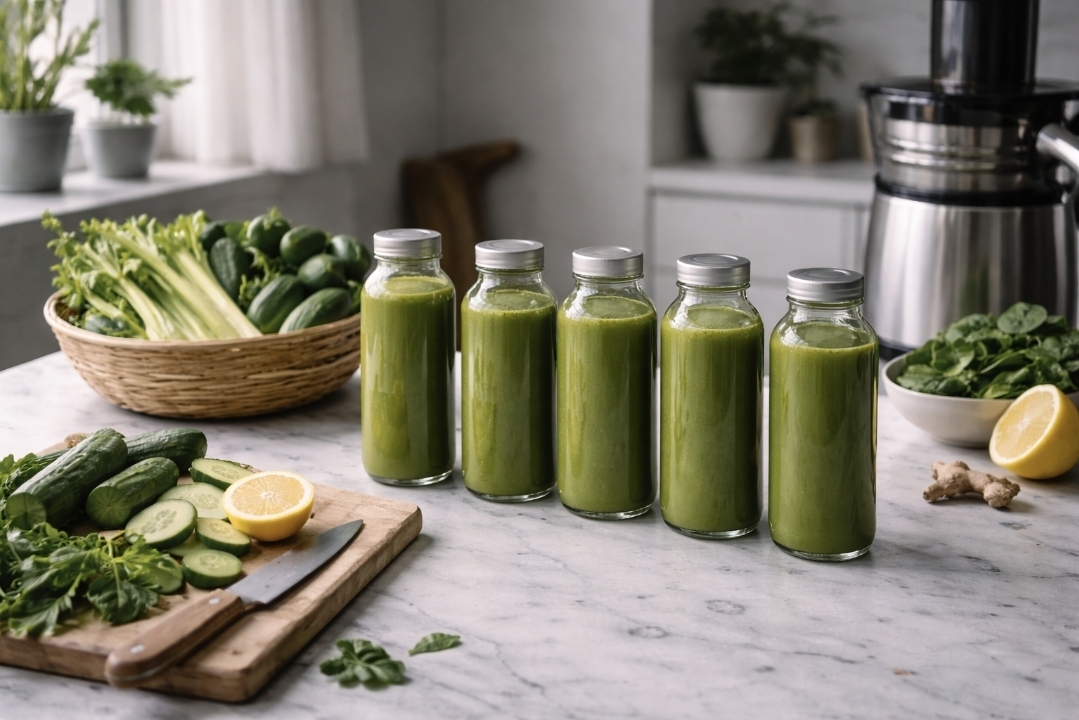
The day before starting, reduce caffeine, increase vegetable intake, and prepare the next day’s bottles in advance. That small adjustment prevents many of the early problems associated with juice fasting.
Preparation does not need to be complicated. It simply removes surprises.
Drinking Too Much Fruit Juice
Sweet blends are comforting during a fast.
They taste good, they go down easily, and when hunger appears it is tempting to reach for something fruit-heavy. Many beginners fall into that pattern during the first couple of days.
The result of this decision usually shows up a few hours later.
Without fiber, fruit juice digests instantly, creating a sugar high followed by a hunger slump that makes you crave another drink.
Research on glycemic response shows that beverages containing higher sugar levels lead to quicker rises and falls in blood glucose compared with lower-sugar foods (PubMed – Glycemic response review).
That rise and fall creates the familiar “crash” many beginners talk about.
Vegetable-dominant blends flatten that curve. Cucumber, celery, leafy greens, and herbs digest more gradually and tend to keep appetite steadier.
Fruit still has a place in a fast, but it works better as a flavor enhancer rather than the main ingredient in every glass.
If you want practical examples, the collection of low sugar juice recipes for fat loss shows how to keep sweetness balanced while still making the drinks enjoyable.
Using Store-Bought Juice Instead of Fresh Juice
Many of those new to juice fasting assume any juice will work during a fast.
Supermarket bottles seem convenient. No preparation. No cleanup.
The problem is how those juices are made.
Most commercial juices are pasteurized and filtered heavily.
That process removes much of the fresh vegetable content and often leaves a drink that resembles a fruit juice than a vegetable blend.
Even bottles labeled “green juice” frequently contain apple or grape concentrate as the main ingredient.
The result is the same problem many beginners experience with fruit-heavy drinks: a rapid rise in blood sugar followed by hunger soon afterward.
Genuine fresh juice acts differently on your body. Vegetable-dominant blends digest more gradually and usually produce a smoother energy pattern through the day.
Store-bought juice can work in an emergency, but relying on it throughout a fast tends to make the experience harder than it needs to be.
Skipping Servings and Then Drinking Too Much Later
This is the kind of error that flies under the radar during a hectic afternoon. A meeting runs on. Errands take longer than expected. Suddenly the morning bottle never happened and the first drink of the day arrives around lunchtime.
The rest of the afternoon becomes compressed. Two or three drinks are consumed close together, followed by a long gap before evening. Energy rises quickly and then drops again. That pattern makes the fast feel unpredictable.
Spacing out your juice bottles every few hours helps maintain a level head and stable energy.
Phone reminders or a written schedule help. When servings are prepared ahead of time, sticking to the schedule becomes much easier.
This article explaining how many juices per day on a juice fast outlines the intake pattern that usually keeps hunger manageable.
Not Drinking Enough Fluids
Juice contains water, but it rarely covers all hydration needs.
Many fasters assume the drinks themselves will provide enough fluid throughout the day. That assumption frequently leads to headaches and fatigue that feel like “fasting symptoms” but are actually simple dehydration.
As food intake drops, the body releases stored glycogen and and with it stored water. Urination increases slightly during the first days of fasting, which means fluid losses rise as well. If you don’t drink enough water, dehydration will follow quickly.
The signs are familiar: dry mouth, mild dizziness, headache, and a heavy feeling behind the eyes. The correction is straightforward. Drink water steadily between servings. One or two glasses every couple of hours works best. Climate and activity level matter, but steady hydration is more important than chasing a specific number.
Another pattern can happen here too. Some people react to dehydration by suddenly drinking large amounts of water all at once. That can leave the stomach uncomfortable and dilute sodium levels temporarily.
Small, consistent sips work better than sudden bursts of drinking.
Check out this guide explaining what you can drink during a juice fast outlines the beverage options that support hydration during fasting.
Ignoring Sodium and Electrolytes
Low sodium is one of the least recognized causes of fasting discomfort.
When meals disappear, sodium intake falls with them. Most diets provide sodium through cooked foods, sauces, and packaged ingredients. Once you are no longer consuming these, salt deposits quickly.
The combination can dilute sodium levels in the bloodstream. Headache, fatigue, and lightheadedness may appear even when fluid intake is adequate.
These symptoms match those associated with hyponatremia, a condition linked to low sodium levels in the blood (Mayo Clinic – Hyponatremia).
In everyday fasting situations the fix is simple.
A pinch of salt added to water, mineral water, or an electrolyte drink usually resolves the symptoms quickly. Many experienced fasters include small amounts of sodium throughout the day for that reason.
Addressing electrolytes early often makes the entire fast feel noticeably smoother.
Trying to Maintain Normal Workout Intensity
Many individuals attempt to maintain their standard gym schedule during their juice fast. That rarely works out well.
High-intensity workouts depend heavily on stored carbohydrate for quick bursts of energy. During fasting those stores decline, which lowers the body’s ability to sustain intense activity.
Exercise research consistently shows that glycogen availability strongly influences athletic performance (PubMed – Glycogen and exercise performance).
The solution is not avoiding movement completely.
Walking, stretching, and light cycling usually feel comfortable during a fast. Any more strenuous activities often become a struggle.
Reducing intensity temporarily keeps activity sustainable until the fast ends.
Not Preparing Juices in Advance
Lack of preparation quietly undermines many fasts.
When drinks are not ready ahead of time, the day becomes reactive. People delay servings because they are busy, ingredients run out, or preparation feels inconvenient in the moment. That delay leads to skipped bottles and sudden hunger later in the day.
Preparation solves most of that.
Making the day’s blends the night before or early in the morning removes the decision entirely. Once your bottles are lined up and your timing is set, you’ll feel like you’re actually in the driver’s seat.
One more benefit applies here.
Prepared drinks encourage better ingredient choices. When people improvise on the spot, they often reach for whatever fruit happens to be available rather than building a balanced vegetable base. Planning the drinks in advance keeps the day consistent and removes unnecessary stress from the routine.

Misreading Normal Hunger Signals
Hunger pangs during a fast do not behave the same way they do during regular eating.
Many beginners expect hunger to grow steadily stronger until they drink something again. In reality, hunger often appears in short waves tied to normal meal times. Those waves pass. Sometimes a glass of water or a short walk is enough for the sensation to pass.
Your body still follows familiar eating schedules. When breakfast or lunch normally occurs, hunger signals rise briefly even if liquid calories were consumed earlier. Recognizing that pattern helps reduce anxiety during the fast.
So what does normal hunger look like?
Persistent hunger that intensifies through the day usually signals a different issue — ie. long gaps between drinks or fruit-heavy blends earlier in the day.
Adjusting timing or ingredients often resolves it quickly.
Once people learn to recognize those signals, the fast becomes much easier to manage. Small corrections prevent most of the discomfort beginners expect from fasting.