

Yes, you can exercise during a juice fast. But what counts as a “normal” workout shifts quickly when you stop eating.
Light activity and walking typically remain manageable, but strenuous exercise and high-intensity training frequently become much more difficult.
If you are planning your first fast, it helps to understand how to do a juice fast properly before even thinking about workouts.
Once juice timing, hydration, and sodium intake stay consistent, it becomes easier to judge what type of activity your body handles comfortably.
Why Workouts Feel Different During a Juice Fast
Physical effort feels different when your body isn’t relying on its usual energy sources.
Under normal eating conditions, muscles rely heavily on glycogen. Glycogen is stored carbohydrate found in the liver and muscles, and it powers quick movements such as sprinting, lifting, or demanding cardio sessions.
When calorie intake drops during a juice fast, glycogen stores begin to fall.
As glycogen declines, the body begins relying more heavily on fat and ketones for fuel. That fuel works well for steady movement, but it’s not great for all-out bursts.
This is why high-intensity exercise often feels heavy or flat during a fast.
Research on exercise metabolism shows that high-intensity muscle contraction depends strongly on glycogen availability (PubMed – Glycogen metabolism in exercise).
You can still move. You just hit “tired” sooner when you push it.
A brisk walk may feel fine. Sprint intervals or heavy lifting may feel exhausting much sooner than usual.
During shorter fasts such as a 1-day juice fast, the difference may be unnoticeable. During longer fasts like a 3-day juice fast plan, the change becomes much more apparent.
Best Types of Exercise During a Juice Fast
Gentle movement usually feels the most manageable during fasting.
Walking is the most reliable option. It keeps circulation moving, reduces stiffness, and requires relatively little immediate calories.

Light activities that won’t burn you out:
- Walking outdoors or on a treadmill
- Light cycling
- Yoga or stretching
- Mobility or joint work
- Easy swimming
These exercises rely on slower energy supply rather than short bursts of energy.
That makes them easier to tolerate while calorie intake is lower.
A simple rule is to keep effort at a conversational pace. If you cannot speak in full sentences while moving, the intensity is likely too high for a fast.
Walking in particular tends to feel natural during fasting because the pace stays steady and the energy demand remains low.
Light cycling can feel similar when resistance stays moderate. However, steep hills or high resistance can quickly increase intensity and cause fatigue sooner than expected.
Yoga, stretching, and mobility sessions also tend to work well. These activities emphasize flexibility and joint movement rather than heavy muscular output.
Light activity can actually ease the physical tightness that often develops over a several-day fast. Taking a quick stroll early on is much more effective for feeling better than just staying sedentary all day.
How Different Types of Exercise Tend to Feel
Not all exercise feels the same during a fast.
The difference usually comes down to how quickly the body needs energy.
Walking usually feels fine because the steady pace allows your body to tap into slower-burning energy.
Light resistance training should still feel manageable as long as weights are reduced and rest periods are longer.
However, heavy compound lifts such as squats or deadlifts can be too much once glycogen stores decline.
High-intensity workouts are usually the most difficult. Your stamina for long-duration cardio will likely decrease. Distance running or heavy cycling can become exhausting well before you hit your normal mileage.
Sprint intervals, circuit training, and H.I.T type classes depend heavily on rapid carbohydrate energy, which becomes limited during fasting.
Why Intense Workouts Become Difficult
High intensity workouts during a juice fast depend heavily on carbohydrate fuel.
When glycogen levels fall during fasting, muscles fatigue sooner.
Fat metabolism can support low intensity movement, but it cannot supply energy at the speed required for explosive exercise.
This explains why fasting often feels like this: you can move around just fine, but as soon as you try to push the pace, you hit a wall.
It doesn’t mean something is wrong. It shows that your system is tapping into a different energy reserve..
Still, forcing intense workouts during a fast can lead to dizziness, excessive fatigue, or unusually slow recovery.
Reducing intensity avoids most of these problems.
When People Try to Train Normally During a Fast
A common mistake is attempting to maintain a normal training routine while fasting.
On the first day of a fast this may be fine. Glycogen stores are still available, and energy levels are usually at normal levels.
By the second or third day, performance capability often drops below par.
You might notice your strength isn’t at its usual peak. Weights or repetitions that are typically easy for you may suddenly feel significantly heavier.
Recovery can also change.
Muscle soreness may last longer, and energy levels may take longer to return after demanding sessions. That’s normal on low calories and lower carb.
For that reason, many people shift toward simple exercises until normal eating resumes.
The Role of Electrolytes During Activity
Electrolytes matter more than many people expect during fasting.
Low sodium can produce symptoms such as headache, dizziness, nausea, or confusion. Those are common symptoms of hyponatremia (Mayo Clinic – Hyponatremia).
Exercise can make this more noticeable.
Sweating removes additional sodium, and standing or moving quickly can make lightheadedness worse if you’re under-salted or drinking tons of plain water.
If you sweat heavily during a walk or workout, a small pinch of salt in water afterward can help prevent Feeling light headed later in the day.
Sodium also plays an important role in maintaining blood pressure and fluid balance.
A little salt spread through the day helps you stay steadier on your feet and reduces dizziness during activity. Aim for roughly one to two grams of sodium daily through mineral water, lightly salted water, or electrolyte powders.
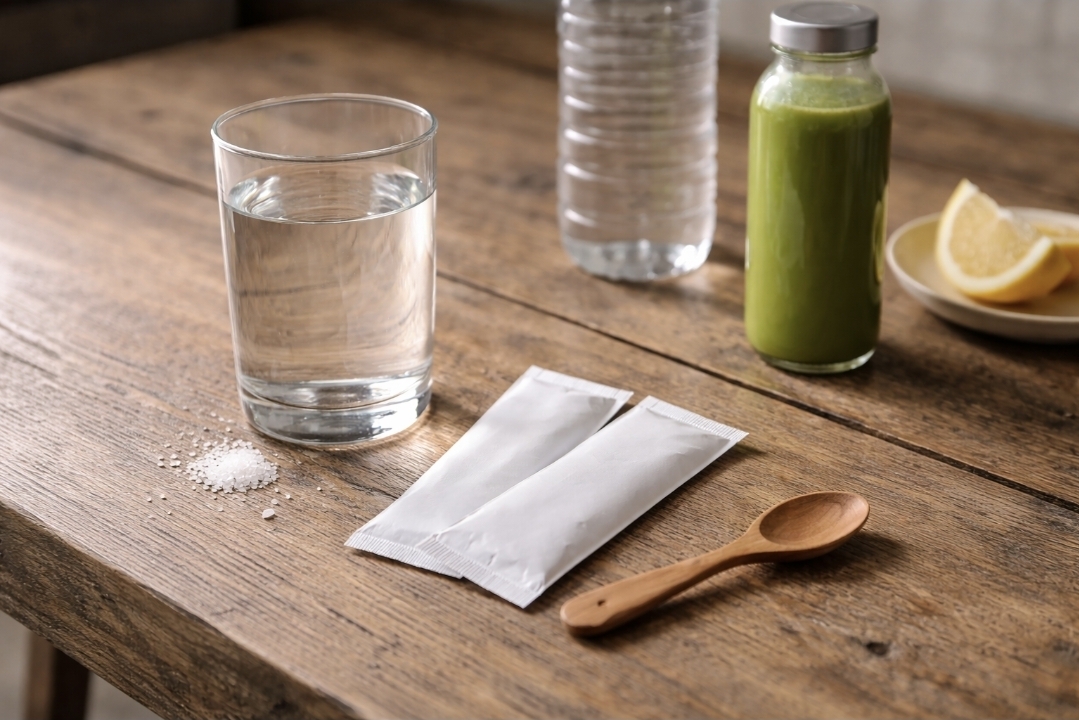
More detail on beverage choices appears in what to drink during a juice fast.
When Is the Best Time to Exercise During a Juice Fast?
The timing of activity can influence how comfortable exercise feels.
Timing your walk for right after a juice serving takes advantage of a natural energy boost. The recent intake of nutrients makes the movement feel easier and more fluid.
Time your light workouts earlier in the day before fatigue builds. Expect late evening sessions to be a struggle since your energy reserves are low by that time.
There isn’t one best time for everyone. Keep it short and easy, and adjust day to day.
Adjusting Your Training Expectations
It should be obvious by now that exercise during a juice fast is not the time for improving performance. The goal is simply to stay lightly active.
If you normally train several days each week, it helps to back off for a few days. Short walks, stretching sessions, or gentle cycling should replace heavier training.
If lifting weights during a fast, reduce normal loads by half and focus on slow, controlled movements rather than heavy sets. While some maintain a light routine with fewer sets and less weight, others pause strength training entirely until regular eating resumes.
Either is fine — pick the one that maintains stability during your fast.
Daily demands also matter. Physically demanding jobs or busy schedules can increase fatigue during fasting.
The article on working while juice fasting explains how work demands interact with energy levels during a fast.
Signs Exercise Is Too Much
Mild fatigue is common during fasting.
Certain symptoms signal that activity should stop.
- Persistent dizziness during your daily exercise
- Lightheadedness when standing up
- Unusual confusion or poor coordination
- Chest pain or labored breathing
- Extreme fatigue that does not improve with rest
These symptoms can appear when the body struggles to maintain fluid balance or blood pressure during exertion.
Reduced calorie intake and lower sodium levels can make circulation slightly more sensitive to sudden activity.
Stopping movement and restoring fluids and sodium usually resolves mild symptoms.
Severe or persistent symptoms require medical attention.
When Movement Actually Helps
As stated previously, walking improves circulation and reduces stiffness after long periods without food. Gentle stretching keeps joints supple.
Surprisingly some juice fasters report that short activity sessions reduce hunger temporarily. Movement shifts attention away from food cues and slightly changes appetite signals.
Some research suggests moderate exercise can nudge appetite for a while (PubMed – Exercise and appetite control).
Intensity is the part that bites. Taking it easy is the key. Gentle movement helps. Intense training usually backfires.
Returning to Normal Training After a Juice Fast
Once you’re eating again, workouts usually feel normal within a couple of sessions. As carbohydrate intake increases, glycogen stores gradually rebuild inside the muscles. Energy for higher-intensity exercise returns as these stores refill.
It is still wise to ease back into demanding workouts rather than jumping straight into maximum effort training. A few lighter sessions allow the body to rebuild strength and endurance comfortably.
To Sum Up
Activity usually goes best when it stays light and predictable.
- Favor walking or gentle cycling
- Keep sessions under about 45 minutes
- Maintain fluid intake and sodium balance
- Avoid high-intensity training
- Stop if dizziness appears
Longer sessions can push fatigue higher than expected when calories are low. Shorter sessions — around 20 to 40 minutes — usually feel much more manageable.
Timing exercise between juice servings can also help maintain energy.
Optimal walking times vary, with some preferring to capitalize on a slight energy boost immediately after a juice, while others move early in the day to avoid fatigue. The best approach depends on personal energy levels and daily routines, whether that involves a post-juice stroll or an early morning session.
Fasting shifts your body’s fuel source, changing how you move. You can still exercise, but you must trade high intensity for a slower, steadier pace.