

The scale moves fast in the first few days. Most people are not expecting quite how fast.
A common range is 3–6 pounds by the third morning. Most of that early drop is water and less food sitting in the body, not fat loss. The fast movement grabs attention and gets treated like proof.
Read Juice Fasting for Weight Loss for what happens across a full fast.
What Most People See in the First 3 Days
The first three days usually show the biggest numbers of the whole fast.
Some people see movement every morning. Others see most of it land between day one and day two. Neither is wrong.
What happened before the fast matters — more restaurant food, more salt, more carbs, and bigger meals tend to make the early drop bigger. A lighter starting diet makes the first three days show less movement. It just means there was less quick weight to shed at the start.
The first 72 hours shed the weight that goes fastest. That is why the start looks more dramatic than everything that comes after it.
Why Weight Loss Is Higher Early
The early drop is bigger than it looks because several fast changes happen at once — water weight drops, glycogen burns off, and there’s simply less food in your system. Read Is Juice Fast Weight Loss Just Water? for the detail.
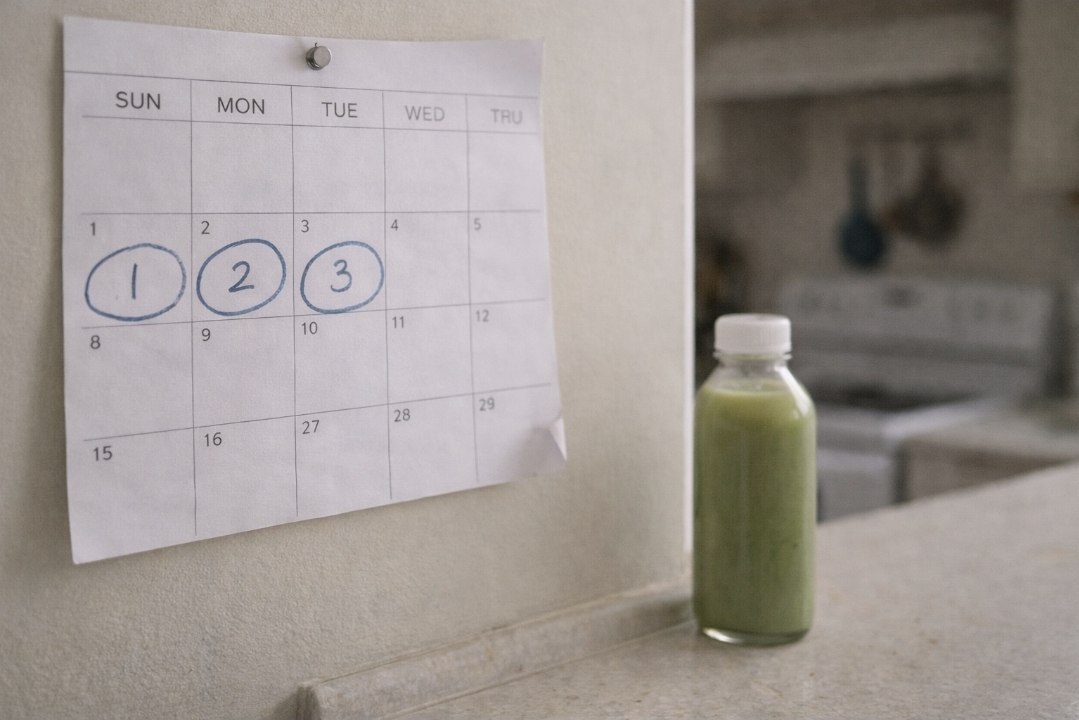
Day 1 vs Day 2 vs Day 3 — What Actually Changes
Day 1
Day one is mostly your body adjusting, not losing fat.
Meals stop. Food volume drops. Salt often drops. Most people feel lighter before the scale catches up — not because fat has gone, but because your body is simply holding less — less food, less water, less waste.
The evening of day one is the hardest part for most people. There is nothing in the kitchen to go to. No dinner, no snack, no routine. Most people who do longer fasts say the first evening is harder than the first morning — not from hunger exactly, more from the missing dinner routine than actual hunger.
Rapid weight loss is not the main story on day one. Day one is your body switching over, not the results showing up yet.
Day 2
Day two is usually where the biggest drop shows up.
Day two is the morning the fast suddenly feels real. You step on the scale and the number has moved — more than it moves in a normal week of dieting. The stomach looks flatter. The clothes feel different. The whole thing starts to feel like it is working.
That feeling is not wrong. Something real is happening. It just is not mostly fat — the drop on day two is mostly water weight and less food in your gut. Most people read it as fat loss. It usually isn’t.
Day two gets too much credit. It is the most memorable day of the fast for most people, and that sets up the disappointment when day four goes quiet.
Day 3
Day three is where people start questioning everything.
A flat morning on day three feels like something went wrong. The previous two days moved. This one hasn’t. The temptation is to start changing things — drink more, drink less, question the juices, question the whole thing.
It usually hasn’t gone wrong. A flat morning on day three usually means the easy water weight has already gone — what’s left moves more slowly. For when fat loss actually starts, read When Does Fat Loss Start During a Juice Fast?
Day three is also where the scale stops being the right thing to watch. What happens to your waistband over the next week tells you more than day three’s number.
How Much of the First 3 Days Can Realistically Be Fat?
Fat loss can start in the first three days but it is a small share of the early drop. Most of what moves is water and less food in your system. For when fat loss actually kicks in, read When Does Fat Loss Start During a Juice Fast?
Why Weight Comes Back After Day 3
The lowest weight in the first three days of a juice fast is often not the number that holds once solid food returns. Read Weight Regain After a Juice Fast.
Why the First 3 Days Feel More Powerful Than They Are
The scale moves, the stomach looks flatter, and the whole thing suddenly feels like it is working. That feeling is real. It is just not mostly fat.
Day two gets remembered. Day five usually does not. That memory gap matters because it shapes how the rest of the fast gets read. Day two feels like the fast is delivering. Day five — which is quieter on the scale but where fat loss is more likely to be running — feels like the fast has stalled. The fast has not stalled. The exciting part has finished and the slower part has started.
A quick drop feels like proof. A quieter middle feels like failure, even when the quieter stretch is where the real change is actually happening. The scale and the body are telling different stories in the first three days. That is what trips people up.
The first three days are easy to measure. A number moved. That is satisfying and clear. The weeks after are harder to read — more to factor in, fewer dramatic mornings. That is why people remember the first three days as the best part of the fast, even when the middle of the fast is where the real progress happens.
What the First 3 Days Actually Tell You
Most people lose noticeable weight in the first three days. Most of that is water weight and less food in your system. Fat loss may begin, but it is a smaller share of the early drop.
The first three days prove the fast is doing something. They don’t tell you how much of it sticks.
The first three days are a strong start. They are not the whole story.