

Juice fasting headaches are one of the main reasons people quit early. They show up in the first few days, they can be persistent, and they make the whole thing feel like you’re doing it wrong. Most of them are preventable — not by luck or genetics, but by timing specific things correctly before and during the fast.
This guide covers what to do and when to do it. If you want the full picture on causes, types, and what each headache pattern means, that’s in the main juice fasting headaches guide. What’s here is what stops a headache before it starts.

Why Timing Is the Whole Game
Most prevention advice focuses on what to do. The part people miss is when. Electrolytes taken after the headache is already building are damage control, not prevention. Caffeine tapering started the same day as the fast is too late. Eating lighter on the morning you start does almost nothing. The window that actually matters is the 3–7 days before you start, and the first 48 hours after you do.
The reason timing matters is that the headache drivers don’t wait. Insulin drops when solid food stops, and that change nudges the kidneys to release sodium faster than usual. That shift is strongest in the first two to three days. If your sodium levels are already low when the fast starts, you’re already playing catch-up. Once the headache has dug in, it takes longer to shift than it would have taken to stop it coming.
Caffeine works on a separate clock. Withdrawal symptoms can begin within 12–24 hours of stopping and peak around 24–72 hours — which lines up almost exactly with Day 2–3 of a fast. If you stop caffeine on Day 1 of fasting, you stack two sources of head pain on the same day. Spread them out and each one is more manageable on its own.
The full explanation of why Day 2 is the hardest is in Juice Fasting Headache Day 2: Why It Happens.
The Caffeine Taper
If you drink coffee daily and stop on Day 1 of a fast, the headache you get in the next 48 hours may have nothing to do with juice fasting at all. Caffeine withdrawal runs on its own clock — symptoms typically begin within 12–24 hours and peak around 24–72 hours after stopping. That window lines up almost exactly with Day 2–3 of a fast, which is already when sodium is at its lowest. Stop caffeine on Day 1 of fasting and you stack both problems on the same day.
Tapering before the fast separates them. Your brain gets used to less caffeine before the fast even starts. Day 2 arrives with one challenge rather than two.
Start the taper 3–7 days before the fast — closer to a week for heavy coffee drinkers, three days is usually enough for one cup a day. The full taper schedule and what to do if you’re already mid-fast is in Coffee Withdrawal During a Juice Fast.
Electrolyte Timing
Electrolytes work when you take them consistently, not when you reach for them after the headache starts. You need sodium already in your system before the drop happens, not after. That means starting the day before the fast, not on Day 2 when head pressure is already there.
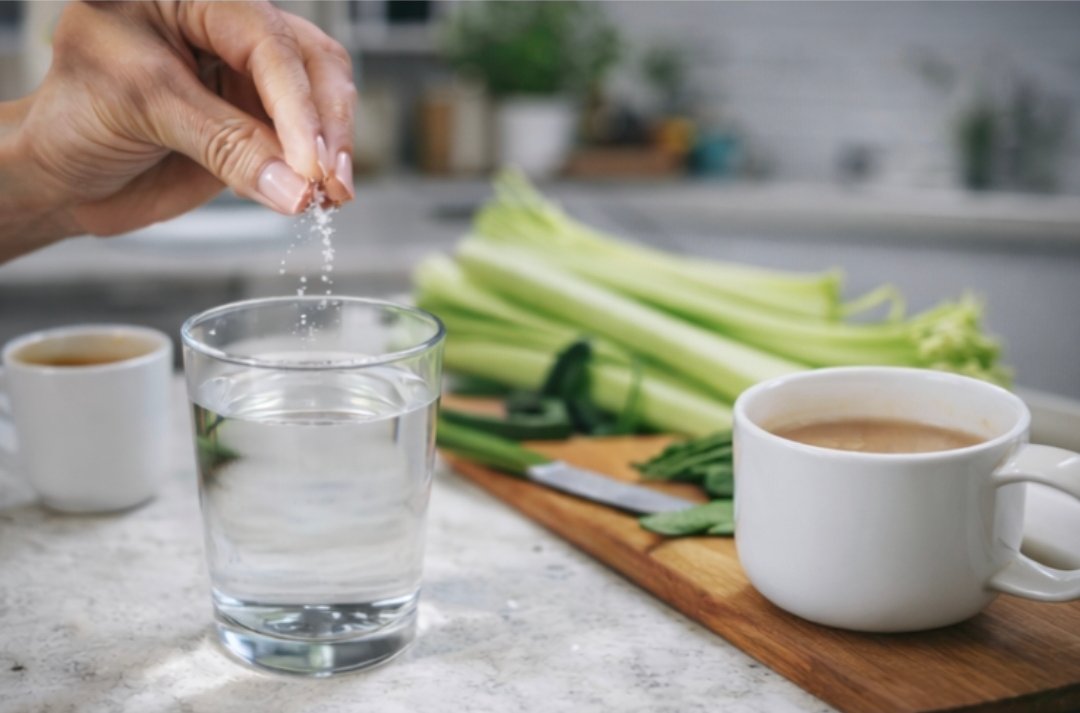
The fastest fix when headaches are already happening is a pinch of sea salt in water — which electrolytes to use, how much, and the fastest fix when a headache is already building — that’s all in Best Electrolytes for Juice Fasting Headaches. What matters here is the timing: start the day before, be consistent on Day 2–3 when sodium loss is highest, and treat vegetables as part of how you keep sodium up, not just as juice ingredients.
Celery juice is worth including early in the day during the first three days. It’s more sodium-forward than most juices and it delivers fluid alongside the mineral rather than separately. Leafy greens contribute potassium and magnesium, which help smooth the nervous system irritability that fasting can produce. Vegetable juice in the morning, kept up through the day — that’s what keeps the head quiet — not one celery juice on Day 1 and then nothing.
Hydration Balance
One of the most common mistakes on a fast is treating water as the answer to every symptom. Headache starts — drink more water. Feel foggy — drink more water. Feel lightheaded — drink more water. By mid-afternoon you’re bloated, still foggy, and the head pressure hasn’t shifted. That’s not always dehydration. Sometimes it’s dilution.
When you drink a lot of plain water, you lower the concentration of sodium in the bloodstream. During fasting, sodium loss is already higher because insulin is lower. Sodium already dropping, then more plain water on top — that’s how you end up with a headache that more water just makes worse. If you’ve been drinking steadily and still feel lightheaded when you stand, shift from water to mineral-rich vegetable juice. Fluid with minerals is what actually helps. Plain water on its own isn’t enough.
The practical rhythm that works: water, then juice, then water — rather than water all day with juice as an occasional addition. On hotter days or if you’ve been moving around, increase the vegetable intake rather than just drinking more water.
The Transition Diet
Coming straight from heavy meals into juice is the fastest way to make Day 1 harder than it needs to be. The body can handle the switch, but it responds with stress signals — headache, irritability, cravings that arrive within hours. Eating lighter for a few days before gives your body time to adjust gradually instead of hitting everything at once.
Start 1–3 days before the fast. If you’ve been eating heavily processed food, restaurant meals, or a lot of salt, give yourself three days. If you already eat reasonably well, one day makes a noticeable difference. The goal is simple: lighter meals, less alcohol and processed food, more vegetables, fruit, soups. Nothing dramatic.
The specific thing worth knowing about salt: heavy salty meals push your sodium up. Stop them abruptly on Day 1, right as the kidneys start releasing sodium faster than usual, and the drop is sharper than it otherwise would be. It’s not that salt before the fast is dangerous — it’s the sudden removal that adds to the headache risk. Keeping meals lighter and less salty in the two or three days before takes the edge off that sharp drop once the fast starts.
Activity and Stress in the First Three Days
This is the one people skip. The temptation is to treat a juice fast like a normal week with juice instead of food. Keep training, stay at the desk all day, maintain everything. That approach works fine for some people on Day 1. By Day 2 it tends to fall apart.
Stress raises cortisol, which disrupts how your body holds onto fluid and makes pain feel sharper. Intense exercise increases sodium loss through sweat. Put them together and you’re losing sodium faster and making the headache more likely. The fast becomes harder and the headache that was mild in the morning is severe by the afternoon.
Walking, light stretching, and easy movement are the right level for the first three days. Not rest — movement is fine and usually helpful. Just not the kind that produces real sweat or real exertion. Sleep matters more during a fast than most people allow for, partly because bad sleep makes everything hurt more, and partly because that’s when your body is doing most of its adjusting. Three days of calmer activity and better sleep early in the fast is usually the difference between Day 2 being manageable and Day 2 being the day you stop.
The Day-by-Day Prevention Plan
Most people who get hit hard on Day 2 started too late.
3–7 days before the fast: Start the caffeine taper. Heavy coffee drinkers start at the longer end. The goal is to be at little or no caffeine by the day before you start.
1–3 days before the fast: Shift meals toward lighter foods — vegetables, fruit, soups, simple proteins. Cut alcohol and heavy processed meals. Keep salt intake moderate rather than high. If you’re prone to headaches, include a vegetable-forward juice serving in the evening of the day before. That gives you a better mineral baseline going in.
Day 1: Start mineral support early — don’t wait for symptoms. Make the first juice of the day vegetable-forward rather than fruit-heavy. Drink steadily rather than waiting until you feel bad and then gulping it down. If mild tightness or lightheadedness appears in the afternoon, treat it as a warning: shift toward vegetable juice, ease up on plain water, reduce any unnecessary exertion.
Day 2: This is the day most people get caught off guard. Sodium loss tends to be at its highest, caffeine withdrawal often peaks here, and the overlap of those two things is where the worst headaches come from. Keep juice frequency regular rather than leaving long gaps. Prioritise a vegetable serving in the morning and again in the early afternoon. Stay conservative with activity. If you wake with head pressure, start the day with mineral-rich vegetables before anything sweet.
Day 3: Some people turn a corner here, others feel the peak arrive a day late. Either way, keep the same discipline — consistent minerals, vegetable-forward earlier in the day, light activity. Don’t test your limits on Day 3 just because Day 2 went well. If symptoms persist despite consistent prevention, that’s information worth taking seriously rather than pushing through.
By Day 4, fluid balance tends to stabilise and headache risk drops for most people. How long it lasts and what shifts each day is in How Long Do Juice Fasting Headaches Last.
If a Headache Starts Anyway
Good preparation cuts the chances significantly. It doesn’t make you untouchable, especially on a first fast or if the week before was rough. When a headache arrives despite preparation, respond early rather than waiting to see how bad it gets.
For mild head pressure or tightness — the kind that’s annoying but not disabling — stop what you’re doing, rest briefly, and shift your next intake toward mineral-rich vegetable juice. Reassess after 30–60 minutes. If it eases, you caught it early enough and the fast can carry on.
For a headache that’s affecting concentration, making you light-sensitive, or building through the day: sit or lie down, drink a vegetable-forward serving, check whether you’ve been drinking a lot of plain water without much juice, and think about when you last had coffee and whether withdrawal is part of what’s happening. If improvement doesn’t come within an hour or two, that’s worth taking seriously.
For anything severe — escalating pain, pain that came on suddenly, or headache combined with confusion, fainting, vision changes, chest symptoms, or anything that feels different from a normal headache — stop the fast. When to Stop a Juice Fast Due to Headache is where to go for the full picture on when to stop. A fast is optional. Don’t muscle through something that’s telling you to quit.
What Good Prevention Actually Feels Like
When prevention is working, the fast feels calmer than you expected. Day 1 isn’t chaotic. Day 2 has some discomfort but no severe head pressure. You can stand up without a dizzy surge. Your head stays quiet enough to function. You’re not chasing water constantly and still feeling wrong. The difference from a fast you went into cold is obvious — not because this is complicated, but because doing a few things a day or two earlier is what keeps Day 2 from being a write-off.
If a headache does start despite all of this, the main juice fasting headaches guide is where to go.