
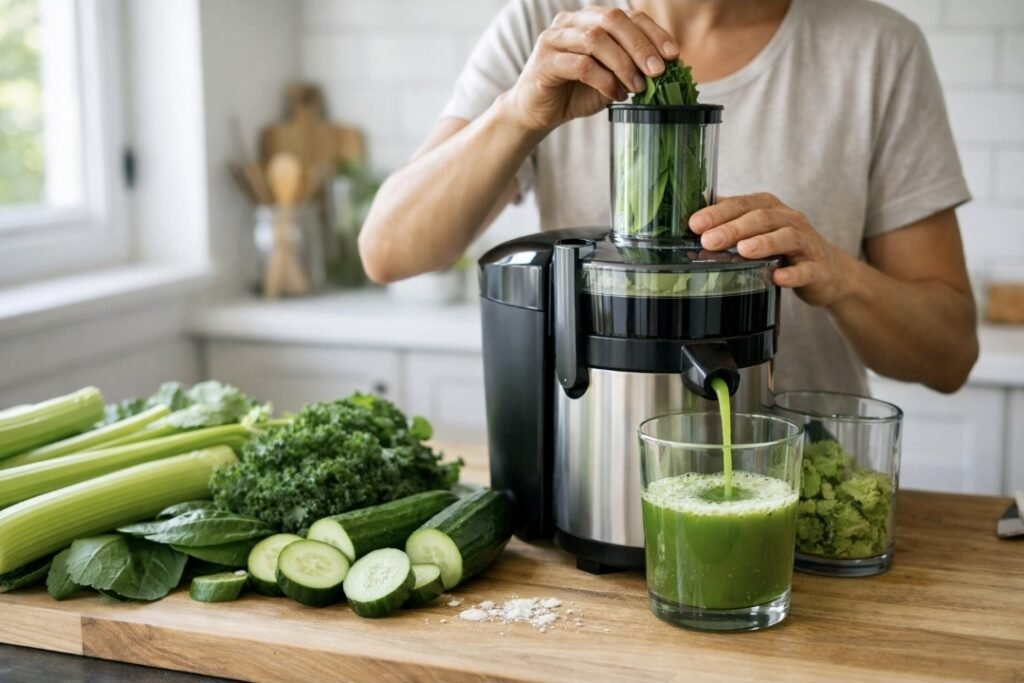
Electrolyte imbalance is one of the most common and most preventable causes of headaches during a juice fast.
Most people assume headaches are just part of a “detox reaction.” They usually are not. In many cases, the reason is simpler: sodium drops, fluid balance changes, and the head starts to feel heavy, tight, or dull.
The first electrolyte to fix is sodium. Potassium and magnesium matter too, especially over longer fasts, but sodium is the one most likely to bring noticeable relief quickly when the headache is caused by low electrolytes.
If you have been getting juice fasting headaches, start here before blaming willpower, toxins, or the fast itself.
The Fastest Electrolyte Fix for a Juice Fasting Headache
Start with sodium.
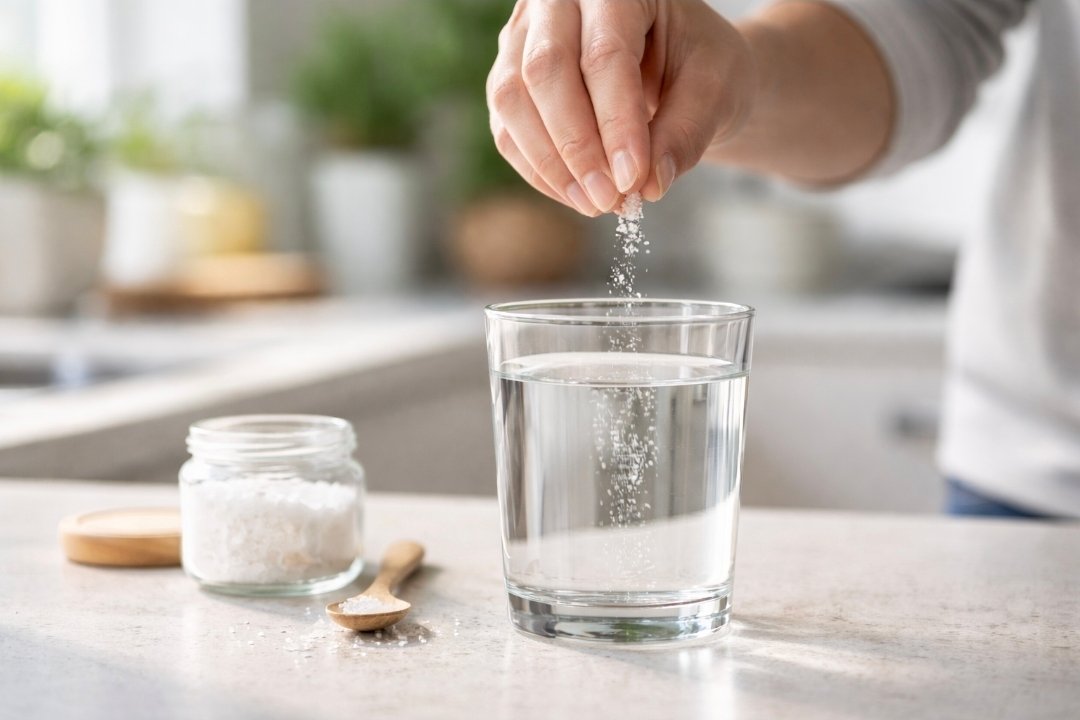
A small pinch of sea salt in water often eases an electrolyte-related fasting headache within 20–40 minutes. It works fastest when the headache comes with lightheadedness, fatigue, brain fog, or that drained feeling when you stand up.
Keep the amount small. You are not trying to flood your body with salt. You are trying to replace what fasting and extra fluid loss can pull down too quickly.
- Fastest relief: small pinch of sea salt in water
- Best natural juice source: celery-based vegetable juice
- Best daily support: celery, cucumber, spinach, greens, and mineral-rich vegetable blends
- Most common mistake: drinking lots of plain water without minerals
If the headache does not change after one or two careful attempts, electrolytes may not be the main cause. Caffeine withdrawal, poor sleep, sugar swings, under-drinking juice, or pushing too hard can also cause headaches during a fast.
Why Electrolytes Matter During Juice Fasting
Electrolytes are minerals that help control fluid balance, nerve signals, muscle function, and circulation.
The brain is especially sensitive to shifts in sodium and fluid volume. When sodium drops too quickly, blood pressure can dip, circulation becomes less steady, and headaches can follow.
During fasting, insulin usually drops. When that happens, the kidneys release more sodium and water than usual. That early sodium loss is one reason headaches often show up in the first few days of a juice fast.
Why Sodium Is the Most Important Electrolyte During Fasting
Sodium is the main mineral involved in blood volume and fluid balance. When sodium gets too low for your current needs, you may feel flat, weak, foggy, dizzy, or headachy.
This is why sodium usually works faster than potassium or magnesium for fasting headaches. It helps your body hold fluid in the bloodstream instead of simply flushing more out through the kidneys.
The thing most people miss
During a juice fast, you are often not getting much sodium.
Fruit-heavy juices contain very little. Many vegetable juices contain more minerals, but still may not provide enough sodium to match what your body is losing in the first few days.
That is why a fasting headache often feels like pressure, heaviness, or a dull band around the head rather than a sharp pain.
Why sodium works faster than potassium
Sodium affects fluid in the bloodstream quickly. That makes it useful when a headache is tied to low blood volume, lightheadedness, or standing dizziness.
Potassium still matters. It supports nerve function, muscle contraction, and normal blood vessel tone. But it does not replace sodium.
For fasting headaches, sodium is usually the first correction. Potassium and magnesium are daily support.
Two patterns worth recognising
- Head pressure with lightheadedness when standing, often paired with a drained or empty feeling.
- A dull headache with fatigue and brain fog that improves after a salty sip or mineral-rich vegetable juice.
These are practical clues, not diagnoses. If a headache improves after a small amount of sodium, low electrolytes become a strong possibility.
Coffee withdrawal headaches follow a different pattern and are covered separately in Coffee Withdrawal During a Juice Fast.
The Most Important Electrolytes for Juice Fasting Headaches
Sodium
Sodium maintains blood volume, circulation, and nerve transmission. It is the fastest-acting electrolyte when a juice fasting headache is caused by low minerals and fluid imbalance.
Best sources during a juice fast include a small pinch of sea salt in water, celery juice, tomato-based vegetable juice, or mineral-rich vegetable broth.
Potassium
Potassium supports nerve signals, muscle contraction, and blood vessel tone. Vegetable juices can provide useful amounts, especially greens, celery, cucumber, and tomato-based blends.
Potassium helps, but it cannot do sodium’s job. If the headache is from sodium loss, potassium alone is unlikely to fix it quickly.
The right juicer makes daily mineral-rich juice easier to keep up with. The options in this best cold press juicer guide for fasting are worth looking at if you are juicing every day.
Magnesium
Magnesium supports nervous system stability and helps relax tight muscles and blood vessels. It may help reduce headache sensitivity, especially when tension, poor sleep, or longer fasting days are involved.
Magnesium is not usually the fastest fix for a headache that starts from low sodium, but it can be useful daily support.
Electrolyte Strategies That Work
The goal is steady mineral intake, not large doses.
- Add a small pinch of sea salt to water once or twice daily if needed
- Use mineral-rich vegetable juices instead of fruit-only juices
- Avoid drinking large amounts of plain water without minerals
- Space electrolyte intake through the day
- Act early when head pressure starts instead of waiting until the headache is strong
Electrolytes work better from day one than as a late rescue move.
Big swings happen when you drink a lot of plain water, sweat, walk more than usual, start the fast too hard, or ignore early symptoms. Small, steady mineral support usually makes the fast smoother.
Timing Electrolytes Through the Day
Morning
Sodium can feel lowest in the morning after overnight fluid shifts. Start with water, then move to a mineral-rich vegetable juice soon after.
Celery-based juice is one of the easiest natural sodium sources during a juice fast. If you wake with head pressure or feel lightheaded when standing, a small pinch of sea salt in water first thing can help.
Midday
Use midday to maintain balance. Have another vegetable-heavy juice and notice how you feel when standing, walking, or working.
If you are drinking extra water because you feel dry or unwell, do not keep taking plain water again and again. Pair extra water with minerals instead.
If your fast includes walking, sweating, or light activity, sodium needs may rise.
Afternoon
Afternoon headaches are common while your body is still adjusting to running on juice. If fatigue appears with a dull headache, use vegetable juice plus a small amount of sodium if needed.
Acting early beats waiting until the headache is bad.
Evening
Evening is about keeping things steady. If headaches appeared during the day, a final mineral-rich juice can reduce the chance of waking with a headache the next morning.
Greens-based juices may also help if the headache feels tied to tension, poor sleep, or low overall mineral intake.
Avoid drinking a lot of plain water late in the evening. It can lower sodium further and disrupt sleep with repeated bathroom trips.
If a Headache Starts During Your Juice Fast
Act early. If mild pressure or a dull ache begins, sip water with a small pinch of sea salt and see how you feel after 20–40 minutes.
Keep juices vegetable-heavy while symptoms are present. Fruit-only juices may give temporary energy but they do not solve low sodium.
If the headache is strong, throbbing, or paired with worsening dizziness, shakiness, confusion, fainting, chest pain, severe weakness, or feeling unsteady, stop fasting and get medical advice.
Who should be careful
More sodium is not automatically better. People with kidney disease, heart conditions, uncontrolled high blood pressure, or those taking diuretics should be cautious and speak to a doctor before adjusting electrolytes.
Even if you are healthy, avoid large doses. Small, spaced amounts are the safer starting point.
Best Natural Electrolyte Sources During Juice Fasting
Vegetable juices are the most useful natural electrolyte sources during a juice fast.
- Celery juice — useful natural sodium source
- Cucumber juice — good for hydration
- Spinach juice — provides magnesium and potassium
- Tomato juice — provides a wider mineral spread
- Vegetable broth — concentrated mineral support
Celery juice is particularly useful because of its sodium content. That makes it a strong option when the headache is electrolyte-related.
Celery vs cucumber
Celery juice is higher in sodium than most common fasting juices. That makes it useful for quick relief when low sodium is involved.
Cucumber juice is better for hydration. It feels soothing and helps with fluid intake, but it is not as sodium-rich as celery. If the headache is mainly caused by low sodium, cucumber alone may not be enough.
Cucumber often helps when you feel dry and slightly headachy. Celery is more useful when head pressure comes with lightheadedness on standing.
Greens blends
Spinach and greens blends — spinach, kale, romaine, parsley — lean more toward potassium and magnesium. Potassium supports nerve function. Magnesium helps reduce tension and headache sensitivity.
Greens blends are not the quickest answer for a low-sodium headache. They work better as daily support to stop symptoms building over several days.
What works fastest for relief
If the headache is down to low electrolytes, higher-sodium options work fastest: celery juice, vegetable broth, or a small pinch of salt in water.
Cucumber is a hydration helper. Greens blends are daily mineral support.
Practical amounts
- Celery juice: a tall glass for relief, or a smaller glass as daily support.
- Cucumber juice: one large cucumber juiced, ideally paired with celery or greens.
- Spinach/greens blend: a generous handful of greens with cucumber or celery for taste and mineral variety.
- Salt water: a small pinch in a glass of water, sipped slowly.
If you cannot tolerate salty taste
Dilute salty water more and sip slowly instead of drinking it all at once. Celery and cucumber together is often easier than straight celery juice.
A squeeze of lemon or lime can make the taste easier without turning the drink into a sugary juice.
If salty water and celery are both difficult, mineral-rich vegetable broth is often the most concentrated natural option, especially during the first few days.

Signs Your Headache Is Electrolyte-Related
Electrolyte headaches often feel systemic. You do not just feel pain. You feel underpowered.
Common signs include:
- Headache improves after salt intake
- Dizziness when standing up
- Fatigue with the headache
- Weakness or low energy
- Brain fog and poor concentration
- Head pressure rather than sharp pain
If you take a small amount of sodium and the headache eases within 15–60 minutes, low electrolytes were probably involved.
That feels different from caffeine withdrawal headaches, which follow a slower curve and usually do not respond much to salt. It also feels different from sugar crash headaches, which tend to follow sweeter juices or uneven intake. For that second pattern, read Sugar Crash During a Juice Fast.
Timing pattern across days
A common pattern is simple: day one feels fine, then day two brings pressure headache, fatigue, and standing dizziness.
That timing fits the early sodium and water loss that often happens during the first days of fasting.
Why Plain Water Can Make Fasting Headaches Worse
Drinking too much plain water without minerals can lower sodium in the bloodstream and make electrolyte headaches worse.
This catches people out because they think more water is always the answer. During a juice fast, that is not always true. If you have been drinking plenty of water and still have a headache with standing dizziness, the next move is usually mineral-rich vegetable juice or a small amount of salt, not more plain water.
How Long Electrolytes Take to Relieve Headaches
If low electrolytes are the cause, relief can be fairly quick. Many people notice improvement within 20–60 minutes.
Some notice a change within 15–30 minutes after a small sodium intake, especially if the headache is mild to moderate and comes with standing dizziness.
Others take 45–90 minutes, especially if they waited until the headache was already strong or if several things are happening at once: low sodium, caffeine withdrawal, poor sleep, and too little juice.
Rapid improvement is a strong clue that the headache was electrolyte-related. If there is no change after a couple of careful attempts, use the main guide on juice fasting headaches to check the other likely causes.
How to Prevent Electrolyte Headaches
- Start mineral intake on day one
- Use vegetable-heavy juices regularly
- Avoid fruit-only juice days
- Avoid drinking too much plain water without minerals
- Ease into fasting instead of starting aggressively
- Reduce caffeine gradually before the fast if you usually drink a lot of it
Prevention works best before the headache starts. The day before your fast, shift toward vegetables, reduce heavy processed foods, and avoid starting from a stressed, dehydrated state.
On day one, start mineral support early instead of waiting for symptoms. That alone can reduce the day two headache pattern that catches many people off guard.
For broader prevention steps, read How to Prevent Juice Fasting Headaches.
When Electrolytes Are Not Enough
Electrolytes help when the headache is caused by mineral and fluid imbalance. They do not fix every fasting headache.
If sodium helps only slightly, or not at all, look at the other likely causes:
- Caffeine withdrawal
- Too little juice
- Too much fruit juice and unstable energy
- Poor sleep
- Stress
- Overexertion
- Starting the fast already dehydrated
When to stop fasting because of a headache is covered in When to Stop a Juice Fast Due to Headache.
Safety Considerations
Electrolyte headaches are often temporary, but do not treat every headache as harmless.
Stop fasting and get medical advice if symptoms include severe dizziness, fainting, confusion, heart palpitations, chest pain, severe weakness, or a headache that keeps worsening.
This article is informational only and not medical advice.
FAQ
Are electrolytes the main cause of juice fasting headaches?
Electrolyte imbalance is a common cause, especially in the first few days. Sodium loss during fasting can change blood volume and circulation, which may trigger pressure-type headaches.
Headaches can also come from caffeine withdrawal, poor sleep, too little juice, sugar swings, or overdoing activity. Standing dizziness, fatigue, and quick improvement after sodium usually point toward electrolytes.
What is the best electrolyte for juice fasting headaches?
Sodium is usually the most important electrolyte for quick relief. Potassium and magnesium help with daily support, but sodium is more likely to ease a fasting headache quickly when low minerals and fluid imbalance are the cause.
How much salt should I take?
Start small. A pinch of sea salt in water is enough for many people to test whether sodium is involved. Sip it slowly and wait to see how you feel.
Do not take large doses. If you have kidney disease, heart problems, uncontrolled high blood pressure, or take diuretics, speak to a doctor first.
Can juice alone provide enough electrolytes?
Some juices help, but sodium is usually the weak point. Vegetable-forward juices provide more minerals than fruit-only juices, but they may still not replace what fasting causes the kidneys to release.
Celery-based juices are more useful than sweeter blends for this specific problem.
Why does salt help headaches quickly?
Sodium helps restore blood volume and steadier circulation. If your headache is driven by early sodium loss plus too much plain water, sodium targets the problem more directly than potassium.
That is why some people feel improvement within 15–60 minutes. If there is no change after a couple of careful attempts, the headache is probably not mainly from low sodium.
Can drinking too much water cause headaches?
Yes. Too much plain water can lower sodium. During fasting, the kidneys may already be releasing more sodium than usual, so repeated plain water can make the imbalance worse.
A better move is to hydrate with minerals: vegetable juice, celery juice, vegetable broth, or a small pinch of salt in water.
Does everyone need electrolyte support?
Most people benefit from some mineral support during fasting, but the amount differs.
Some can do a short juice fast without noticeable symptoms, especially if they rest, sleep well, and use vegetable juices. Others develop headaches quickly, especially if they sweat, walk a lot, drink plain water heavily, or have a history of fasting headaches.
What if salty water makes me feel nauseous?
Dilute it more and sip slowly. Or use celery and cucumber juice, which often feels gentler.
Lemon or lime can make salty water easier to drink. If nausea is strong or persistent, slow down and put safety first. Sometimes the right move is stopping the fast and resetting.
Can electrolytes prevent headaches before they start?
Yes. Prevention is easier than rescue. Starting mineral support on day one reduces the early sodium drop that often drives day two and day three headaches.
Spacing intake matters. Small, steady amounts usually work better than occasional large doses.
Prevent Headaches During Your Juice Fast
A clear 3-day juice fast plan makes electrolyte timing easier and reduces the chance of avoidable headaches.
The One to Start With
The best electrolytes for juice fasting headaches are sodium, potassium, and magnesium. Start with sodium if the headache is already there. Use potassium and magnesium through vegetable juices for steadier daily support.
Keeping electrolytes steady prevents many fasting headaches before they start.