
Low-Sugar Juice Recipes for Fat Loss During Fasting
“Low sugar” gets misunderstood fast when people start juicing.
They load a blender with apples, grapes, pineapple, and a little spinach, then wonder why hunger hits hard an hour later and the day feels harder than it needs to.
This isn’t about cutting fruit out. It’s about building juices that taste good, stay vegetable-forwardbuilt mostly from vegetables, and don’t turn every glass into a sweet drink.
If you’re using juicing as part of juice fasting for weight loss, these recipes keep things steadier without overcomplicating it.
What “Low-Sugar” Means in Juice (Without Getting Technical)
Low-sugar juice means the drink tastes like vegetables first, not fruit first.
It also means you can drink it without feeling like you just had dessert for breakfast.
The goal is a juice that supports fat loss during fasting by reducing the “sweet spike → hungry crash” pattern that makes people overdrink or overeat later.
You don’t need to track anything. Just make a few consistent choices.
- What it is: vegetable-based juice with small fruit additions for flavor.
- What it isn’t: “healthy fruit juice” with a token handful of greens.
- What it is: acids and herbs doing the heavy lifting for taste (lemon, lime, ginger, mint).
- What it isn’t: relying on apple or pineapple to make every recipe drinkable.
- What it is: rotating vegetables so you don’t end up drinking mostly carrot and beet all week.
Low sugar usually comes down to two things: how much fruit you put in, and which vegetables you pick as the base.
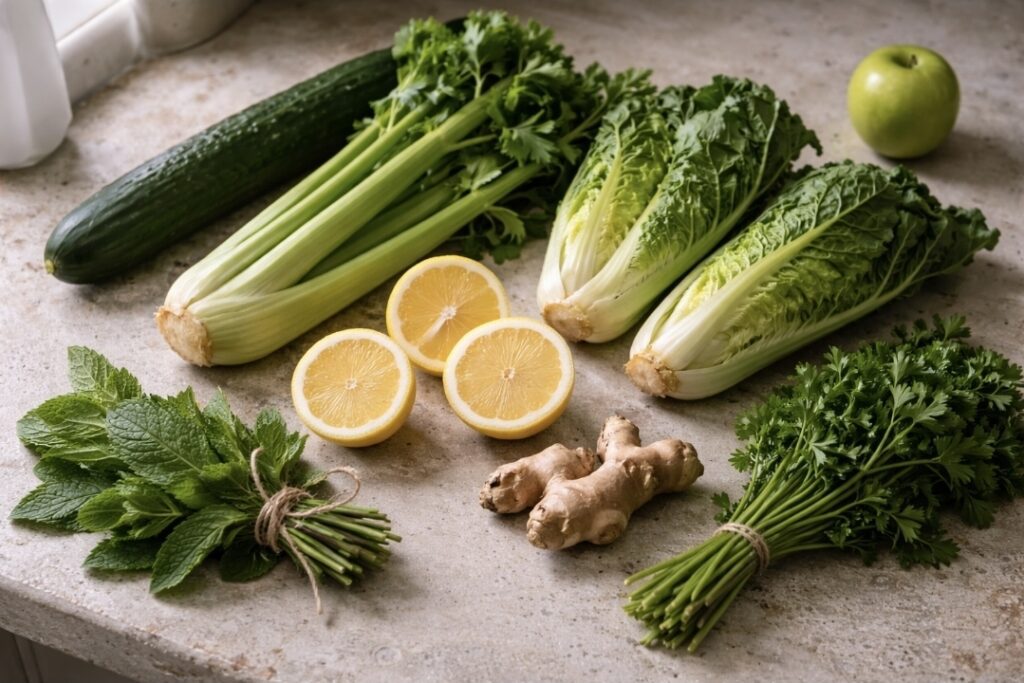
Cucumber, celery, leafy greens, and lemon can make a big glass that still feels light.
Carrots and beets can still fit, but they stop being “low sugar” when they become the base of every bottle.
The Rules That Keep Juice Low Sugar (Simple Build Formula)
You don’t need strict rules to make low sugar juice. You need a repeatable plan that keeps fruit in the “accent” role.
The easiest way to keep it consistent is to build every juice around a vegetable base, then add one or two flavor drivers.
After a few batches, it becomes automatic without drifting back into fruit-heavy blends.
Here’s a simple system that works:
- Pick 1–2 vegetable bases: cucumber, celery, romaine, spinach, kale, zucchini, or parsley-heavy mixes.
- Add one “character” vegetable: fennel, bell pepper, tomato, radish, or a small piece of beet or carrot.
- Add one herb: mint, basil, cilantro, dill, or parsley.
- Add one acid: lemon or lime.
- Optional small fruit: green apple, berries, grapefruit, or a small piece of pear for balance.
Two things make a bigger difference than you think.
First, acid changes everything. Lemon or lime can make a green juice taste finished without needing sweetness.
Second, ginger and herbs make a low sugar juice feel less like liquid salad, which makes it easier to stick with.
10 Low-Sugar Juice Recipes for Fat Loss During Fasting
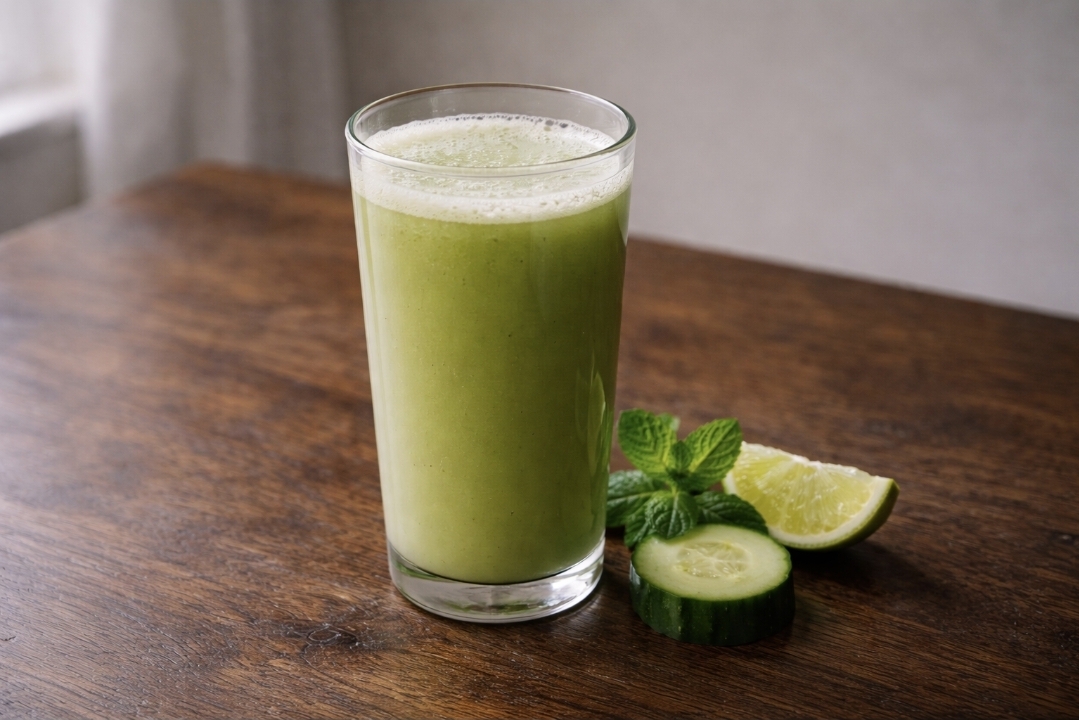
1) Cucumber Celery Lime Cooler
- Cucumber
- Celery
- Lime
- Handful of mint
- Small piece of ginger
Clean, sharp, and refreshing. Built mostly from cucumber and celery, with lime and ginger carrying the flavor.
2) Romaine Lemon Green
- Romaine hearts
- Cucumber
- Lemon
- Parsley
- Small green apple (optional)
Light and crisp, with a bright finish from lemon. If you use apple, keep it minimal.
3) Spinach Basil Citrus
- Spinach
- Cucumber
- Lemon or lime
- Fresh basil
- Pinch of ginger
Tastes more like a grown-up lemonade than a green drink. Basil softens the green edge, so fruit isn’t necessary.
4) Savory Tomato Celery Juice
- Tomatoes
- Celery
- Cucumber
- Lemon
- Fresh cilantro (optional)
More savory than sweet, which helps if you’re tired of fruit-heavy juice. Tomatoes add body without pushing high sugar content the way fruit blends can.
5) Fennel Cucumber Lemon
- Fennel bulb
- Cucumber
- Lemon
- Parsley
- Small piece of ginger
Fennel brings a slightly sweet note even though it’s not fruit. A solid option when you want variety without increasing sugar.
6) Green Pepper Lime Punch
- Green bell pepper
- Cucumber
- Celery
- Lime
- Cilantro
Fresh and sharp, almost like a juice version of salsa without the heat. Pepper adds depth so fruit isn’t doing the heavy lifting.
7) Ginger Greens With Grapefruit
- Romaine or spinach
- Cucumber
- Grapefruit (small portion)
- Ginger
- Lime
Grapefruit gives a fruit note without turning the glass into a sweet drink. Keep the portion modest and let ginger stand out.
8) “Almost Sweet” Carrot Citrus (Controlled)
- Carrot (small amount)
- Cucumber
- Lemon
- Ginger
- Parsley
Scratches the sweet itch without turning into straight carrot juice. Carrot stays in a supporting role, not the base.
9) Beet-Lemon Bite (Small Beet, Big Acid)
- Beet (small piece)
- Cucumber
- Lemon
- Celery
- Ginger
Beet can take over the taste, so use a small portion. Lemon and ginger keep the flavor sharp and balanced.
10) Herb-Heavy Green (Mint + Parsley)
- Cucumber
- Romaine
- Mint
- Parsley
- Lime
A reset-your-palate juice when you’ve had too many sweet drinks. Herbs and lime carry the flavor instead of fruit.
These recipes are meant to be mixed and matched, not treated like a fixed menu.
If you find one that feels easy to drink, keep it as an anchor and rotate the others so you don’t drift back toward fruit-heavy habits.
How to Use These Recipes During a Juice Fast
The biggest reason people abandon low sugar juice is boredom and hunger, not lack of willpower.
Rotation solves boredom. Balanced flavors solve the “I need something sweet” problem.
If every bottle tastes like greens and nothing else, most people eventually start adding more fruit just to make it tolerable.
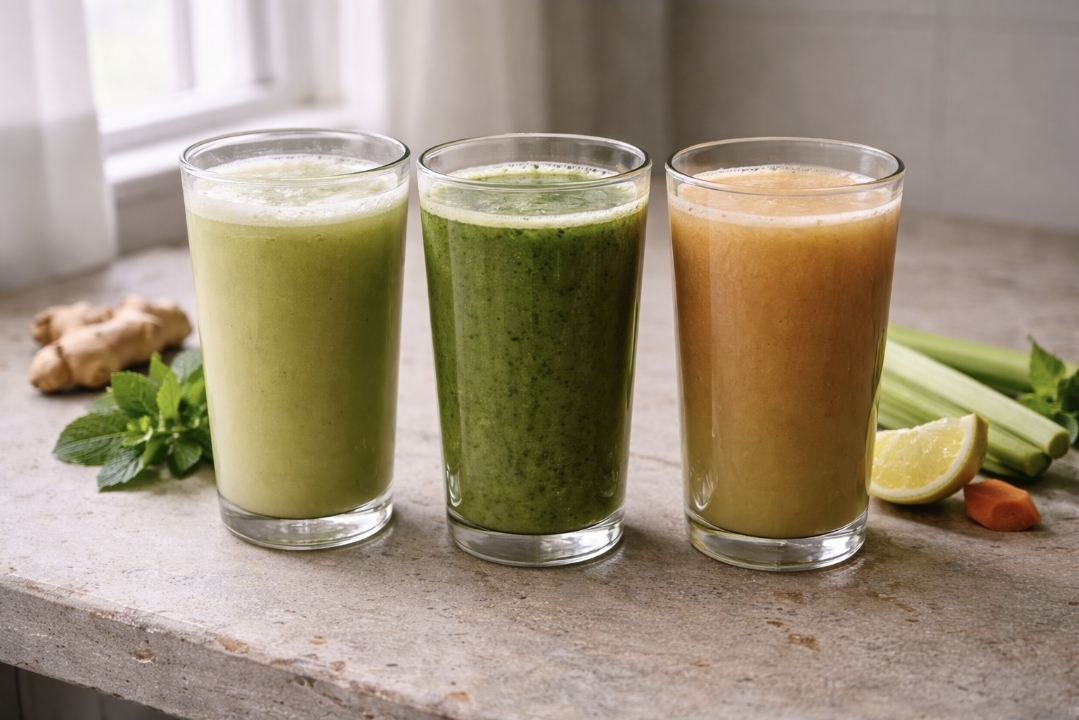
A simple rotation idea is to keep three options throughout your day: one crisp/bright juice, one savory-leaning juice, and one almost sweet but controlled juice.
That keeps the juice plan from feeling like the same drink repeated.
If you use the carrot or beet recipes, treat them as occasional choice, not your daily base.
Hunger during fasting is not always about sugar. Sometimes it’s just the reality of running on less.
Sweet juices often make hunger feel sharper because they can leave you wanting more right after you finish.
- If hunger hits hard after a sweet-tasting juice, switch the next one to savory or herb-based.
- If you feel flat and don’t want another green juice, use citrus and ginger to enhance the flavor.
- If you keep craving sweetness, reduce fruit and increase acid instead.
- If your juicing day feels repetitive, rotate herbs before you rotate fruit.
Small adjustments make the day easier.
You’re not trying to outsmart hunger. You’re trying not to make it worse with fruit-heavy blends.
Common Mistakes That Make “Low-Sugar” Juices Not Low Sugar
Most “low sugar” mistakes come from good intentions.
People want the juice to taste good, so they keep adding fruit until it does.
The end result is a drink that’s easy to overconsume and doesn’t feel steady during fasting.
- Using apple as the base every time: apple is fine as an accent, but daily apple-heavy juices stop being low sugar fast.
- Leaning on bottled “green juice”: many bottled options are fruit juice with a green label and a small amount of greens.
- Adding dried fruit for sweetness: dried fruit concentrates sugar and can turn a “healthy” drink into a sweet hit.
- Carrot or beet every day: both can fit, but they work best as occasional flavor additions, not the foundation of the fast.
- Skipping acid and herbs: when you don’t use lemon, lime, ginger, or herbs, fruit becomes the default flavor tool.
Your palate shifts over a week.
If you start with fruit-heavy juice, your taste expects sweetness, and vegetable-forward blends feel harsh.
If you start vegetable-forward, fruit tastes stronger, and you need less of it to get the same flavor.
Who Should Be Cautious With Low-Sugar Juicing
Low-sugar juice can be useful during fasting, but it’s not right for everyone.
This is about knowing when the setup can create problems.
If you take diabetes medication or insulin, changing your intake can affect blood sugar control quickly.
Talk to your doctor before changing anything.
If you have kidney disease, high-oxalate greens and aggressive juicing can be an issue, and you should seek professional advice before making this a habit.
Pregnancy and breastfeeding aren’t the time to experiment with fasting. Restriction and fasting practices are usually not appropriate during those periods.
If there’s a history of eating disorders or restrictive eating patterns, “low sugar” rules can become rigid fast and do more harm than good.
None of this means juicing is bad. Different situations require different decisions.
If you’re unsure, cautious choices beat aggressive experiments.
Final Words
Low-sugar juice recipes for fat loss work best when they taste good enough to repeat and steady enough to avoid the sweet-hunger loop.
Vegetables, acid, herbs, and ginger give it flavor.
Fruit can still be included, just use less if of it.
If it tastes like straight fruit juice, it’s not low sugar.
FAQ
Are low-sugar juices better for fat loss?
They can be, mostly because they reduce the urge to keep chasing sweetness during a fast. Juices made mostly from vegetables feel steadier for many people than fruit-heavy blends. That makes the fast easier to stick to without turning each drink into a sweet treat. It still depends on overall intake and what happens outside the juicer.
What fruits are lowest sugar for juicing?
Berries, grapefruit, and green apple used in small amounts are common choices. Citrus is often the most useful fruit because it adds flavor without needing much volume. Pineapple, grapes, mango, and large amounts of apple push sugar up quickly. If you want fruit, treat it like seasoning, not the base.
Can I use carrots or beets in low-sugar juice?
Yes, but use them as small additions, not as the main ingredient. Carrot-only or beet-heavy juices can end up tasting sweet enough that you keep wanting more. When you pair a small amount with cucumber, celery, lemon, and ginger, the flavor stays balanced. Rotation also matters so those vegetables don’t become your daily go to.
Will low-sugar juice reduce cravings during a juice fast?
It often helps because the juice tastes less like dessert and more like food. Cravings can still show up during fasting, but fruit-heavy juices can make cravings worse for some people. Savory juices and herb-laiden recipes tend to reduce that “keep drinking” urge. It’s not a guarantee, but it’s a common result.
How do I keep juice from tasting “too green”?
Use lemon or lime and a good amount of ginger before you add more fruit. Herbs help a lot too, especially mint and basil. Cucumber and romaine make green juice taste lighter than kale-heavy blends. If it still tastes harsh, adjust the greens and acid first, not the fruit.