
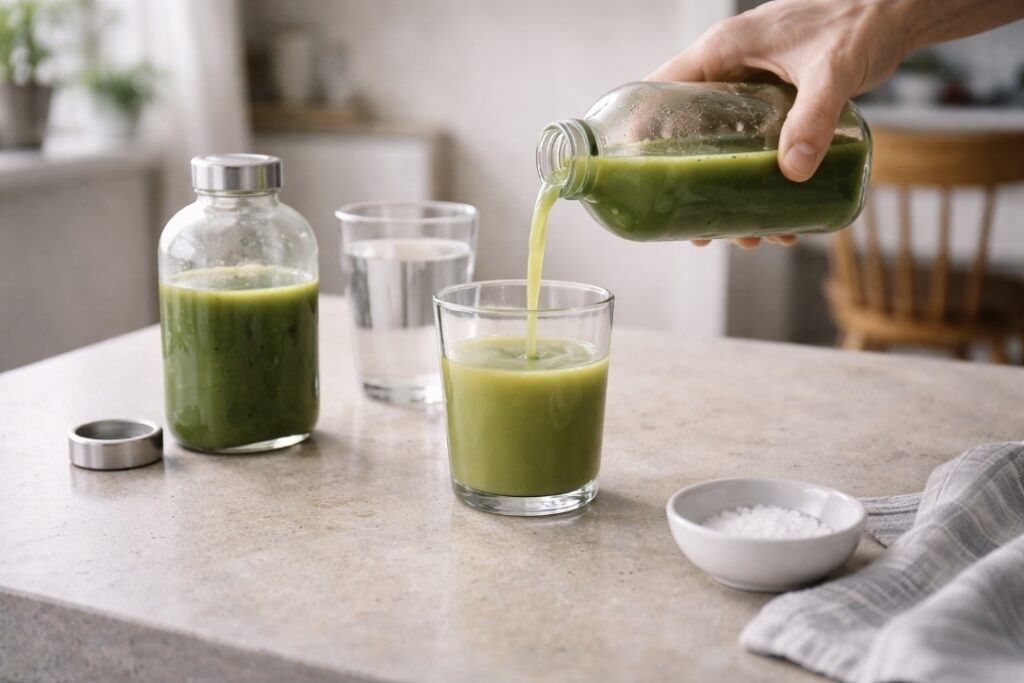
Hunger is what makes a lot of people stop a juice fast early. Not because something is automatically wrong, but because they fall behind on juice and do not fix it early enough.
If hunger starts coming with dizziness, weakness, shakiness, or you no longer feel steady, read when hunger during a juice fast may be a warning sign.
Here is what to change today. Timing. How much juice you are actually drinking. Water and a little salt if you feel dry or lightheaded. What goes in the next bottle. If you need the full setup, read this guide on how to juice fast. If you are asking why hunger keeps coming back even though you are juicing, read why you’re still hungry on a juice fast.
Start With the Quickest Fix
Do not overthink the whole fast first. Start with the quickest fix.
If you waited too long for the next juice, get juice in now. If you have barely had any juice today, get a full serving in now. If you also feel dry, flat, or a bit headachy, drink water too.
Fix the basic things first. Then see how you feel.
If you are just winging it
No set times, no idea how much juice you have had, no next bottle ready. Fix that first. Hunger gets harder fast when you are making it up as you go.
Timing: Do Not Wait Until You’re Very Hungry
Hunger gets harder to settle once it is fully up. That is why waiting too long between juices wrecks the rest of the day.
Drink before you get properly hungry. For most people, that means every 2 to 2.5 hours. Not whenever you remember. Not once you are already really hungry. Before that.
The first juice matters most. Leave that one too late and the whole day starts off late.
Within 30 to 45 minutes of waking is a good place to start. That one change helps a lot with late-morning and afternoon hunger.
If you keep falling behind, stop thinking in rough timings. Write down real times for the next few juices and follow them.
Hunger is easier to keep under control when the next bottle already has a time instead of becoming something you keep putting off.
First juice of the day
Get it in within 30 to 45 minutes of waking. Do not wait for hunger to show up first.
Total Volume: Small Amounts Keep You Hungry
A lot of people are simply not drinking enough juice. That is separate from timing, and it needs a different fix.
Juice is all your calories on a juice fast. You need to drink enough. If you are only getting in a few small glasses, hunger will stay high no matter how neatly you space them out.
A good minimum is 48 to 64 ounces across the day. Early in the fast, going nearer the higher end makes the first few days easier.
If you are down at 24 or 32 ounces, do not overthink it. You need more juice.
Serving size matters too. Tiny servings on a good schedule still leave hunger hanging around. A few mouthfuls will not do the job of a proper serving.
Water and herbal tea help with hydration. They do not fill you up the way juice does. If hunger is up and your only answer is more water, you are usually still not fixing the real problem.

Salt and Water
Sometimes it feels like hunger when part of the problem is actually dehydration. That happens more than people think.
If you are thirsty, dull-headed, flat, or a little lightheaded when you stand up, do not assume that is just hunger. Water may help more than another twenty minutes of fighting with it.
Plain water is the first step. If the day has also left you feeling run down, a small pinch of sea salt in water can help too.
This does not replace juice. It just takes one extra problem out of the picture and can make hunger feel less intense.
Deal with the dry feeling first, then see if you are still hungry.
Quick dehydration check
Dry mouth, dull head, or slight lightheadedness along with hunger points to water and salt as part of what you need. Do that first, then reassess.
What Goes in the Juice Matters
Some juices hold hunger off better than others.
Fruit-heavy juice gives a quick lift, but it does not last long. Do that all day and hunger starts coming back harder than it should.
Vegetable-heavy juice keeps you steadier. Cucumber, celery, and greens as the base help keep the next hunger wave from coming back too fast.
A little apple or carrot for taste is fine. A bottle that is mostly apple, pineapple, or other sweet fruit is much harder to get through the day on.
If the day has already gone wrong, make the next juice the one you fix. Do not wait until tomorrow to change the mix.
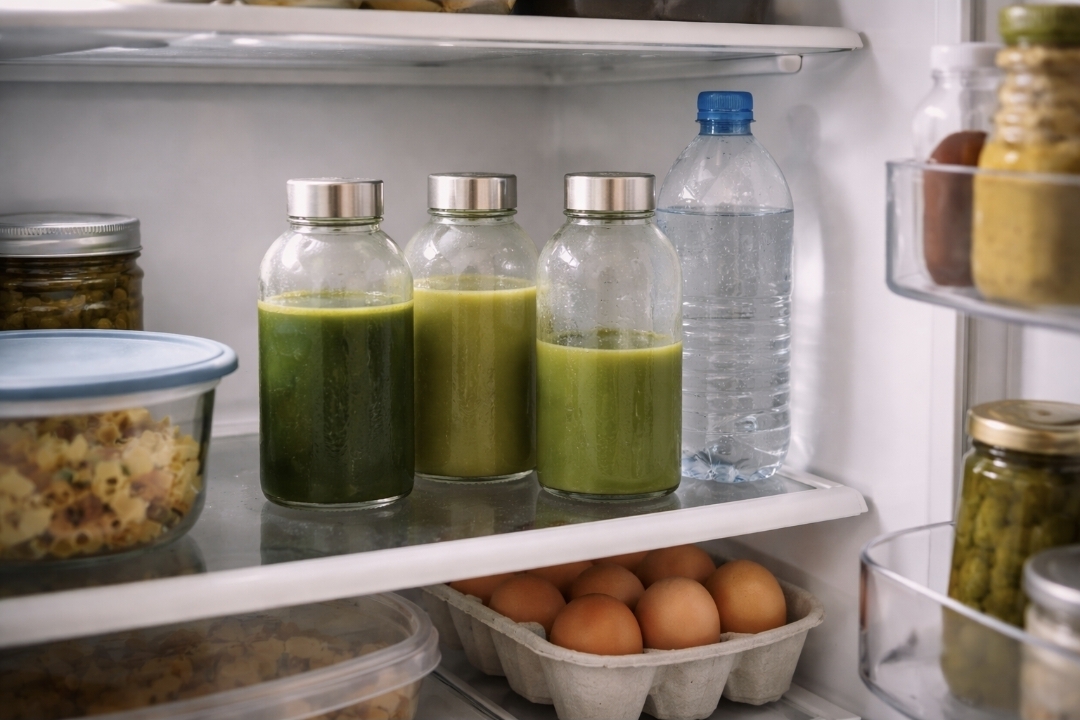
What Helps and What Makes It Worse
What helps is simple. Drink early. Keep the gaps short. Get enough juice in. Make the next bottle more vegetable-heavy, not sweeter.
What makes it worse is simple too. Long gaps. Tiny servings. Fruit-heavy juice all day. Trying to fix hunger with water alone.
Trying to tough it out by stretching the gap is another mistake. Hunger does not settle because you pushed through it. It usually comes back worse.
Cutting volume to push results faster backfires too. You are already drinking fewer calories than usual. Cutting it harder just makes the fast much harder to stick to.
If that keeps happening on your fast, the common juice fasting mistakes page goes further into it. If you are trying to lose weight without making the fast miserable, read juice fasting for weight loss.
Quick Reset If the Day Has Already Gone Wrong
Do not wait until tomorrow. Fix today.
Right now: drink a full serving of juice. If the day also feels dry or flat, follow it with water and a small pinch of sea salt.
Next: write down the times for your next three juices. Real times. Not “later” and not “every couple of hours.”
Then: make the next juice vegetable-heavy. Use cucumber, celery, and greens as the base. If the last few juices were too sweet, change that with the next one.
Do not do this: do not stretch the next gap to make up for drinking early. Do not switch to plain water and hope it passes. Do not throw the whole fast away because one part of the day went wrong.
A rough day can still turn around if you change it while it is happening. If you want to know what a fast usually feels like from day to day, read what to expect during a fast.