

A juice fast works when it is set up before it starts. Pick your timeframe, decide how you will handle hunger and headaches, and write your first refeeding meal down before day one begins. Without that groundwork, a fast turns into inconsistent intake, too much fruit, and a chaotic first meal that undoes most of the effort.
If you are using a blender rather than a juicer, read the juicing vs blending comparison first. A smoothie keeps the pulp and fibre in the drink, so it is not the same as strained juice.
This guide is for beginners who want clear, practical direction — what to drink, when to drink it, how to handle what goes wrong, and when to stop. The goal is finishing what you planned without making work, sleep, or daily life unmanageable.
If you’re completely new and still deciding where to begin, use the juice fasting start guide first.
For the weight loss side of things, juice fasting for weight loss covers what to expect from the scale.
Step 1: Choose the Right Timeframe
How long you fast determines how hard it gets. First-time fasters start with one day. That single day tests how you handle hunger, hydration, and a day without normal meals — without the pressure of committing to more. If it goes well, three days is a reasonable next step. Seven days requires prior successful shorter fasts and a quieter schedule.
Pick a window that fits your life. A week with heavy deadlines, social events, or physical work is the wrong week to start. A quieter stretch with a predictable daily schedule gives you the best chance of finishing what you started.
Before committing to a length, read the relevant plan first:
Stop early if sleep drops below six hours consistently, if standing dizziness does not ease after adding salt and fluids, or if work or basic daily function starts to feel unsafe. Stop immediately and seek medical attention if fainting, chest pain, confusion, vision disturbance, or persistent vomiting occurs.
Pre-Fast Preparation
Most problems on day one come from starting without preparation. The day before, reduce caffeine so withdrawal hits during the fast rather than on top of it. Clear snacks and high-sugar food from visible areas — what you can see is what you reach for when hunger builds. Buy all your produce in advance and prepare bottles the night before so decisions are already made when the day starts.
- Buy all produce 3–4 days in advance
- Clear snack foods and desserts from the kitchen
- Reschedule food-centred social events
- Taper caffeine before day one
- Reduce workload commitments during the fast
- Write out your first two refeeding meals before starting
Step 2: How Many Juices Per Day
Four to six juices per day, spaced roughly every two and a half to three and a half hours, keeps energy steadier and hunger more manageable than either fewer or more. Vegetable-forward blends work better than fruit-heavy ones — the sweetness from too much fruit drives cravings rather than settling them. The full breakdown of quantities, spacing, and composition is in how many juices per day on a juice fast.
Daily Schedule Example
Here is a 7am–9pm example:
7:00am — Wake and drink 12–16 ounces of water.
7:45am — First juice.
10:30am — Second juice.
1:00pm — Third juice followed by a short walk.
3:30pm — Fourth juice.
6:30pm — Fifth juice.
8:30pm — Final juice if needed. Stop juice two to three hours before bed.
Step 3: Hydration and Salt
Water between juices is necessary but plain water alone is not enough across a multi-day fast. When food drops, sodium drops with it. Drinking large amounts of plain water then dilutes what remains. The result — headache, dizziness when standing, fatigue — gets mistakenly treated as a fasting symptom when it is actually a salt problem.
A pinch of salt in water, mineral water, celery juice, or a simple electrolyte mix spread through the day keeps sodium steady. Aim for 1–2 grams of sodium daily from all sources. If a headache arrives and water is not helping, add salt before drinking more water. The full approach to hydration during a fast is in what to drink during a juice fast.
Step 4: When Things Go Wrong
Headache: add a pinch of salt to water and rest. If it does not ease, read juice fasting headaches to identify what type it is before continuing.
Hunger building before the next juice: drink 8–12 ounces of water immediately and increase the vegetable content of the next serving.
Nausea: reduce the next serving by a few ounces and extend the gap by 30–60 minutes. If nausea persists, read nausea during a juice fast.
Standing dizziness: sit down, add salt and fluid, stand more slowly. If it does not resolve, stop the fast.
Too much fruit: return to vegetable-heavy blends immediately. Remove fruit from the next one or two servings.
Sleep disrupted: stop juice intake two to three hours before bed and reduce late-day volume.
Fix problems as soon as they appear. Leaving them compounds fatigue and increases the chance of ending the fast early.
Step 5: Work and Activity
Walking, light stretching, and gentle movement are fine during a fast. High-intensity workouts and heavy lifting are not — stored energy is lower than usual and the body does not have the fuel to recover from hard training. Reduce training volume significantly during multi-day fasts. Stop immediately if dizziness, weakness, or vision disturbance appears during any activity.
Desk work continues during short fasts. Expect focus to be slightly lower than usual — break work into 60–90 minute blocks and take short movement breaks between them. Physical labour is harder to combine with fasting. For more detail on both, working while juice fasting and exercise during a juice fast cover the specifics.
Step 6: When to Stop
End the fast immediately if any of the following occurs:
- Fainting
- Chest pain
- Vision disturbance
- Confusion or disorientation
- Persistent vomiting
- Dizziness that does not ease after salt and fluids
Seek medical attention if symptoms continue after stopping. A fast that ends at the right moment is not a failure. For the full picture on when to stop, juice fast side effects covers what is normal and what is not.
Step 7: Plan the Break Before You Start
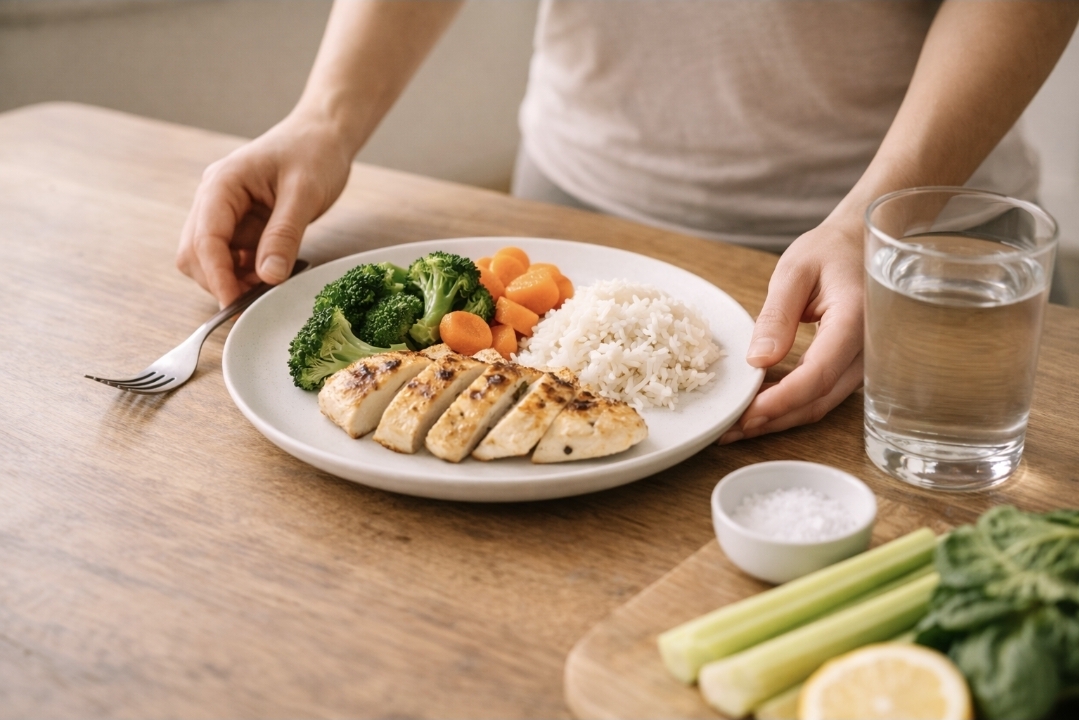
Write the first two refeeding meals down before day one begins. Entering a fast without an exit plan increases the chance of overeating the first meal and undoing most of what the fast achieved.
Day 1 example:
- 8:00am — small portion of lean protein and cooked vegetables
- 1:00pm — repeat
- 6:00pm — moderate protein, vegetables, small amount of starch
Day 2: three structured meals, protein at each, moderate starch, no grazing.
Avoid large restaurant meals, alcohol, and fried food in the first 24 hours after the fast. If overeating happens at one meal, return to normal portions at the next meal — do not skip the next meal to compensate. The full refeed approach is in how to break a juice fast properly.
What to Expect
Finishing the planned duration with consistent juice intake, steady hydration, and a controlled first meal is a clean result. Energy will be lower than usual, especially on day two. That is normal. The fast does not need to feel comfortable to be working — it needs to stay manageable.
Do not use daily weight changes to judge how it went. Measure it by whether you hit your juice schedule, stayed hydrated, and handled the first meals back without losing control.
FAQ
How many juices per day?
Four to six juices daily, spaced roughly every two and a half to three and a half hours. Full detail in how many juices per day.
Can I work?
Desk-based work is manageable during short fasts. Physical labour is much harder to combine with fasting and often requires reducing the fast duration or timing it differently.
Can I exercise?
Walking and light movement are fine. Reduce heavy lifting and high-intensity training significantly. Stop if dizziness or unusual weakness appears.
Is 1 day enough?
One day is the right starting point for beginners. It tests how your body responds before committing to longer.
How often can I repeat it?
Leave enough time between fasts to eat normally and recover. Going back too quickly without eating properly between fasts leads to fatigue and muscle loss over time.