

Juice Fast Weight Loss First 3 Days: How Much Do You Lose?
Most people see quick movement on the scale at the start of a fast. A common range is 3–6 pounds by the third morning. Most of that early drop comes from water and less food sitting in your system, not pure fat loss.
If you’re trying to make sense of your first three days, you need to know what is actually changing. The early shift comes from water changes and digestion slowing down more than long-term fat loss. For a broader view of how fasting affects body weight over time, see Juice Fasting for Weight Loss. Here, we are focusing strictly on days one through three.
What Most People See in the First 3 Days
The first three days often show the biggest visible change of the entire fast. Some people see movement every morning. Others see most of the change between the first and second weigh-in.
Results vary widely. If you’ve been eating out a lot, eating higher carb, or consuming more salt than usual, you may see a sharper early drop. If you were already eating lighter or lower carb, the shift may be smaller.
It may look impressive, but that doesn’t mean it lasts. Early numbers often reflect how much water your body was holding before you started. That drops quickly. Fat loss does not move at the same speed.
The first 72 hours feel dramatic because the scale moves faster than it normally does during regular dieting. When someone has struggled for weeks to see change, seeing pounds come off in two days feels powerful. That contrast makes it feel bigger than it actually is.
Expectations matter too. If you start a fast hoping for a reset or breakthrough, early movement reinforces that hope. The numbers can start to mean more than they should.
People also weigh themselves more often during a fast. Seeing the number change each morning creates a sense of momentum, even if most of it is water.
Fast change gets more credit than slow change. Long-term fat loss is gradual. Early water loss is not.
Consider two examples.
Example A: If you’ve been eating out a lot, having frequent salty snacks, and eating higher carb meals, your body is likely holding more stored carbohydrate and extra water.
By the third morning, this person may see a large drop. Most of that change comes from stored carbohydrate shrinking and the water leaving with it. The number looks impressive.
Example B: Another person begins after weeks of mostly home-cooked meals with moderate carbohydrates and lower salt intake.
By day three, their scale may move less. It may even stall for a day. That smaller drop does not mean they lost less fat.
The difference comes down to where they started. One person had more water to lose. The other did not.
Neither result proves faster fat loss. Both mainly show water leaving the body.
People compare early numbers without thinking about what their diet looked like before starting. That is where confusion starts. The early reading depends heavily on what came before it.
Why Weight Loss Is Higher Early
Weight loss is higher early because several things change at once.
- Stored carbohydrate drops and releases water.
- Less solid food sits in digestion.
- Salt intake often decreases.
- Late-night eating stops.
- Bloating from heavy meals improves.
These changes lower body weight quickly. They do not require large amounts of fat to be lost. That is why juice fast weight loss first 3 days results can look dramatic even when fat loss is still modest.
The average person carries a meaningful amount of stored carbohydrate in their muscles and liver. That stored fuel holds water with it.
When carbohydrate intake drops sharply, your body uses that stored supply. As it shrinks, the water attached to it leaves as well.
This water loss can outweigh the fat lost in the same time frame. That is why early scale movement often looks larger than what fat loss alone could explain.
The common 3–6 pound pattern seen in the first few days mostly comes from water leaving and less food sitting in the gut. Fat contributes, but it is not the main driver.
Because it happens quickly, it feels convincing. In reality, it is mostly a water adjustment.
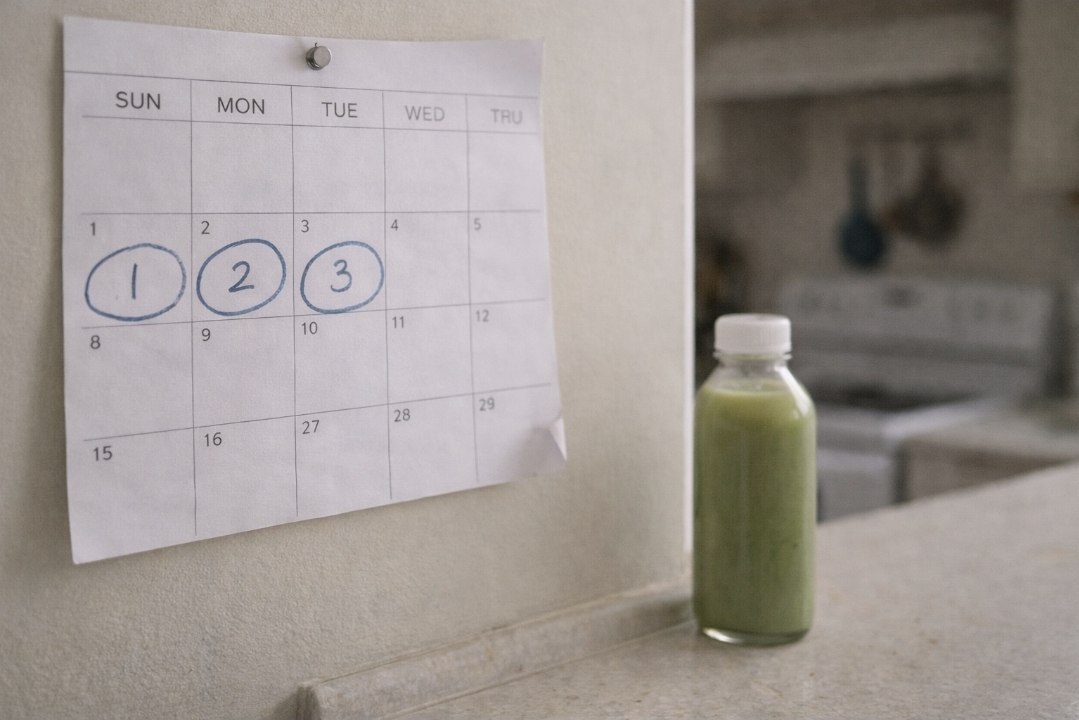
Day 1 vs Day 2 vs Day 3 — What Actually Changes
Day 1
On the first day, intake changes immediately. Solid meals stop. Salt intake often drops.
What moves first is food volume in digestion. What does not change much yet is body fat. The scale may not move much by the next morning.
Some people think day one proves the fast works instantly. Others think it failed if the scale barely moves. Most visible change takes more than 24 hours.
Day 2
Day two often shows clearer movement. Stored carbohydrate continues to drop. Water leaves alongside it.
Scale movement may slow if the biggest water drop already happened. Sleep, hydration, and previous salt intake also affect what shows up.
Hunger may change on day two. Some people feel less hungry. Others still feel strong appetite. That does not directly reflect how much fat is being lost.
Day 3
By day three, most short-term water shifts are finished. The digestive system holds very little bulk. The number often looks lower than any previous day.
This low point is not stable. Once normal meals return, stored carbohydrate refills and water comes back with it.
Day three reflects a lower-water state, not a permanent body change. Treating it as a new baseline leads to frustration later.
How Much of the First 3 Days Can Realistically Be Fat?
Fat loss in three days is limited by time and energy balance. Even with strict restriction, the body cannot remove large amounts of fat that quickly.
To lose several pounds of pure fat in three days would require an extreme deficit far beyond what most short fasts create. It is more than your body could realistically lose as fat in that window.
Most visible early weight change cannot be pure fat because the amount is too large. Water loss explains the majority.
You may start losing some fat during this time, but it builds gradually. It does not disappear in bulk over a weekend.
Knowing this keeps expectations realistic. The early drop is real, but it is not mostly fat tissue disappearing.
Why Weight Comes Back After Day 3
Weight often rises once normal meals return.
Within 24 hours of eating again, stored carbohydrate begins to refill. Water comes back with it. The digestive system also holds more volume.
Within 72 hours, most of that water has returned. The scale reflects that quickly.
What you eat next decides what happens after that. If intake returns to maintenance levels, weight usually settles after the initial bump.
A quick rise that levels off is usually water and food volume. That pattern is common.
True fat regain looks different. It shows up as a steady upward climb over multiple days.
To tell the difference between a bump and a real gain, watch the direction over a week. A stable plateau suggests water returning. A continued rise suggests excess intake.
For a full breakdown of rebound patterns and what they mean, see Weight Regain After a Juice Fast.
What Would Surprise You?
Some people lose very little in the first three days. This often happens when their starting diet was already moderate in carbohydrates and salt.
Others lose more than expected. That usually reflects higher water retention before starting, not faster fat loss.
Scale readings can swing even during a fast. Hydration, sleep, and stress can shift water balance from one morning to the next.
Drinking more or less fluid alone can move the scale temporarily. That does not mean fat changed.
This surprises people because they expect steady progress. Early fasting weight loss rarely moves in a straight line.
What the First 3 Days Actually Tell You
The first three days show how your body reacts to restriction.
They show how much water you were carrying before you started. They show how appetite and energy respond to lower intake.
They do not provide a stable measure of long-term fat loss. If fat loss is your goal, the more relevant timeline is discussed in When Does Fat Loss Start During a Juice Fast?.
The first three days are useful for understanding early changes. They are not the final result.
How to Read Your Own Numbers Correctly
Most confusion in the first three days comes from how people compare their numbers.
Many compare day three to the highest recent weight they remember. That exaggerates the change. If your starting point was already a heavier-than-usual morning, the drop will look larger than it truly is.
A better comparison is to your typical morning weight over the previous week. That baseline gives a clearer picture of what actually changed.
Timing also matters. A third-morning weigh-in is not the same as stepping on the scale in the evening. Food, hydration, and bowel timing can shift the reading within a single day without changing body fat at all.
Clothing differences, late meals before starting, and even travel can affect your starting number. When those variables clean up during a fast, the drop looks dramatic. That does not mean fat tissue disappeared overnight.
It also helps to look at direction instead of a single number. If weight drops quickly and then rebounds once normal eating resumes, that pattern points to water change. If weight drops modestly but continues trending downward over a week, that pattern reflects something more durable.
One isolated reading does not tell the full story. The trend over several days is more meaningful than the lowest point you see.
Reading your numbers this way prevents overreaction. It keeps early changes in context and reduces the temptation to treat day three as a final result.
When Early Weight Loss Should Concern You
Rapid weight loss alone is not automatically dangerous. What matters is whether you feel stable.
- Fainting or repeated near-fainting
- Confusion that does not clear
- Severe weakness interfering with normal movement
- Persistent vomiting or inability to keep fluids down
- Chest pain or shortness of breath
People with diabetes, kidney disease, heart conditions, or a history of eating disorders should not attempt a juice fast without medical supervision.
Why the First 3 Days Feel More Powerful Than They Are
Early movement feels dramatic because it happens fast and is easy to measure. Most people rarely see multi-pound change over a normal week, so when it happens in two or three days, it feels like a breakthrough.
Fast change creates a strong emotional reaction. That reaction can make the result seem more permanent than it actually is.
The first three days compress several short-term shifts into a tight window. That makes it look like more fat was lost than actually was.
Keeping that in perspective prevents overreaction and protects expectations for what comes next.
Honest Bottom Line
Most people lose noticeable weight in the first three days of a juice fast.
The majority of that change is water and reduced digestive content. Fat loss may begin, but it represents a smaller share of the early shift.
The lowest reading during day three is rarely a stable baseline. It reflects temporary water loss that often reverses once regular eating resumes.
FAQ
How much weight do you lose in the first 3 days of a juice fast?
Many people see a clear drop by day three. The amount depends on starting diet and body size. Most early movement comes from water and digestion changes rather than pure fat.
Is early juice fast weight loss mostly water?
In most cases, yes. Water loss makes up the largest share of the early decline. Fat loss can begin, but it usually does not dominate the first 72 hours.
Can you lose belly fat in the first three days?
Some fat loss may occur, but three days is short. A flatter stomach early on is usually less bloating and less material in digestion. Targeted belly fat reduction does not happen that quickly.
Why did I lose very little by day three?
Sleep, stress, salt intake, bowel habits, and starting diet all influence early results. People already eating lightly often see smaller changes. A modest shift does not mean the fast failed.
Why did the weight return quickly?
When normal eating resumes, stored carbohydrate and water return quickly. Digestive bulk also increases. A fast rebound does not automatically mean fat gain unless higher intake continues over several days.