

How to Do a Juice Fast Properly
How to do a juice fast properly starts with a structured plan, not motivation. Pick your timeframe, juice amounts, hydration goals, activity caps, and your exit strategy before you even open the first bottle. Without clear rules, a juice fast turns into inconsistent intake, excess fruit, dehydration, or uncontrolled refeeding.
This guide is written for absolute beginners who want clear, practical direction. Every step below focuses on what to actually do: how much to drink, when to drink it, how to adjust when symptoms appear, and when to stop. The goal is finishing the planned fast without destabilizing work, sleep, or safety.
For broader context and getting clear on your goal, see Juice Fasting for Weight Loss.
This article focuses strictly on implementing your juice regime. The way you set it up determines whether it stays manageable or falls apart.
Step 1: Choose the Right Timeframe
The length of your fast determines how demanding it becomes. First-time fasters start with one day. That single day tests schedule control, hydration discipline, and caffeine taper compliance without creating too much strain.
Move to three days only after completing a one-day fast without dizziness, fainting, confusion, or work disruption. Approach the longer duration with a clear, structured plan.
A seven-day fast requires prior successful shorter fasts, adjusted workload, and a detailed refeed plan written in advance. Attempting seven days without prior tolerance testing increases the likelihood of stopping early.
Let your schedule drive the duration choice. Travel, social events, deadlines, and physically demanding workdays increase failure risk. Select a window with minimal external pressure and a predictable daily schedule. No unexpected duties or physically draining chores.
Doing it properly means completing the planned duration without missing juices, emergency sugar additions, or chaotic refeeding. Success is defined by your discipline and behavior, not just hitting a specific hour on the clock.
Set yourself up before you start. Remove trigger foods from the kitchen. Inform close contacts of your plan. Write the start and stop dates down before beginning.
Beginner considerations:
- First fast → 1 day.
- Completed 1 day cleanly → evaluate 3 days.
- Completed 3 days without stop triggers → evaluate longer duration.
Downgrade criteria: reduce duration immediately if sleep drops below six hours nightly, if standing dizziness persists after sodium intake, or if work performance declines sharply.
Early stop triggers: fainting, chest pain, confusion, visual disturbance, or persistent vomiting require immediate termination of the fast.
Detailed outlines before committing:
Pre-Fast Preparation Checklist
Getting ready properly is what keeps you steady on your journey. Starting without preparation increases the chance of stopping early.
- Plan groceries 3–4 days in advance and buy all the produce you need at once.
- Remove snack foods, desserts, and alcohol from visible storage areas.
- Review social calendar and reschedule food-centered events.
- Ensure you have tapered off caffeine before day one.
- Reduce workload commitments during the fasting window.
- Write out your full refeed plan before starting.
Buying everything up front prevents last-minute swaps that increase fruit intake. Buy leafy greens, cucumbers, celery, herbs, and a limited quantity of fruit.
Your kitchen setup matters. Clear counters of packaged snacks and remove high-sugar foods from direct view. Visual cues influence behavior during hunger spikes.
Planning around people reduces pressure. Decline restaurant invitations or shift them outside the fasting window.
Make sure the caffeine taper is done before starting. Withdrawal during fasting increases headache risk.
Lower your workload for the duration. Avoid stacking deadlines during multi-day fasts.
Write out your Day 1 and Day 2 refeed meals in advance. Entering a fast without an exit plan increases overeating risk.
Step 2: Decide How Many Juices Per Day
Keep the daily juice schedule consistent. Four to six servings per day create rhythm without extreme restriction. Fewer than four increases fatigue and irritability. More than six increases sugar exposure and appetite swings.
Keep total daily volume between 64 and 96 ounces. The minimum volume floor is 64 ounces. The maximum ceiling is 100 ounces.
Spacing matters more than the exact clock time. Consume one juice every 2.5–3.5 hours during waking hours.
When you drink less than the minimum recommendation, irritability and low energy show up, and fruit additions can creep in later. It also increases the chance of breaking the fast prematurely.
When you go above the ceiling, bloating and nausea present themselves, and sleep gets disrupted. Excessive volume increases how much sweet taste you’re getting and destabilizes appetite rhythm.
Missed serving decision ladder:
- Missed by 30 minutes → resume schedule without changing volume.
- Missed by 1 hour → consume the scheduled serving and continue normal spacing.
- Missed by 2+ hours → consume a reduced portion and reset juice spacing from that point.
Fruit-heavy juices push sweetness higher. The more sweet juice you drink, the stronger cravings tend to feel later.
Hunger spike protocol: if hunger rises before the next scheduled juice → increase vegetable volume in the next serving and drink 8–12 ounces of water immediately.
Nausea protocol: if nausea appears → reduce the next serving by 4–6 ounces and extend spacing by 30–60 minutes.
Headache protocol: if headache persists after hydration → add a pinch of salt to water and reduce activity load. If headache remains severe → stop the fast.
Sleep disruption protocol: if sleep becomes fragmented → stop juice intake three hours before bed and reduce late in the day volume.
Detailed quantity planning appears in How Many Juices Per Day on a Juice Fast.
Daily Schedule Example
Here’s a 7:00am–9:00pm example:
7:00am – Wake and drink 12–16 ounces of water.
7:45am – First juice serving. 8:00am–10:00am – Focused work block.
10:30am – Second juice. 11:00am–12:30pm – Light work or meetings.
1:00pm – Third juice. 1:30pm – 20-minute walk.
3:30pm – Fourth juice. 4:00pm–6:00pm – Lower-intensity work block.
6:30pm – Fifth juice if using five servings. 7:00pm – Light stretching or short walk.
8:30pm – Final water intake. Stop juice intake at least two hours before bed. 9:00pm – Begin wind-down routine.
Hydration continues between servings with small amounts of water rather than large volumes at once. Work blocks stay focused and shorter than normal to manage energy variability.
Step 3: Juice Composition Rules
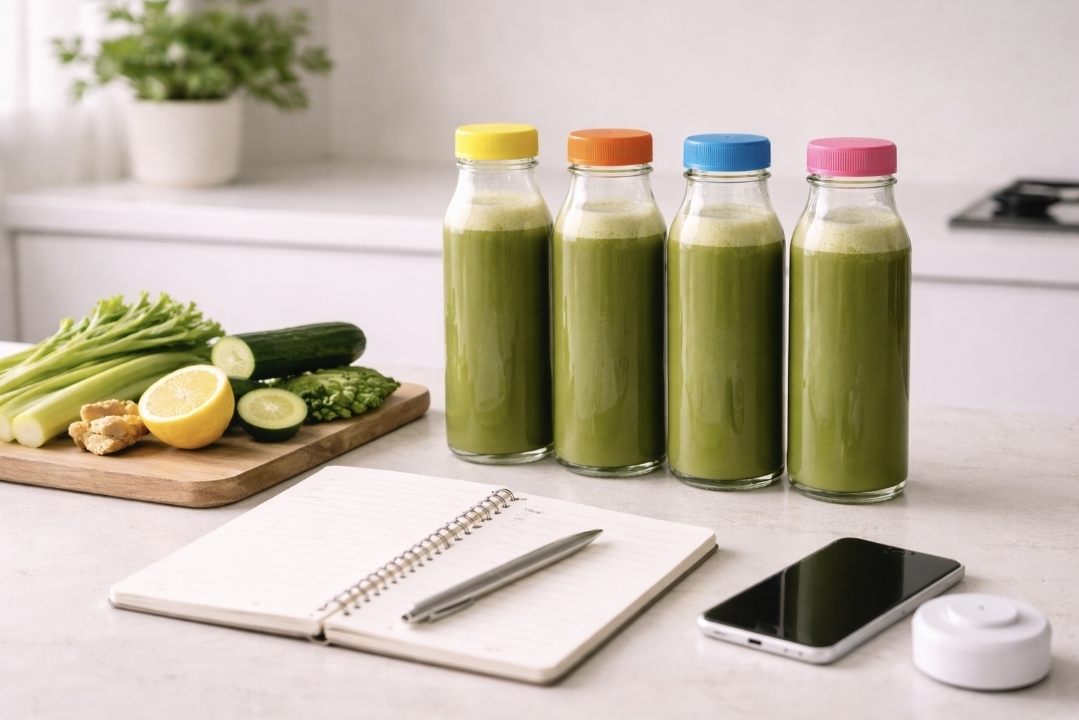
What’s in the juice affects how steady you feel. Maintain a minimum vegetable-to-fruit ratio of 3:1 by volume. Three parts vegetable base for every one part fruit.
Maximum fruit servings per day: one full fruit-dominant juice. Any additional fruit must stay under half a serving.
Rotation prevents palate fatigue. Rotate spinach, kale, cucumber, celery, parsley, and lemon.
When sweet blends are dominant in your juices, the day gets harder to manage. The more frequently sweetness dominates, the stronger the desire for additional sweetness later in the day.
Daily build template:
- Base: cucumber + celery.
- Leafy green: spinach or kale.
- Flavor: lemon or ginger.
- Optional fruit: half apple.
Craving control protocol: if sweetness cravings get worse → increase leafy greens and citrus rather than adding fruit.
Store-bought red flags:
- Fruit listed as first ingredient.
- No vegetable base.
- Added sweeteners.
- Sugar content exceeding 40 grams per bottle.
- No visible pulp or fiber residue.
For daily structure guidance check-out How to Structure a Juice Fast Day.
Step 4: Hydration & Electrolytes
Set water intake by bodyweight.
- Under 150 lb → 40–50 ounces additional water daily.
- 150–200 lb → 50–65 ounces additional water daily.
- Over 200 lb → 65–80 ounces additional water daily.
Thirst shows up as a dry mouth or lips. Dizziness signals blood pressure instability. Handle those situations differently.
Use sodium like this: one pinch when standing dizziness appears. Maximum sodium amount: no more than 2 teaspoons total per day.
Skip sodium when blood pressure remains elevated or when swelling occurs.
Aim for light-yellow urine. Completely clear urine combined with frequent urination indicates overhydration.
Dizziness protocol: if standing dizziness occurs → add salt to one glass of water. If dizziness persists after sodium → stop the fast.
Overhydration warning signs:
- Clear urine every 30–60 minutes.
- Bloating with headache.
- Nausea despite fluid intake.
Caffeine taper example:
- Day -3 → reduce intake by 50%.
- Day -2 → reduce by another 50%.
- Day -1 → eliminate entirely.
Full beverage routine can be found in What to Drink During a Juice Fast.
Common Stability Errors
Under-drinking shows up as irritability, low energy, and lightheadedness. When total water intake drops below the minimum volume, stability declines quickly. Increase water gradually, reassess sodium intake, and resume normal intervals before adding more juice.
Over-drinking creates bloating, nausea, and disrupted sleep. Large volumes in short windows dilute electrolytes and increase bathroom frequency. Reduce water volume, spread intake evenly, and correct sodium balance rather than adding more juice.
As stated previously, excess fruit increases how much sweet taste you’re getting and drives stronger cravings later in the day. When multiple fruit-dominant servings stack together, appetite rhythm destabilizes. Immediately return to vegetable-heavy blends and remove fruit from the next one or two servings.
Skipping sodium during multi-day fasting leads to dizziness and weakness when standing up. Add a measured pinch of salt to water and take it easy until stability returns. Do not continue normal exercise when feeling like this.
Training too hard during restriction leads to weakness, shakiness, and a collapse in performance. Replace heavy lifting for example with walking only. You can return to normal training after refeeding is complete.
Make adjustments as soon as you notice something feels off. Delaying changes compounds fatigue and increases the risk of ending the fast early.
Step 5: Work & Activity
Keep activity light: walking, mobility drills, gentle cycling, or stretching. Avoid high-intensity workouts and heavy resistance training.
Expect mental focus to drop during your fast. Break work into 60–90 minute blocks followed by short movement breaks.
Reduce total training volume by 30–50% during multi-day fasts.
Stop training immediately if dizziness, weakness, or vision disturbance appears.
For exercise guidance: Exercise During a Juice Fast.
For workload planning: Working While Juice Fasting.
Step 6: Hard Stop Conditions
End the fast immediately if any of the following happen:
- Fainting.
- Chest pain.
- Vision disturbance.
- Confusion.
- Persistent vomiting.
- Persistent dizziness despite sodium intake.
Seek medical evaluation if symptoms continue after stopping.
Common juice fasting errors are explored in more dept in Juice Fasting Mistakes.
Step 7: Plan the Break Before You Start
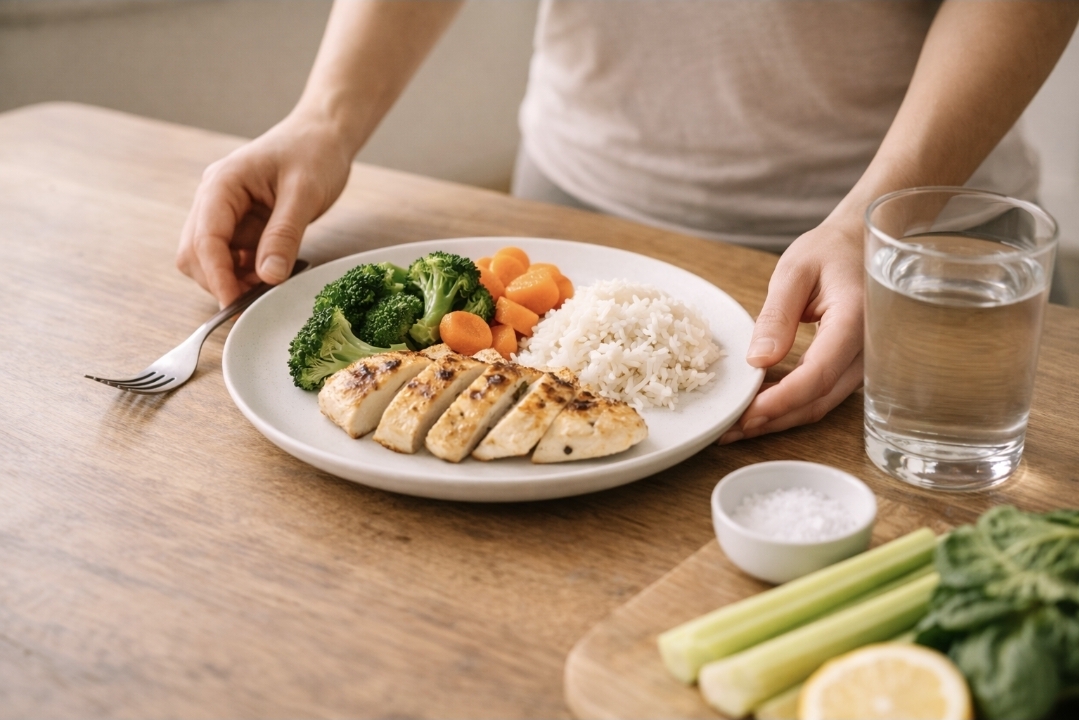
Write the refeed structure before day one begins.
Day 1 schedule example:
- 8:00 AM → palm-sized lean protein + cooked vegetables.
- 1:00 PM → repeat structured plate.
- 6:00 PM → moderate protein + vegetables + small starch.
Day 2 escalation:
- Three structured meals.
- Protein at each meal.
- Moderate starch portions.
- No grazing.
When protein is missing, appetite gets harder to control and overeating becomes more likely.
Social eating requires a plan. Review menu before arriving and select lean protein and vegetables.
Do not do during first 24 hours:
- Large restaurant meals.
- Alcohol.
- Fried or heavy desserts.
Overeating correction protocol: if overeating occurs at one meal → return to structured portions at the next meal without skipping food or compensating.
Checkout this detailed refeed plan How to Break a Juice Fast Properly.
First 72 Hours After Refeed
Keep Day 1 strict. Stick to three solid meals with plenty of protein in each, and stop snacking in between. You’ll probably feel extra hungry after fasting, but staying disciplined with your meal times will stop you from overdoing it.
Day 2 feels easier physically, but this is when people slip up with food. Hunger increases as digestion normalizes, and unplanned snacking becomes more tempting. Stick to three set meals and keep your starch portions small instead of diving straight back into heavy carbs.
By Day 3, things normalize. You can go back to normal portion sizes, but you still need to be intentional about when you eat. Don’t let yourself slip back into mindless snacking just because the fast is over.
Portion progression example: Day 1 half-cup starch, Day 2 three-quarter cup, Day 3 normal serving. Escalate gradually rather than doubling intake in one sitting.
Social eating risk is highest on Days 2 and 3. Review menus in advance, decline dessert, limit alcohol, and avoid buffet-style restaurants that encourage overeating.
What Results to Expect
Do not use daily weight changes to judge success. Measure it by how well you hit your juice targets, stick to your schedule, stay hydrated, and manage your first meals back.
Executing a juice fast properly requires preparation, consistency, and a defined exit strategy from start to finish.
FAQ
How many juices per day?
Drink four to six juices a day to stay on track without overdoing the restriction. Keep your total amount between 64 and 96 ounces daily, and make sure you space them out evenly.
Can I work?
Desk-based work continues during short fasts. Manual labor increases fatigue while fasting. Schedule heavy physical demands outside multi-day fasts.
Can I exercise?
Walking and mobility work are fine. You are best to significantly reduce any heavy lifting. Stop training if dizziness or weakness appears.
Is 1 day enough?
One day fasting tests tolerance and execution discipline. It provides a structured trial before extending duration. Beginners should begin here.
How often can I repeat it?
Fasting too often without eating enough in between is asking for trouble. If you jump back in without refueling properly, you’re going to feel exhausted and risk losing muscle. Look at your overall monthly schedule before you decide to go again.