

Does Beetroot Juice Improve Circulation? Evidence, Benefits & How It Works
Beetroot juice is one of the few foods consistently linked to improved blood flow. It is widely used by athletes, men looking to improve performance, and people trying to support circulation naturally.
But does beetroot juice actually improve circulation in a noticeable way, or is the effect too small to matter in real life?
Short answer: yes — but only under the right conditions. Beetroot works by increasing nitric oxide, which helps blood vessels relax and improves how easily blood moves through the body. This directly affects energy, physical performance, and even erectile function.
If you want the broader breakdown of how circulation affects the body, see juicing for blood flow.
If you want to maximise results, timing matters too — here’s the best time to drink beetroot juice for circulation based on when nitric oxide levels tend to peak.
What Does “Improved Circulation” Really Mean?
Circulation refers to how efficiently blood moves throughout your body. Strong circulation ensures oxygen, nutrients, and hormones are delivered effectively, while waste products are removed properly.
Healthy blood flow is associated with:
- Stable blood pressure
- Improved energy levels
- Better exercise performance
- Faster recovery
- Support for erectile health
This is also why circulation is a key factor in overall men’s health, which is covered more broadly here: juicing for men’s health.
When circulation is compromised, you may experience fatigue, cold extremities, poor endurance, or reduced vascular performance.
How Beetroot Juice May Support Circulation
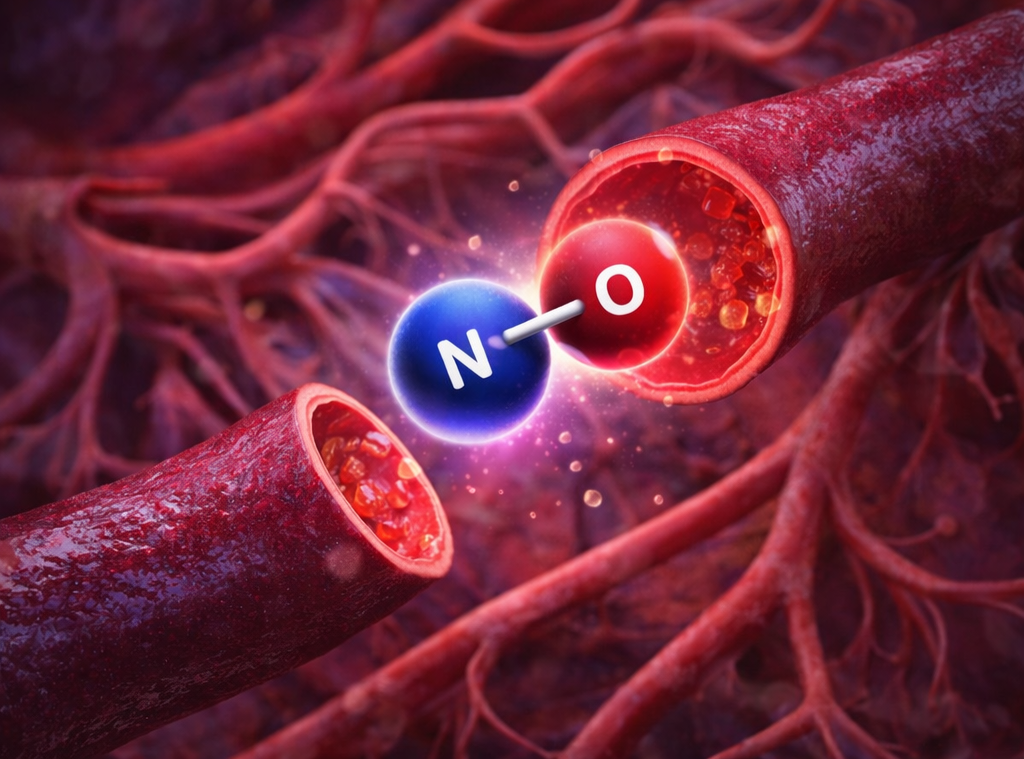
The primary reason beetroot juice is associated with circulation is its high nitrate content.
Beetroot is naturally rich in dietary nitrates. Once consumed, these nitrates are converted into nitric oxide inside the body — a molecule that plays a major role in vascular function.
Nitric oxide relaxes and widens blood vessels in a process known as vasodilation. When blood vessels widen, blood flows more freely. This reduction in vascular resistance is the core mechanism behind why beetroot juice may improve circulation.
If you want a clearer breakdown of how to apply this in a structured way, see a more structured breakdown.
The Nitric Oxide Pathway Explained Simply
The process works like this:
- Dietary nitrates are absorbed after drinking beetroot juice.
- Oral bacteria convert nitrates into nitrites.
- Nitrites convert into nitric oxide in the bloodstream.
- Nitric oxide signals blood vessels to relax.
- Blood flow efficiency increases.
This entire process happens quickly, which is why some people notice effects within a few hours of drinking beetroot juice.
This nitric oxide pathway is why beetroot is frequently discussed in cardiovascular research and athletic performance studies.
Beetroot Juice and Blood Pressure
One of the most researched areas of beetroot supplementation involves blood pressure.
Because nitric oxide widens blood vessels, it can reduce vascular resistance. Several studies suggest beetroot juice may help lower high blood pressure in certain individuals.
This effect is generally moderate rather than dramatic, but meaningful when combined with diet, movement, and weight management strategies.
How Long Does It Take to Notice Effects?
Some people report improved endurance or mild blood pressure changes within hours of drinking beetroot juice.
Others require consistent intake over days or weeks.
If you’re wondering about how long beetroot juice takes to work, timing depends on dosage, frequency, and your baseline vascular health.
Acute nitric oxide increases may occur within 2–3 hours. Longer-term circulation benefits require consistency.
Circulation and Erectile Health
Strong blood flow is critical for physical performance across the body. Vascular efficiency directly affects tissue oxygenation and function.
For this reason, improved circulation may also support erectile dysfunction, since performance in this area depends heavily on proper blood flow.
If you want a clearer breakdown of how blood flow affects performance directly, this is covered in juicing for performance.
Beetroot isn’t a miracle solution — but it supports the underlying mechanism that makes performance possible.
Beetroot Juice and Athletic Performance
Beetroot juice has become popular among endurance athletes because improved blood flow can enhance oxygen delivery to working muscles.
Research suggests potential benefits including:
- Improved endurance capacity
- Reduced oxygen cost during exercise
- Delayed fatigue
- Improved time-to-exhaustion
For this reason, beetroot is often consumed 2–3 hours before training or competition.

When Beetroot Juice Actually Makes a Noticeable Difference
Beetroot juice tends to have the most noticeable impact when circulation is already slightly impaired. This could be due to low activity levels, inconsistent diet, or early signs of vascular decline. In these cases, improving nitric oxide availability can make a clearer difference in how the body responds.
Men often notice this in specific ways. Workouts feel slightly easier to sustain. Energy holds longer instead of dropping off early. Physical response becomes more consistent rather than unpredictable. These are not dramatic changes, but they are noticeable when they happen consistently.
On the other hand, if circulation is already strong, the effect is much smaller. Beetroot still supports vascular function, but the difference is less obvious. This is why some people feel a clear benefit, while others feel very little.
This is also why beetroot works best when combined with other basic improvements. Better sleep, consistent meals, and regular movement all support circulation. Beetroot simply enhances what is already there rather than creating it from nothing.
So, Does Beetroot Juice Improve Circulation?
Beetroot juice works, but only as part of a consistent setup. It improves blood flow, which supports energy, performance, and erectile function, but it does not replace the basics.
If you want to go deeper into how to actually apply this in a way that works, explore this further.
Used properly, it supports the system. On its own, it does very little.