
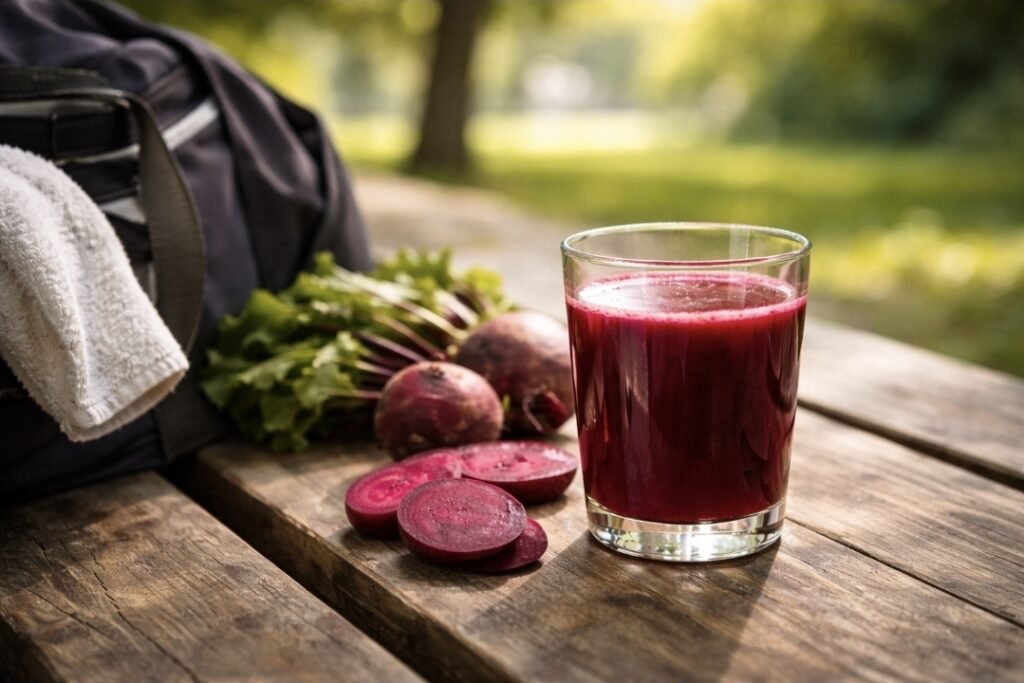
The right time to drink beetroot juice depends on why you’re drinking it. General circulation, blood pressure support, exercise performance, and erectile function all have different best times — and getting the timing wrong is one of the main reasons people think it doesn’t work.
Here’s when to drink it for each goal. If you want to know why the timing matters — what happens after you drink it — see how long beetroot juice takes to work. In short: nitric oxide usually peaks about two to three hours after you drink it, which is the window all timing advice here is built around. If you’ve got the timing right but still notice little or no effect, read why beetroot juice doesn’t work for everyone.
For General Circulation Support
If the goal is long-term circulation support rather than a workout or one specific event, the exact hour matters less than doing it daily. A daily morning habit works well for most people — it’s easy to maintain, it helps carry the effect through the day, and it reduces the chance of skipping.
For general use, consistency matters more than the clock. A steady daily intake does more for long-term blood flow than occasional large doses no matter when you drink them. Pick a time that fits naturally into the day and keep it there.
For Blood Pressure Support
Because beetroot juice usually starts lowering blood pressure within two to six hours of intake, mid-morning or early afternoon tends to work best for daytime support. Drinking it in the morning means the effect covers the busier part of the day when blood pressure often runs higher.
Evening use is less useful if blood pressure is the goal and can make some people feel lightheaded if they already react strongly to blood pressure changes. If you’re prone to this or already have low blood pressure, morning is the safer default.
Warning: Check with a doctor if you’re on blood pressure medication.
Beetroot juice can lower blood pressure. If you’re already taking medication for hypertension, adding regular beetroot juice is something to check with your doctor to avoid over-lowering blood pressure.

For Exercise Performance
Two to three hours before training. This is the most specific and best-backed timing in this area. It lines up with peak nitric oxide levels, which is when blood flow support is strongest and when performance benefits — the same effort feels slightly easier, delayed fatigue, improved endurance — are easiest to notice.
Drinking it immediately before exercise almost always misses the window. By the time you warm up, your body has not finished turning it into nitric oxide. For performance use, timing two to three hours ahead needs to be part of your pre-workout routine.
250–500ml is enough for most people. Drinking more than that usually does not help and often causes digestive discomfort that can get in the way of performance.
For Erectile Function Support
Consistent daily intake matters more than any specific timing for this goal. Erectile function depends more on steady blood-flow improvement than one short nitric oxide spike — the improvement comes from better blood vessel function overall built over weeks of daily use, not from one well-timed serving.
Morning works well in practice because it supports consistency. This is not something you’ll feel from one dose taken at the perfect time — it builds from a steady daily habit over four to six weeks. If you want the ED side of this, see my article on where juicing helps and where it falls short for ED.

Timing vs Consistency — What Matters More
For athletes using beetroot specifically for performance, timing matters a lot — two to three hours before is hard to get around. For everyone else, consistency is the more important part. A daily habit at the same sustainable time will produce better long-term blood-flow results than occasional perfectly-timed doses.
The goal is a simple routine, not a perfect one-off. If keeping it at a specific time means you’re more likely to skip it, a slightly less-than-perfect time you’ll actually use is better than a perfect time you never stick to.
Quick reference: timing by goal
General circulation: morning, daily.
Blood pressure: mid-morning or early afternoon.
Exercise performance: 2–3 hours before training.
ED support: morning, daily — consistency over timing.
How Much to Drink
Most research uses 250–500ml per day. Start at the lower end. Larger amounts do not reliably help more and can cause stomach upset or temporary beeturia — harmless, but surprising if you have never seen it before.
If you want the research on how beetroot affects blood flow, see my article on how beetroot juice improves circulation. If you want to see how beetroot fits into a wider blood-flow routine with other ingredients and habits, see my guide to juicing for blood flow.