

What to Do With Juicing Pulp
I have kept pulp I never used more times than I want to admit. The pulp bin fills up as you juice, the pile looks like more than scraps, and tipping it into the trash feels wasteful. So it goes into a bowl in the fridge instead. By the next afternoon it has dried at the edges, gone a little sour in the middle, and become something I throw away anyway, maybe a day later but with more of a smell.
Pulp is only worth keeping when it is fresh, clean, and set aside for something you will actually cook. Cleaner produce means cleaner pulp, so start with properly washed and trimmed produce before juicing. Keep only what has a use; saving the rest out of guilt is where you give yourself extra work.
First Decide Whether to Keep It
Keep only the pulp you are about to cook, freeze, or compost. Pulp that came out of a lazy prep job — gritty at the base, mixed with peel, or run from produce that was already soft, old, or bruised should not go in the fridge, no matter how full the catcher looks.
Decide before the pulp sits out too long. Put pulp you plan to keep into a covered container; put the rest in compost or trash straight away.
Vegetable Pulp
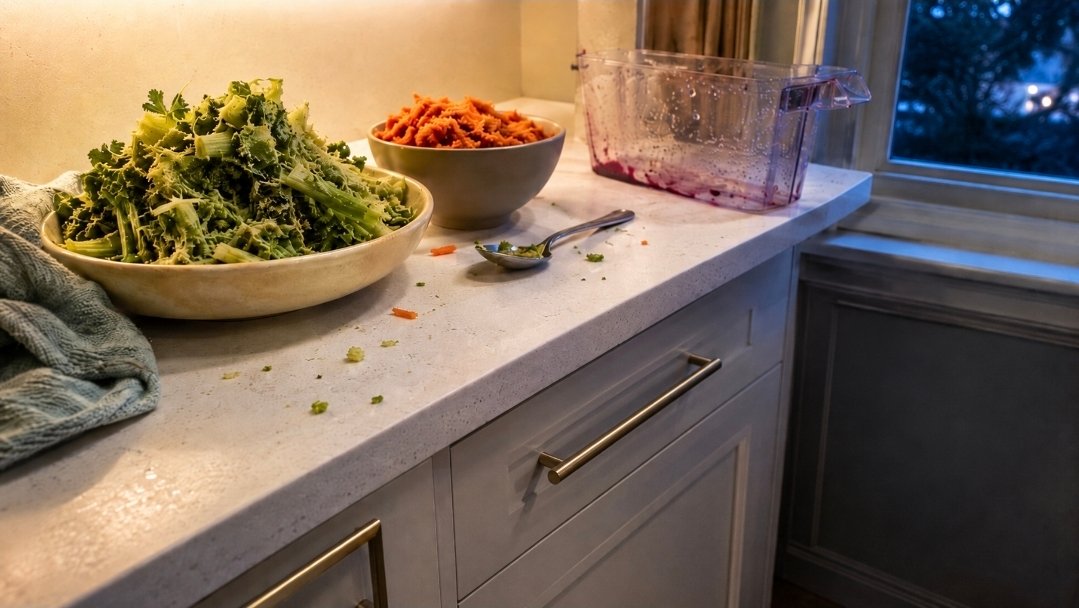
Vegetable pulp is the easiest pulp to reuse. Carrot, celery, beet, cucumber, and kale pulp can be used in savory cooking — worked into soup, simmered into stock, stirred into sauces, folded into patties, or baked into savory muffins. Use the pulp for body and a little flavor, not as the main ingredient.
Most vegetable pulp comes out of the machine fibrous, so add liquid or fat — stock, oil, egg, or a wet batter. Dropped straight into a dish, vegetable pulp clumps.
Some pulp has a stronger taste or texture. Celery-heavy and kale-heavy pulp tastes stronger and greener than the small amount suggests. Too much and the soup tastes of nothing else. Cucumber-heavy pulp is softer and wetter, so it blends more easily into stock or sauce than into a dry patty. Beet pulp is worse for staining than for flavor — a spoonful colors a whole bowl and marks the board and your fingers on the way. Carrot pulp is the safest first choice if you are only saving one type.
Fruit Pulp
Fruit pulp is the harder one to keep. Apple, pear, pineapple, citrus, and berry pulp come out sweeter, wetter, and stickier than vegetable pulp, and they spoil much faster. Fruit pulp that smells fresh in the morning can smell fermented by evening.
Fruit pulp has a short window. Stir it into muffins, pancakes, oatmeal, or a quick sauce, or freeze it in portions if there is no use for it today. Freeze it the same day, while it is still fresh.
Watch what went into the fruit pulp. Apple and pear pulp turn sticky and brown, pineapple pulp stays wetter and stringier, and berry pulp stains surfaces on contact. Citrus pith and seeds make anything you add them to bitter, and peel that should have come off before juicing adds more bitterness.
Composting
When pulp is not worth eating, compost it instead. Pulp is already shredded much finer than most kitchen scraps, so it breaks down fast once it is in your compost pile.
Fast breakdown has one problem. A pile of wet pulp dropped into a small bin clumps, packs down, and starts to smell before it breaks down, so mix it with dry material — leaves, shredded paper, the browner half of a compost bin — rather than adding it as a single wet mass.
If you do not compost at all, do not start a compost bin just for pulp. Get rid of it.
When to Throw It Away
Put some pulp straight in the trash, without agonizing over it. Throw away pulp that smells sour, looks slimy, shows any mold, came through grainy, or came from produce you would not have eaten whole.
WARNING: Warm pulp spoils fast
Pulp left at room temperature after juicing spoils within hours, not days. If pulp has sat out through the morning, compost it or throw it away.
Warm-weather juicing shortens the safe time even further. In a kitchen that is already warm by mid-morning, pulp goes from usable to sour faster than it would in a cool kitchen, so the same bowl that might have lasted in winter may not last in July.
Do Not Let Pulp Guilt Ruin Juicing
If saving pulp becomes a chore and makes you less likely to juice tomorrow, trash it.
If you are trying to cut waste, spend the effort on buying and juicing the right amount rather than salvaging it after; budget juice fasting is about spending less not rescuing it later. Juicing comes first. Everything else is a bonus you are free to toss.