
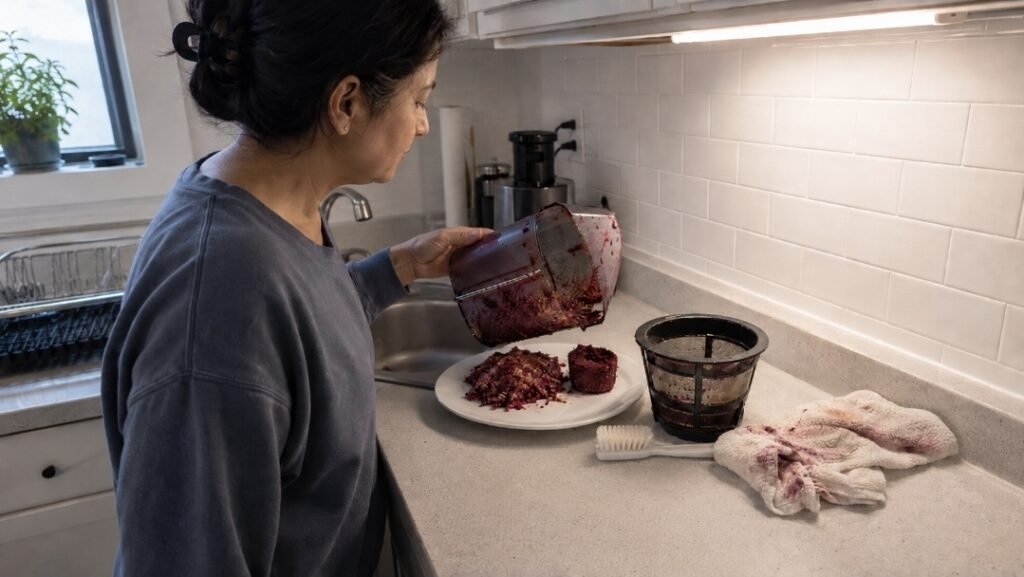
Wet pulp looks like wasted produce. You finish juicing, open the pulp bin, and the clump sitting there is damp enough that squeezing a handful drips juice through your fingers. At that point, it is easy to blame the juicer and wonder if it needs replacing, though wet pulp does not always mean the machine is faulty.
Some dampness is normal for the produce and machine; some comes from feeding the fruit and vegetables through too fast, poor produce order, or a screen that has clogged with pulp. Machine type matters here, because a centrifugal juicer normally leaves wetter pulp than a cold press; cold press vs centrifugal juicer for juice fasting details the difference in machine types before you assume the juicer is at fault.
Some Wet Pulp Is Normal
No juicer leaves powder-dry pulp. Pulp should come out damp, closer to wet sawdust than dust, and pulp that feels moist rather than soaked is normal. A perfectly dry clump is not a realistic result from a home juicer.
Cucumber pulp usually looks soft and wet in the bin; carrot pulp is firmer; celery and citrus are in the middle. Leafy greens usually make lighter, matted damp pulp. The same machine can make all of those pulp textures in one session, so a green-and-cucumber bin looks different from a carrot-and-beet bin.
Watch for a change from your machine’s usual pulp output, not a fixed dryness target. It is hard to tell normal damp pulp from genuinely wasted produce until you have used the same machine enough times to know its pattern. Until then, wet pulp is hard to judge, so avoid making a firm rule from one batch.
Feeding Produce Too Fast
Lean harder on the plunger when you are behind, and the pulp comes out wetter, not the juice any quicker. Moving produce through too fast gives the screen less time to separate juice from fiber, so more juice stays in the pulp instead of making it into the glass.
A screen that has not cleared the last load of fruit or vegetables cannot handle the next load well. Pile produce on before it catches up, and fiber drops into the bin still wet with juice. Ease off the plunger, let the motor catch up before the next handful, and the same produce gives up more of its juice.
Nothing is wrong with your appliance when this happens. Fast feeding is the most common reason a juicer that worked fine last week gives you wetter pulp this morning, especially on busy days when slowing down is precisely what you do not have time for.
Leafy Greens and Soft Produce
Loose greens are hard to feed through the chute cleanly on their own. Kale, spinach, and parsley fold against the chute wall, and on a centrifugal machine they can reach the catcher before much juice is extracted, so the pulp comes out green and barely pressed.
Soft produce can leave wet pulp for a different reason. Very ripe or watery pieces turn to mush instead of pressing firmly against the mesh screen, so less juice separates from the fiber. Firmer produce helps with both problems: feed a carrot or celery rib with the greens, and the firmer pieces help press leaves through and the pulp ends up drained better.
Blocked Screen or Dirty Parts
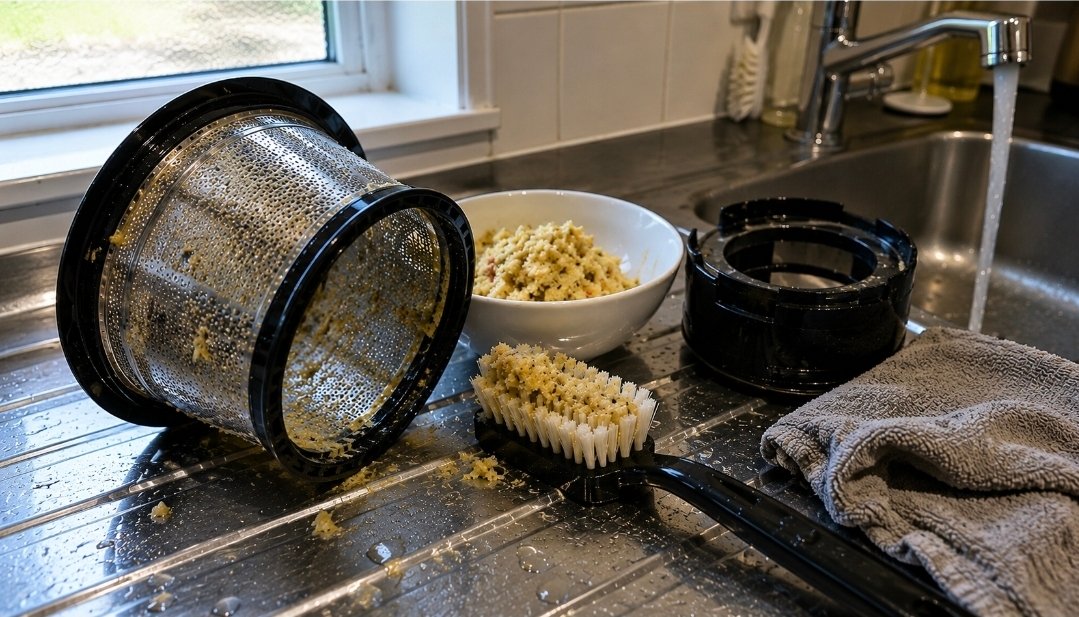
A screen can look clean at a glance while pulp still blocks the mesh. Pulp dries into the fine holes of the mesh between sessions, and once those holes are packed, juice cannot pass through and stays in the pulp instead. The pulp gets wetter even when nothing about your technique has changed.
Wear and tear creeps in slowly, leaving the pulp a little wetter each month. On centrifugal machines, a worn cutting blade breaks firm produce down less cleanly before it reaches the mesh, so less juice separates early and more juice stays in the pulp.
Pay close attention to when the pulp becomes wet. Wet pulp from the first serving of the day usually means the screen or how fast you are feeding the produce through is the problem; wet pulp after the second or third glass can mean pulp is building up in the mesh as you go.
Hold the screen under running water and you can see the blocked holes, with water beading and running off the blocked areas instead of passing straight through. To avoid this, brush the screen before pulp dries into the mesh; the details found in the rinse-and-clean routine in how to clean a juicer help stop the screen clogging mid-session.
Juicer Type and Yield
Run the same produce through two machine types and you will get different pulp. A centrifugal juicer usually gives wetter pulp than a cold press, because fast spinning against a screen extracts less juice than slow crushing through an auger. Cold press machines generally extract more juice from greens and watery produce in particular.
The yield difference comes from the design. With a centrifugal machine, you trade some yield for speed, and juice lost to the pulp is the price of filling a glass in under a minute. Part of the wet result is the design, not a problem.
Once you know whether the wet pulp comes from the machine type, feeding the juicer too fast, how you paired produce, or the state of the screen, you can decide whether to change how you juice or accept the machine’s limit.
When Wet Pulp Justifies a New Juicer
New hardware is warranted when you have slowed down the feed, paired greens with firm produce, cleaned the screen thoroughly, and the bin is still heavy with trapped juice. At that point the problem is the machine, not something you can fix by juicing differently.
Greens make the case for an upgrade sooner. If leafy juice is most of your daily juice and a centrifugal machine keeps sending greens to the catcher half-juiced, the waste adds up, and greens yield so little to begin with that half-pressing them squanders the produce you can least afford to lose.
Produce cost is another reason to reconsider whether to change your juicer. When pulp that holds too much juice means buying more celery and cucumber to make the same number of bottles, the savings at checkout get eaten by the extra produce within weeks. Where the cost balances out can also depend on the model. Compare price, yield, cleaning parts, and daily use in best juicer for juice fasting once the basic causes are ruled out.
I haven’t always been able to tell, on any given morning, whether the damp pulp came from the produce, the rush, or a machine that is no longer extracting well. Usually, I rinse the screen, slow down the feeding speed, and check the pulp over a few different juicing sessions before I call it one way or the other.