
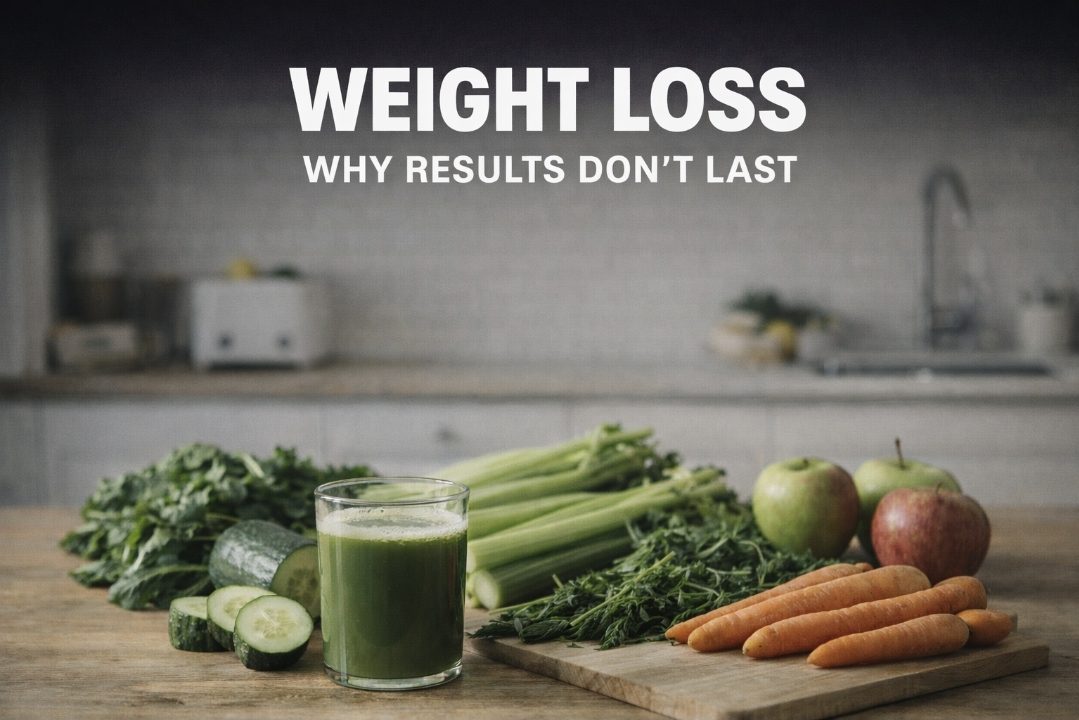
Weight Loss
Juice fasting can move the scale quickly. That part is real. What confuses most people is assuming that early scale movement equals lasting fat loss. It doesn’t. Here you will discover what’s actually happening, what to expect, and how to use it properly so you don’t undo the result as soon as the fast ends.
Done properly, a juice fast reduces how much you eat while still keeping intake steady. That shift alone is enough to trigger weight loss. What matters is how you interpret the early drop and what you do once normal eating resumes.
Can You Lose Weight with Juice Fasting?
Yes. When you replace meals with vegetable-based juices, your intake drops and your body responds quickly. That’s why the scale often moves within a few days.
The early drop comes from several things happening at once. You’re eating less, your body is holding less water, and there’s less food sitting in your system. That combination creates fast visible change, but it’s not all body fat.
What Weight Loss Usually Looks Like at the Start
The first few days usually show the biggest drop. Clothes feel looser, the scale moves quickly, and it feels like everything is working. That phase is useful, but it’s also where expectations get distorted.
After that initial drop, the pace slows. That slowdown is not failure. It’s your body settling into a more realistic rate of change. This is where actual fat loss becomes more relevant, and it moves at a steadier pace.
Results vary based on where you’re starting. If your diet before the fast was inconsistent or high in processed food, the early change will feel more dramatic. If your diet was already relatively clean, the shift will be smaller but still noticeable.
How you structure the fast also matters. Drinking enough juice, keeping sugar intake controlled, and staying consistent will make the process smoother. If intake is too low or too uneven, energy drops and the fast becomes harder than it needs to be.
For a clearer breakdown of how the experience changes over time, read Results and Expectations.
What Actually Makes the Weight Stay Off
The fast creates the initial drop. What happens after determines whether it stays. If you return to the same eating pattern that led to weight gain, the scale will follow.
“After” is where most people lose the result. That means how you structure meals, how much you eat, and whether you slide back into constant snacking or convenience food. If those habits stay the same, the outcome doesn’t hold.
Juice fasting gives you a clean break from that pattern. What you build next is what matters.
A Simple Juice Weight Loss Setup
Keep the setup simple. Most of your juices should be vegetable-based to keep sugar intake controlled and energy stable. Greens, cucumber, celery, and carrots form a solid base, with small amounts of fruit added for taste.
Aim for around 4–5 juices per day. Spread them across the day instead of leaving long gaps. Waiting too long between servings leads to energy dips and stronger cravings, which is where most fasts fall apart.
A simple daily setup looks like this:

Keep fruit limited. Too much sweetness leads to sharper hunger swings and makes the fast harder to manage. You’re better off using small amounts to improve taste rather than building juices around fruit.
Drink water alongside your juices throughout the day. Hydration reduces headaches, fatigue, and the flat feeling that often shows up early.
A basic day looks like this: one juice in the morning to start steady, another around midday when hunger builds, one in the afternoon when energy dips, and one in the evening to manage routine cravings.
If you need the full step-by-step setup, start here: How to Juice Fast.
Common Mistakes
- Drinking too little → leads to low energy, stronger cravings, and early dropout
- Using too much fruit → causes unstable hunger and makes the fast harder to maintain
- Expecting rapid progress to continue → creates frustration when the pace slows
- Ending the fast without structure → often leads to quick regain
- Starting without a clear setup → turns a manageable fast into a difficult one
Fix these early and the process becomes far more controlled. If not, small issues build quickly and usually end the fast before it’s useful.
Where to Go Next
Start here first: How to Juice Fast. This gives you the exact setup so you don’t waste time figuring it out as you go.
Then fix weak points here: Mistakes to Avoid.
Then read this to understand how the process actually unfolds: Results and Expectations.