
A Beginner’s Guide to Intermittent Fasting (Start Safely and Get Real Results)
If you’re searching for a practical guide to intermittent fasting for beginners, this is it. You’ll learn what intermittent fasting is, the safest way to start, what you can drink, what to eat, and what results are realistic—without hype and without extreme protocols.
Intermittent fasting (IF) isn’t magic. It’s structure. Used well, it reduces snacking, simplifies decisions, and makes consistency easier. Used badly, it becomes “starve all day, binge at night,” and you quit. This guide is designed to push you toward the first outcome.
What Is Intermittent Fasting?
Intermittent fasting is an eating schedule. It tells you when to eat, not what to eat.
You alternate between an eating window (when you eat meals) and a fasting window (when you don’t consume meaningful calories). Many people like IF because it creates boundaries and reduces mindless grazing.
Important: you can do intermittent fasting and still eat badly. IF doesn’t automatically make your diet healthy—it just gives structure.
How Intermittent Fasting Works (Plain English)
After you eat, your body uses glucose for energy. As time passes without food, insulin levels typically fall and your body gradually shifts toward using stored energy.
For most beginners, the biggest benefit is behavioural: fewer eating opportunities means fewer chances to overeat without thinking.
Many people also notice hunger becomes more predictable. Instead of constant cravings, you get clear hunger waves that come and go.
Common Intermittent Fasting Schedules
There are several approaches. As a beginner, start with the easiest one that fits your routine and doesn’t wreck your sleep or mood.
12:12 (Best place to start)
Fast 12 hours, eat within 12 hours. Example: finish eating at 8pm, first meal at 8am.
14:10 (Gentle upgrade)
Fast 14 hours, eat within 10 hours. Example: first meal at 10am, last meal at 8pm.
16:8 (Most popular)
Fast 16 hours, eat within 8 hours. Example: first meal at 12pm, last meal at 8pm.
18:6 (More advanced)
Fast 18 hours, eat within 6 hours. Useful for some, unnecessary for most.
24-hour fasts (not for beginners)
These are optional tools for experienced people. They are not required for fat loss or health improvements.

If you’re new, start with 12:12 for 7 days, then 14:10 for 7–14 days. Only then consider 16:8.
Who Should Avoid Intermittent Fasting
Intermittent fasting is not appropriate for everyone. Don’t start without medical guidance if any of these apply:
- Pregnant or breastfeeding
- History of eating disorders or disordered eating patterns
- Underweight or struggling to maintain weight
- Diabetes or blood sugar issues (especially if medicated)
- Any medication that requires food timing
Also: if fasting triggers binge/restrict cycles or obsessive thinking, it’s the wrong tool right now. Use a simpler structure instead (e.g., three balanced meals).
How To Start Intermittent Fasting for Beginners Safely
This is the “no drama” start plan.
Step 1: Don’t change everything at once
For week one, keep your food choices roughly the same. Only change timing. This prevents the “new diet + new schedule + new workouts” crash.
Step 2: Extend your overnight fast
Most fasting is just sleeping plus a slightly later first meal. If you finish dinner at 8pm, try your first meal at 9am (13 hours).
Step 3: Increase gradually
Add 30–60 minutes every few days until you reach a comfortable 14–16 hour fast.
Step 4: Hydrate properly
Many “hunger” signals are dehydration or habit. Drink water. If you feel headachy or lightheaded, consider electrolytes (without sugar).
Step 5: Break your fast with a real meal
The fastest way to fail is to break your fast with sugary snacks. Aim for protein + fibre + healthy fats.
A simple template:
- Protein: eggs, chicken, fish, Greek yogurt, tofu, beans
- Fibre: vegetables, berries, oats, legumes
- Healthy fats: olive oil, avocado, nuts
Step 6: Choose consistency over intensity
If 16:8 wrecks your sleep or mood, drop back to 14:10. You’ll progress faster with a schedule you can maintain.
What Can You Drink While Fasting?
Keep this simple.
- Water: yes
- Black coffee: usually yes
- Unsweetened tea: yes
- Electrolytes: sometimes helpful (avoid sugary ones)
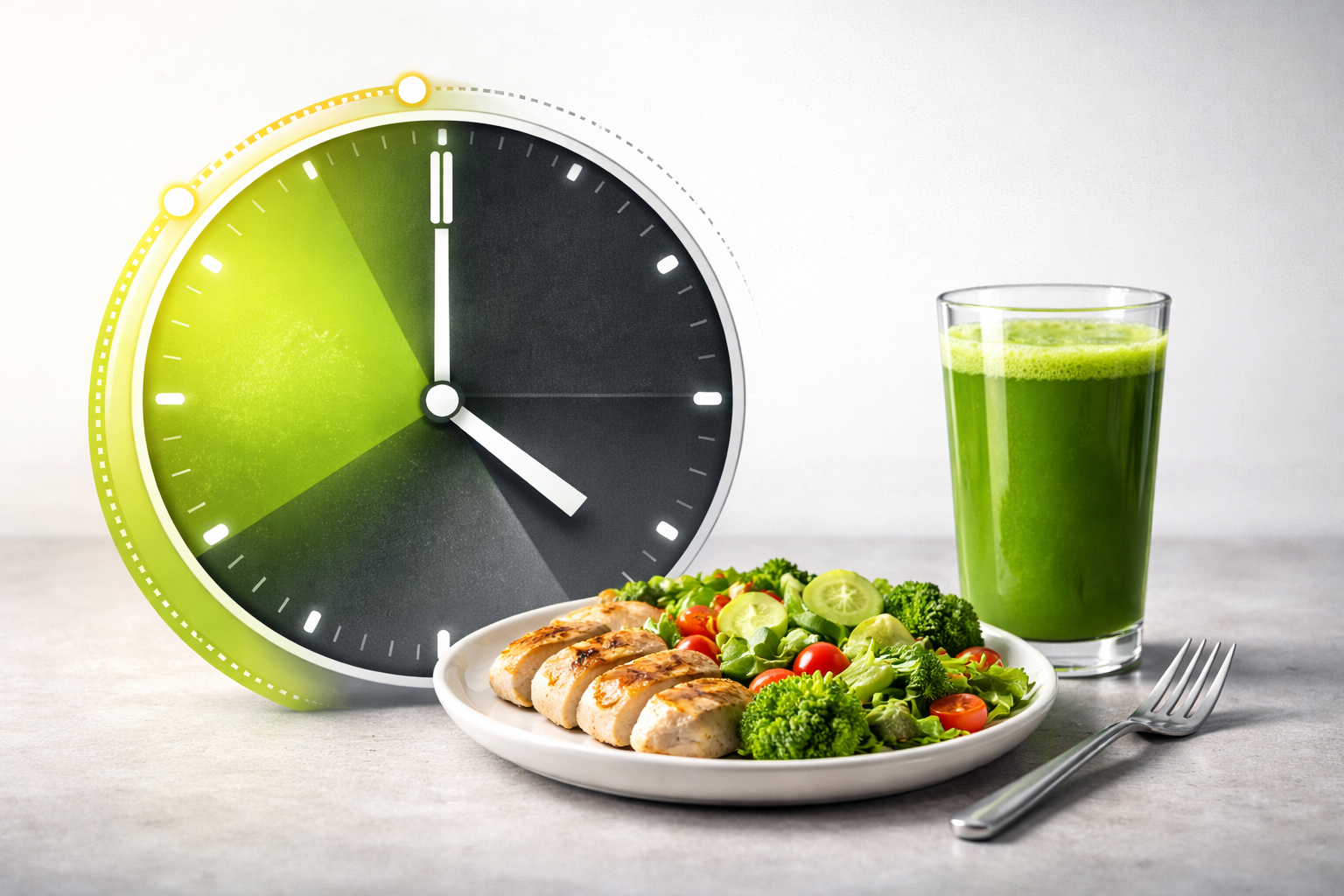
- Juice: typically breaks a fast (use juice in the eating window)
If you’re combining fasting with juicing, keep juice inside the eating window. More on that here:
Intermittent Fasting and Juicing
What Should You Eat In Your Eating Window?
Intermittent fasting works best when your meals are satisfying. That means adequate protein, high-volume foods (vegetables), fibre, and minimal ultra-processed foods.
A simple day on 16:8 might look like:
- Meal 1 (12pm): protein + vegetables + carbs as needed
- Optional snack (3–4pm): Greek yogurt + berries, or nuts + fruit
- Meal 2 (7pm): protein + vegetables + healthy fats
You don’t need perfection. You need repeatable meals you can do most days.
Results: What’s Realistic?
Most beginners notice changes in stages:
- Days 1–4: hunger waves and habit adjustment
- Week 1–2: appetite becomes more predictable, cravings often drop
- Weeks 3–6: easier consistency, possible fat loss depending on intake
- Months 2–3: visible changes if overall habits improve
Weight loss isn’t guaranteed. IF helps by making a calorie deficit easier. If you eat more during the window than you used to, nothing changes.
Common Mistakes That Ruin Intermittent Fasting
1) Starting too aggressively
Going from frequent snacking to 18:6 overnight is unnecessary. Build tolerance gradually.
2) Under-eating protein
Low protein makes hunger and cravings worse.
3) “Fasting all day then rewarding yourself”
That trains bingeing, not discipline.
4) Poor sleep
Sleep deprivation makes fasting feel brutal and increases appetite.
5) Not planning the first meal
When you wait too long to decide, you grab junk.
How To Fix Hunger Fast (Without Quitting)
Use this order:
- Drink water
- Add electrolytes if you feel lightheaded
- Walk for 10 minutes
- Distract for 20 minutes (hunger often passes)
- If still miserable: eat and shorten the fast
Intermittent fasting should be challenging occasionally, not unbearable daily.
Intermittent Fasting and Exercise
Yes, you can train while fasting. Beginners should start with walking, light strength training, or mobility work.
If you do intense training, you may prefer a wider eating window on training days. Performance matters. IF is a tool, not a religion.
Does Intermittent Fasting Slow Metabolism?
Short daily fasts typically do not “shut down” metabolism. The bigger risk is chronic severe calorie restriction.
If you are constantly exhausted, cold, and irritable, you may be under-eating. Bring food quality and total intake up, or widen your eating window.
A Simple 2-Week Beginner Plan
Week 1
- 12:12 every day
- No other changes required
- Track energy, hunger, sleep
Week 2
- 14:10 on weekdays
- 12:12 on weekends if that fits your social life
- Prioritise protein at the first meal
Optional Week 3
- Move to 16:8 only if Week 2 felt easy
How To Choose Your Best Schedule (Quick Self-Test)
Choose 12:12 if you snack at night, have a stressful job, or you’re starting from grazing all day.
Choose 14:10 if you can delay breakfast a little and want benefits without strong hunger.
Choose 16:8 if 14:10 feels easy for two weeks and you can eat two solid meals without bingeing.
Avoid 18:6 for now if you get headaches easily, feel anxious around food, or train hard and feel weak fasted.
How To Break Your Fast (Best Foods)
Breaking your fast well is one of the biggest predictors of success. Good options:
- Eggs + vegetables + olive oil
- Greek yogurt + berries + nuts
- Chicken or tuna salad with plenty of vegetables
- Oats with protein + berries
Avoid breaking your fast with pastries, sweets, cereal, fruit juice, or “just a snack” that turns into grazing.
If you want a simple rule: break your fast with protein first.
What If You Don’t Feel Good While Fasting?
Use this troubleshooting list:
- Headache: water, electrolytes, don’t spike caffeine
- Shaky/low energy: you may be under-eating; increase protein at the last meal; use 12:12 or 14:10 for a week
- Constipation: increase fibre + water; consider magnesium (if tolerated)
- Bad sleep: don’t push fasting windows; avoid huge late meals
If symptoms feel severe or scary, stop fasting and speak to a professional.
Intermittent Fasting for Beginners: A Practical Workday Routine
Morning: water on waking, black coffee/tea if you want, light movement.
Midday (first meal): high protein + vegetables. Don’t make it tiny.
Afternoon: optional snack if needed (protein + fruit).
Evening (final meal): protein + vegetables + healthy fats. Stop eating 2–3 hours before bed if possible.
How IF Fits With Social Life (Without Being Weird)
- If you have dinner plans, shift the window later that day.
- If you have brunch, eat earlier and end earlier.
- If you have a special occasion, eat like a normal person and resume the next day.
You’re building a lifestyle, not proving discipline.
FAQs (Expanded)
Does intermittent fasting work for men and women?
Yes, but some women report stronger stress responses to aggressive fasting. If sleep, mood, or cycle changes, shorten the fast and prioritise nutrition.
Can I do intermittent fasting if I work shifts?
Yes. Anchor your eating window to your “day” relative to sleep, not the clock.
Is it okay to do intermittent fasting every day?
Yes if you feel good. Many people do weekdays only and eat normally on weekends.
Do I need supplements?
Not usually. Focus on protein, vegetables, and hydration. Electrolytes can help if you get headaches or feel lightheaded.
Final Thoughts
If you remember one thing: make the plan easy enough to repeat. Intermittent fasting for beginners isn’t about suffering. It’s about structure.
Start small, stay consistent, and tighten the window only when it feels manageable. That’s how this actually works long term.
Resources
If you’re looking for structured fasting and juicing plans, you can explore recommended guides here.