
Juice Fasting vs Water Fasting for Fat Loss: What Changes Metabolically
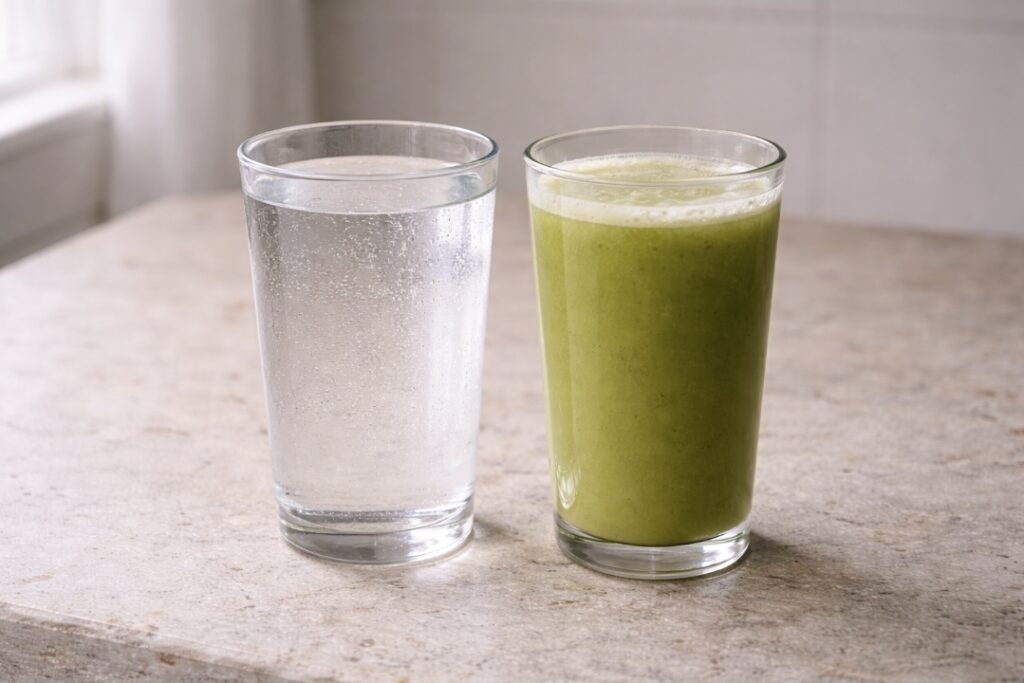
Juice fasting vs water fasting for fat loss can both reduce body fat, but they do not put the body under the same conditions.
With water fasting, calories stop completely. With juice fasting, some calories still come in, usually mostly from carbohydrate, while protein and fat stay very low.
That changes how fast stored carbohydrate runs down, how soon the body has to lean harder on stored fuel, how hard hunger hits, and how much normal movement you keep while the fast is going on.
Faster early weight loss does not settle the question by itself. The harsher method can look stronger at the start and still end worse if you stop earlier or eat hard afterward.
For the broader overview of juice fasting and weight loss expectations, see Juice Fasting for Weight Loss.
What Each One Means
Water fasting means no calories. No protein, no fat, no carbohydrate. Just water, and sometimes electrolytes depending on how strict the fast is.
With nothing coming in, stored carbohydrate usually runs down faster and the body has to rely more heavily on internal fuel sooner.
Juice fasting means liquid calories, usually mostly carbohydrate, with very little protein and very little fat. A few small vegetable juices and several large sweet juices are not the same fast, so the details matter.
With some calories still coming in, stored carbohydrate can run down more slowly. It can still drop quickly if juice volume stays modest and the overall deficit stays large enough.
Both can cut calories enough to reduce body fat. The real comparison is what happens inside the body and what happens to your energy, hunger, and output while you are doing it.
What Changes Metabolically
How Fast Glycogen Runs Down
Water fasting usually drains stored carbohydrate faster because no calories are coming in at all.
Juice fasting can slow that drop because some carbohydrate is still being fed in. How much it slows depends on how much juice you drink and how sweet those juices are.
If juices are fruit-heavy or frequent, glycogen often stays higher for longer. If juices are mostly vegetable-based and total volume stays modest, glycogen still drops, just not as abruptly as it does on water.
When Fat Use Speeds Up
Water fasting usually pushes the body toward stored fuel sooner because there is no incoming energy.
Juice fasting can still lead to fat use if intake stays low enough that the body has to make up the difference from its own stores. For most people, though, the shift is slower because carbohydrate is still coming in.
That does not tell you exactly when visible fat loss will show up. If that timing is the part you care about most, read When Does Fat Loss Start During a Juice Fast?.
Protein Stays Low in Both
Neither method gives the body much protein.
That matters because water fasting and juice fasting can both raise the risk of muscle loss if they go on long enough. Water fasting is usually harsher because no energy comes in at all. Juice fasting is not muscle-protective, but for some people it is easier to keep walking, training lightly, and doing normal daily activity.
That does not make juice fasting the better method by default. It only means the conditions are different.
How Hard the Body Slows Down
When calories drop hard, most people start moving less without thinking about it. They feel colder, flatter, slower, and less willing to do much.
Water fasting is the sharper version because the drop is immediate and complete. Juice fasting can still feel hard enough to do the same thing, but some calories coming in can soften that hit for some people.
Hunger and Whether You Can Keep Going
Water fasting often brings sharper hunger waves, especially early. For some people that settles later. For others it stays loud and starts dragging energy and focus down with it.
Juice fasting can feel easier because there is still taste, volume, and some calories coming in. For other people, sweet liquids do the opposite and keep appetite active.
This matters more than people admit. The method that looks stronger on paper loses its edge quickly if you cannot stick to it or if it sets up a hard rebound afterward.
Faster Doesn’t Always Mean More Fat Loss
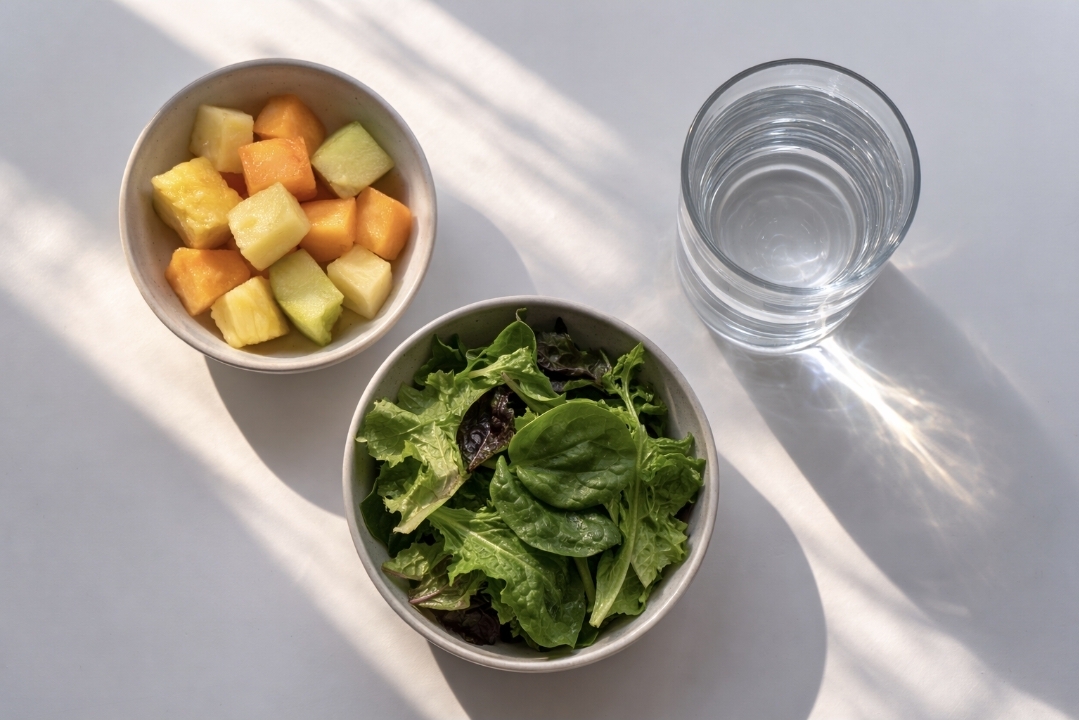
Water fasting can produce faster early weight change than juice fasting.
That does not automatically mean more body fat was lost during the same window.
Early scale movement includes stored carbohydrate, water, and changes in digestion, and those can be larger than actual fat loss in the first stretch.
Total fat loss depends on how large a deficit you create, how long you keep it going, how much movement you keep, and what happens after the fast ends.
If water fasting is so harsh that you stop early, or if it leads straight into overeating afterward, the faster-looking method can end up with the worse result. If juice fasting is easier to hold and lets you keep more day-to-day movement, the slower-looking method can end up doing better across the full stretch.
If your question is really about what part of early loss is water and what part is fat, read Is Juice Fast Weight Loss Just Water? How to Tell the Difference. If the problem is what happens when food comes back, read How to Break a Juice Fast Without Regaining Weight.
Who Each Approach Fits Better
This is not really about discipline. It is about how your body and your behavior respond to restriction.
Two people can try the same method and get opposite outcomes because one tolerates it well and the other does not.
- People who get hit hard by hunger: Juice fasting may take the edge off for some people, but sweet and frequent juices can also keep cravings alive.
- People with physical jobs or regular training: Juice fasting often preserves more usable energy and better day-to-day output. Water fasting more often forces a drop in work capacity.
- Leaner people: Water fasting often feels harsher sooner and can become more punishing as duration rises. Juice fasting can still be restrictive, but some people tolerate it better.
- People who rebound-eat after hard restriction: Water fasting can set up a stronger swing into overeating for some people. Juice fasting can soften that swing if it feels more manageable.
None of that makes one method automatically better. It explains why outcomes can split so sharply between people.
Safety Notes Before You Try Either
Fasting is not a harmless experiment for everyone.
If you take diabetes medication or insulin, fasting can change blood sugar quickly and needs medical oversight.
Blood pressure medication and diuretics can also create problems because hydration and electrolyte balance can shift during fasting.
Kidney disease makes things riskier, especially with intense fasting or large amounts of juice from high-oxalate vegetables like spinach.
Pregnancy and breastfeeding are not times to experiment with fasting.
If there is a history of eating disorders, fasting can pull restrictive behavior and rigid thinking back in very quickly.
What the Comparison Really Comes Down To
Water fasting usually pushes a faster early shift toward stored fuel, but it can also hit energy harder, lower output faster, and raise the chance that you stop early or rebound later.
Juice fasting can still produce fat loss, and for some people it is easier to live through, but the shift is often slower and sweet liquids can keep appetite more active.
The better method is not the one that looks harsher. It is the one you can sustain long enough to create a real deficit without flattening your day or erasing the result afterward.