
Worked for 41s
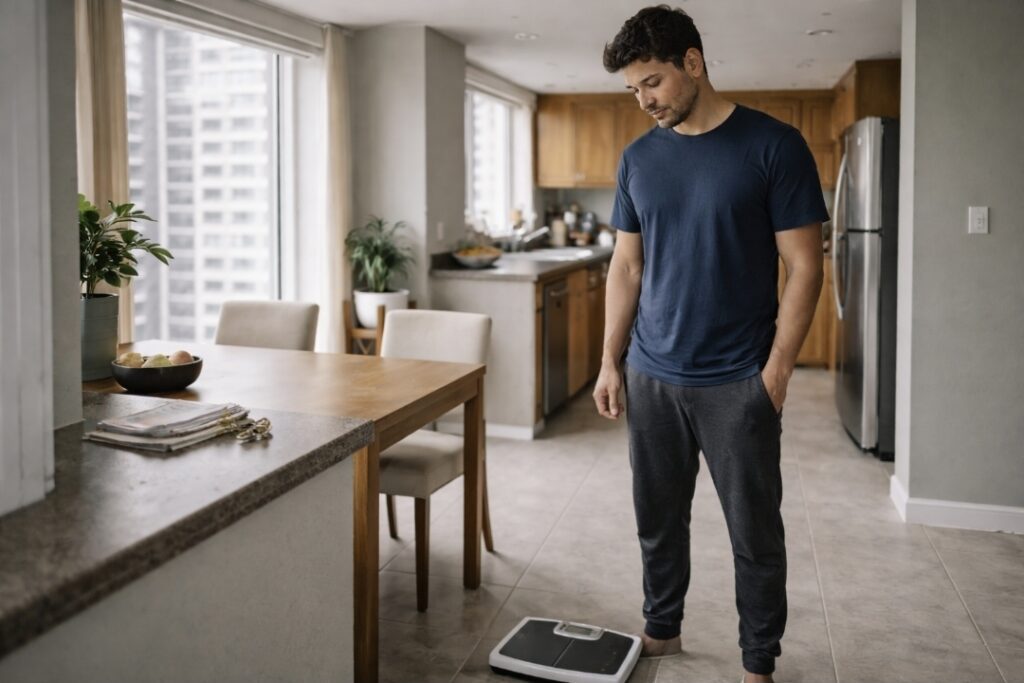
You can see a large drop on the scale during a juice fast before much body fat has been lost.
Rapid early weight loss is easy to misread. Your weight changes quickly, your stomach may look flatter, and the difference can seem larger than it really is. The lower scale weight is real, but early juice fast weight loss is often mostly stored carbohydrate, water, and less food sitting in the gut.
If your question is how much weight you can lose overall and what affects the result, juice fast weight loss is more relevant. The more specific question is whether a rapid drop on the scale is mostly water or actual body fat.
Early Juice Fast Weight Loss Is Often Mostly Water
In the first few days, a large drop on the scale usually comes from water loss, less food in the digestive system, and normal fluid changes. A large early drop is still a real change in scale weight. But the early number should not be treated as pure fat loss.
Fat loss can happen during a juice fast if you take in less energy than your body uses. But fat loss is slower than the first dramatic scale drop. Body fat does not return overnight, and one normal meal does not restore the fat you lost.
The practical difference is:
- Water weight can fall quickly and return quickly.
- Body fat usually changes more slowly, and any loss is less likely to disappear when normal eating resumes.
Water Weight vs Fat Loss
| What you notice | Usually points to water | Usually points to fat loss |
|---|---|---|
| Speed of change | Big drop within one to three days | Slower drop over more time |
| Rebound after eating | Weight rises after salt, carbs, or a large meal | Weight remains lower after normal eating returns |
| Mirror change | Face and stomach look flatter quickly | Clothes remain looser after several days of normal eating |
| Lowest weigh-in | Very low number during the fast | Settled number remains lower later |
| Best clue | Weight falls quickly and returns quickly | Slower change that does not disappear after one meal |
What Water Loss Looks Like
Water loss is fast and easy to reverse.
The first sign is speed. A big drop by day two or day three does not mean you have lost a large amount of body fat overnight. Most of that early drop is usually water.
The second sign is how quickly your weight rises again. After one salty meal, one higher-carb meal, or one late dinner, your weight can rise again by the next morning.
The third sign is how quickly your face or stomach looks different. Your face may look less puffy. Rings feel looser. The stomach looks flatter in the morning, then softer again a day later.
Those visible changes are real, but they are not the same as losing body fat.

Why Water Drops So Fast During a Juice Fast
A juice fast changes several things that affect scale weight quickly.
You are eating less solid food, so there is less food sitting in your digestive system. You may also be eating less salt than usual, especially if your normal diet includes bread, takeaway food, sauces, packaged snacks, or restaurant meals.
Your stored carbohydrate also changes. Stored carbohydrate holds water with it. When your body uses some of its stored carbohydrate, some of the water stored with it is released as well. This helps explain why the early scale change can be large before much body fat has been lost.
A large scale drop during the first few days is easy to mistake for body-fat loss. If most of your weight change happened during the first three days, what happens to weight in the first few days of a juice fast explains why the early drop can be unusually large.
What Fat Loss Looks Like
Fat loss is slower and less dramatic.
Your weight can still change from day to day, but the average may gradually become lower. One normal meal does not restore the body fat you lost. One higher weigh-in does not mean the previous week of fat loss disappeared.
How your clothes fit can give you another clue. If a waistband remains looser after several days of normal eating, that supports fat loss more than one unusually low weigh-in during the fast.
Pay more attention to the weight that remains off after several days of normal eating. Water comes back fast. Fat does not come back because of one dinner.
What Happens to the Scale After One Meal
Your weight after one normal meal can help show how much of the earlier loss was water.
You eat normally for one night, wake up heavier, and assume you regained everything you lost. You probably did not. A sharp overnight increase is usually food, water, and stored carbohydrate returning.
Your body stores carbohydrate again, retains more water with it, and contains more food after you eat. A salty dinner can add even more scale weight by the next morning.
One dinner does not restore the body fat you lost, but water weight can rise quickly.
The scale response after normal eating resumes can help separate water loss from fat loss.
The lowest weigh-in is usually the least reliable number for judging fat loss.
Your weight after several days of normal eating gives a better indication than the lightest morning during the fast.
What the Mirror Tells You
The mirror can show changes, but quick visual differences are easy to misread.
A flatter stomach in the first few days usually means you are retaining less fluid and have less food in your digestive system. It does not prove belly fat dropped at the same speed.
A quick visual change can look like fat loss even when most of the difference comes from water or less food in the digestive system. Quick visual change and real belly-fat loss do not follow the same pace.
If your stomach looks noticeably flatter within only a few days, does juice fasting burn belly fat or just reduce bloat? helps separate fat loss from reduced bloating.
If the visual change comes fast and disappears fast, it was probably not much fat.
What Still Holds After Eating Returns
Do not judge fat loss from the first meal after the fast. Compare your weight again after several days of normal eating.
The scale rises when food returns. That part is normal. Compare your weight after your body has stored carbohydrate and water again and you have been eating normally for several days.
Your lowest weight during the fast is one number. Your weight after several days of normal eating is another.
After several days of normal eating, compare your weight with where you started. If it remains clearly lower, fat loss was likely part of the change. If it returns close to your starting range, most of the early drop was probably water and less food in the digestive system.
If your question is when body-fat loss becomes more likely during a fast, when fat loss starts during a juice fast is more relevant.

How People Misread the Scale
Day-to-day weight changes become misleading when you draw conclusions from a single weigh-in.
Different wake times, bad sleep, a takeaway meal, alcohol, a long drive, a late dinner, a hard workout, or not using the bathroom yet can all change your weight from one morning to the next. Then people start drawing conclusions from one weigh-in.
Weigh yourself at the same time, under the same conditions, and on the same scale.
Compare several weigh-ins rather than focusing on one unusual morning. A sharp one-day increase after a salty meal is different from a gradual increase over two weeks.
A one-day increase after salty food is usually water, while a steady increase over two weeks suggests your body weight is genuinely rising.
Three Numbers to Compare
To tell water loss from fat loss, look at three numbers instead of one.
1. Your starting weight. Record your weight before the fast begins, ideally under normal conditions.
2. Your lowest fast weight. Your lowest fast-day weight may look impressive, but it is also the easiest number to misread.
3. Your weight after eating normally again. Compare it with your starting weight after several days of normal eating to see how much lower your weight remains.
If your lowest fast weight was far below your starting weight but your weight after normal eating returns almost to where you began, most of the early loss was water and food weight. If your weight remains clearly lower, fat loss was more likely involved.
The Quickest Way to Separate Water Loss From Fat Loss
Ask three questions.
Did your weight drop quickly?
Did your weight rise quickly after you started eating normally again?
After several days of normal eating, was your weight still below where you started?
If your weight fell quickly, rose quickly after eating, and returned near your starting weight, most of the early loss was probably water.
If your weight changed more gradually and remained lower after normal eating resumed, fat loss was more likely part of the change.
Do not judge fat loss by the lightest morning of the fast.
Judge fat loss by whether your weight remains lower after several days of normal eating.
Different Weight Changes Need Different Explanations
Water loss is only one part of juice-fast weight change, and other questions need different information.
- If you want a broader explanation of how much weight people lose and what affects the result, juice fast weight loss is more relevant.
- If most of your scale change happened during the first few days, juice fast weight loss in the first three days is more relevant.
- If you are trying to work out when body-fat loss becomes more likely, when fat loss starts during a juice fast is more relevant.
- If your stomach looks flatter and you are unsure whether you lost fat or simply have less bloating, belly fat or bloat during a juice fast is more relevant.
- If your concern is how much weight returns after normal eating resumes, how to break a juice fast without regaining weight is more relevant.
Questions About Juice Fast Water Weight and Fat Loss
Is all juice fast weight loss water?
No. Some fat loss can happen if you take in less energy than your body uses. But the rapid early drop is often mostly water, changes in stored carbohydrate, and less food sitting in the gut.
Why did I gain weight after ending a juice fast?
Some weight comes back when you eat again because food volume, stored carbohydrate, salt, and water return. A higher scale weight after eating again does not mean you instantly gained fat. A quick rise after eating again is usually caused by food, stored carbohydrate, salt, and water returning.
Does a flatter stomach mean I lost belly fat?
Not automatically. A flatter stomach after a few days can come from less bloating, less food bulk, and water changes. Belly fat changes more slowly.
How long should I wait before judging the result?
Do not judge from the lowest morning during the fast. Watch where the scale settles after normal eating has returned for a few days. Several days of normal eating give you a clearer comparison than the lightest fast-day number.
Can one meal ruin fat loss from a juice fast?
One normal meal does not erase fat loss. It can make the scale jump because food, salt, water, and stored carbohydrate come back. Compare your weight over several days rather than focusing on the increase the morning after one meal.
Why does the scale drop quickly, then stop?
The quick early drop is often water-heavy. Once that slows, the scale may move less dramatically. A slower scale change does not automatically mean fat loss has stopped. The rapid early water loss may simply have slowed.