

Sugar Crash During a Juice Fast: Why It Hits (And How to Stop It)
Introduction
A sugar crash during a juice fast can feel like you hit a wall out of nowhere: shaky, weak, foggy, irritable, sometimes sweaty, sometimes nauseous.
It’s common, and it’s not a “willpower problem.”
It’s usually a predictable mismatch between what you’re drinking and how your body is trying to regulate blood glucose while you’re not eating solid food.
If headaches are part of your crash pattern, start with the main guide here: Juice fasting headaches: causes, prevention, and fixes.
Quick Answer
A sugar crash during a juice fast is most often caused by drinking high-sugar juices (fruit-heavy blends, too little fiber, too little protein/fat from any source) in large “spikes,” followed by long gaps.
The fix is to stabilize intake: reduce sugar load per juice, increase vegetable ratio, add salt/electrolytes when appropriate, and shorten the gap between juices.
If you have diabetes, a history of hypoglycemia, are pregnant, or you feel faint/confused, do not push through—stop and seek medical advice.
Why This Happens
When you stop eating solid food, your usual glucose “buffer” changes.
Solid meals slow digestion and smooth out sugar absorption.
Juice is absorbed faster.
If the juice is fruit-dominant (or includes concentrated sweet produce like apple, pineapple, grapes, beet, carrot), blood glucose can rise quickly.
Your body responds with insulin to bring it down.
On a fast, that insulin response can overshoot—especially if you’re sensitive to rapid sugar spikes—leading to the crash: low energy, trembling, hunger, anxiety-like symptoms, and sometimes headache.
Fasting alters how your body regulates blood sugar and fluid balance.
This can make you feel jittery or shaky.
That can mimic anxiety and can amplify a crash once glucose drops.
Main Causes or Mechanisms
Fast absorption + high sugar load: Juice hits the bloodstream quickly, especially when it’s low in pulp and heavy in fruit.
Insulin overshoot: The body tries to correct the spike.
In some people, the correction is aggressive and creates a dip below baseline.
Long gaps between juices: A big sweet juice at 10am and nothing until 2pm is a crash setup.
Low sodium/electrolytes: Low sodium can worsen weakness, lightheadedness, and “wobbly” feelings that get blamed on sugar.
It can also worsen headache patterns.
If headaches are showing up, cross-check the broader headache guide: juice fasting headaches overview.
High activity or heat exposure: A long walk, sauna, hot bath, or heavy sweating increases glucose use and can trigger symptoms faster.
Signs It’s a Sugar Crash (Not Detox or Caffeine Withdrawal)
Sugar crashes have a recognizable pattern.
Use this to avoid mislabeling the problem and doing the wrong fix.
More likely a sugar crash if:
- Symptoms appear 30–120 minutes after a sweet juice (fruit-heavy, carrot/beet-heavy, lots of apple).
- You feel shaky, sweaty, weak, or suddenly ravenous, not just “tired.”
- You get brain fog or feel “spaced out” that improves after a small, steadier intake.
- Mood shifts fast: irritability, anxiety-like symptoms, jitteriness.
- Symptoms improve within 10–25 minutes after a low-sugar, mineral-supported juice or a small planned adjustment.
More likely caffeine withdrawal if:
- Headache is the main feature and it’s steady rather than “wave-like.”
- Symptoms peak around 24–72 hours after stopping caffeine.
- You have neck tension, heavy eyelids, and a dull pressure headache rather than shakiness.
- (See detailed guide: [Internal Link Placeholder: Coffee Withdrawal During a Juice Fast])
More likely “detox”/adaptation if:
- Symptoms are more gradual, with general fatigue, sleepiness, or mild nausea without clear timing after sweet juice.
- You’re under-sleeping, under-hydrating, or pushing activity hard.

The 3 Mistakes That Cause Sugar Crashes on Juice Fasts
Mistake 1: Using apple as the base for everything.
Apple makes vegetable juice taste better, but it also makes crashes more likely when it becomes the default “bulk” ingredient.
If half your juice volume is apple, you’ve basically built a glucose spike machine.
Mistake 2: Drinking one big sweet juice, then waiting too long.
Large servings create a higher peak, and the long gap sets up the drop.
People often do this because they want fewer prep sessions.
The trade-off is unstable energy.
Mistake 3: Going fruit-heavy early in the day.
Many people wake up slightly dehydrated with lower glycogen availability.
A big sweet juice on that background can trigger a fast spike-and-drop, especially if you also had poor sleep.
How to Fix It
The goal is not “zero sugar.”
The goal is stable intake.
Use these adjustments in order, starting with the simplest.
Fix 1: Change the ratio (vegetables first, fruit as support)
For the next 24 hours, cap fruit in each juice to a smaller role.
Instead of “fruit juice + greens,” flip it to “vegetable juice + a little fruit.”
A practical target is 80–90% vegetables by volume with fruit used to make it drinkable.
Better options for stability: cucumber, celery, romaine, spinach, lemon/lime, ginger, parsley, small amounts of green apple.
Fix 2: Reduce serving size and shorten the gap
Instead of one large juice every 4–5 hours, do smaller servings more frequently.
Many people stabilize quickly with a pattern like every 2–3 hours, especially during the first days.
If your crash happens late morning, don’t wait until noon to “power through.”
Adjust the schedule so your next intake lands earlier.
Electrolytes and sodium balance
Low sodium can worsen headache and fatigue during a juice fast, especially if you’re drinking large amounts of fluid without replacing electrolytes.
In practice, this often shows up as dull headache, weakness, dizziness when standing, or feeling unusually drained despite drinking enough juice.
Some fasters stabilize by adding a small pinch of salt to one or two juices per day or drinking a small amount of vegetable broth.
This helps restore fluid balance and circulation.
However, people with high blood pressure, kidney disease, heart conditions, or those taking medications affecting fluid balance should avoid increasing sodium intake without medical guidance.
If symptoms improve within 30–60 minutes after electrolyte intake, low sodium was likely a contributing factor.
Fix 4: Use a “rescue” juice that doesn’t spike
If you’re mid-crash, skip the fruit bomb.
Make a small, calming juice: cucumber + celery + lemon + a little ginger.
If you need a touch of sweetness to get it down, use a small amount of green apple rather than a full apple base.
Fix 5: Stop pretending activity doesn’t matter
If you’re walking long distances, training, doing hot yoga, or sitting in a sauna while juice fasting, crashes become more likely.
Reduce activity intensity for 24–48 hours and reassess.
If you’re determined to keep activity, you need more stable intake timing, not “discipline.”
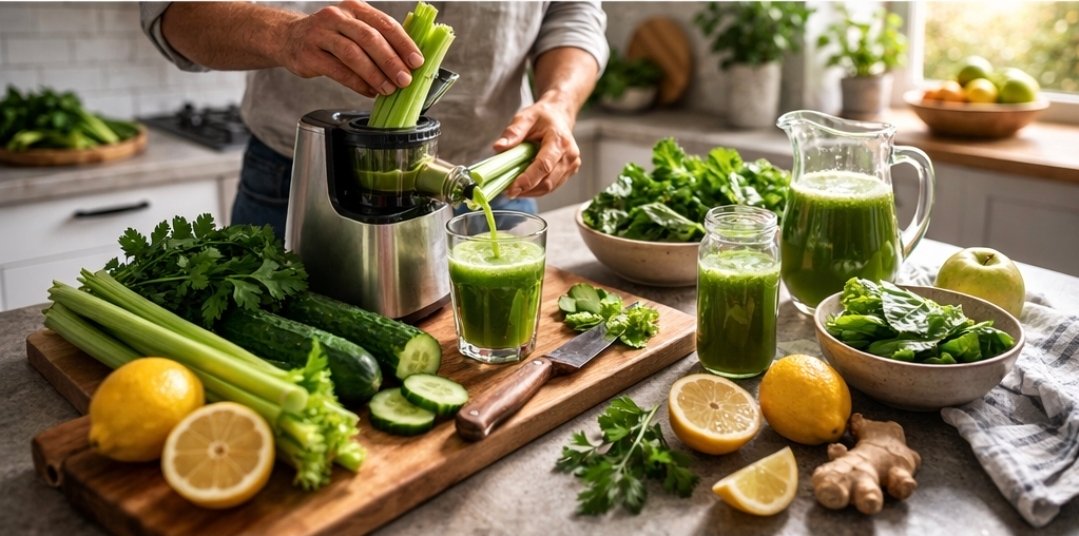
A Simple “Stable Energy” Juice Structure (What to Put in Each Juice)
This is a repeatable structure that reduces spikes and keeps the juice drinkable.
It’s not a recipe.
It’s a template.
Base (hydration + volume)
- Cucumber and/or celery
- Optional: romaine (adds volume without much sugar)
Greens (micronutrients)
- Spinach, kale, parsley, chard (choose 1–2 per juice)
- Use “push” ingredients like cucumber if greens slow the juicer
Acid (taste + balance)
- Lemon or lime (almost always improves drinkability)
Spice (small dose, big effect)
- Ginger (small piece; don’t turn it into a burn test)
Sweet (optional, controlled)
- Green apple: small amount for taste
- If using carrot or beet, keep it modest and pair with cucumber/celery
How to Prevent It
Most crashes happen because intake becomes uneven or too low.
Use these rules before the crash starts.
Start day 1 with lower sugar than you think you need.
If you begin fruit-heavy, you often lock yourself into spike-and-crash all day.
Make your first juice vegetable-forward.
A cucumber/celery/lemon base is a strong opener.
Don’t let the gap stretch.
Set a timer if you need to.
Stable fasting is boring on purpose.
Don’t stack sweet produce.
Apple + pineapple + carrot + beet in one juice is asking for a hit.
Match intake to output.
If you sweat more, you need more fluid and electrolytes, not just more fruit sugar.
Plan for day 2–3.
Many people see the worst instability here.
If headaches show up on day 2 specifically, don’t guess—use the targeted resource.
(See detailed guide: [Internal Link Placeholder: Juice Fasting Headache Day 2: Why It Happens])
Example of a Stable Juice Fasting Intake Pattern
A stable fasting day usually involves spacing juice intake evenly instead of drinking large amounts at once.
- 8:00 AM — green vegetable juice (celery, cucumber, spinach)
- 10:30 AM — mixed vegetable juice with small fruit portion
- 1:00 PM — green juice
- 3:30 PM — vegetable-dominant juice with carrot or apple
- 6:00 PM — lighter green juice
This pattern helps maintain stable blood sugar and reduces the risk of crashes and headaches.
Safety / When to Stop
Do not push through severe symptoms.
Juice fasting affects people differently, and a “sugar crash” can become dangerous if it’s true hypoglycemia or if you have an underlying condition.
Stop the fast and seek medical advice urgently if you have:
- Fainting, repeated near-fainting, or inability to stand without severe dizziness
- Confusion, slurred speech, severe disorientation, or unusual behavior
- Chest pain, shortness of breath, or a racing heartbeat that doesn’t settle
- Severe weakness that makes normal tasks unsafe
- Seizure symptoms
Do not juice fast without medical supervision if:
- You have diabetes, take insulin, or take glucose-lowering medication
- You have a history of hypoglycemia, eating disorders, or significant heart/kidney disease
- You are pregnant or breastfeeding
This is general education, not personalized medical advice.
If you’re getting headaches plus energy crashes, use the broader troubleshooting guide and stop if symptoms escalate:
juice fasting headache causes and prevention.
(See detailed guide: [Internal Link Placeholder: When to Stop a Juice Fast Due to Headache])
FAQ
How fast can a sugar crash happen on a juice fast?
Often within 30–120 minutes after a high-sugar juice, especially if it was large, fruit-heavy, or followed by a long gap.
People usually notice it as a sudden drop rather than a slow fade.
Is beet juice a common trigger for crashes?
It can be, especially if beet is used in large amounts or paired with fruit.
Beet and carrot are easy to overdo because they taste “healthy” but can push the sugar load higher than people expect.
Can celery juice cause headaches that feel like a crash?
Sometimes people blame celery when it’s actually low overall intake or electrolyte imbalance.
If headaches appear repeatedly with celery-heavy routines, troubleshoot it specifically.
(See detailed guide: [Internal Link Placeholder: Can Celery Juice Cause Headaches During Fasting?])
What’s the best first juice of the day to avoid a crash?
Cucumber + celery + lemon is a strong baseline.
Add a small amount of greens if your stomach tolerates it.
Keep fruit minimal early in the day.
Should I “fix” a crash with more fruit juice?
Not usually.
It may help briefly, but it can set up another spike-and-drop cycle.
A vegetable-forward juice plus appropriate electrolytes is often a steadier correction.
How long do juice fasting headaches last if sugar crashes are involved?
If the headache is linked to unstable intake, it often improves once your juices become more stable and you stop big sugar swings.
If headaches persist, use a timing-based guide.
(See detailed guide: [Internal Link Placeholder: How Long Do Juice Fasting Headaches Last?])
Why do I crash harder on day 2?
Day 2 is a common point where routine stress, sleep disruption, and inconsistent intake collide.
If you’re seeing a consistent day-2 pattern, address it directly.
(See detailed guide: [Internal Link Placeholder: Juice Fasting Headache Day 2: Why It Happens])
Should I stop my fast if I keep crashing?
If repeated crashes continue despite stabilizing your juice structure, intake timing, and electrolytes—or if you feel faint, confused, or unsafe—stop.
Your body is giving you a clear signal to reassess.
Recommendation
If you’re getting sugar crashes plus headaches, don’t guess.
Start with the main troubleshooting hub and work systematically:
Juice Fasting Headaches: Causes, Prevention, and Fixes.
Conclusion
A sugar crash during a juice fast is usually a strategy problem, not a mystery.
If your juices are fruit-heavy, your servings are large, and your gaps are long, you’re creating spikes and drops on repeat.
Stabilize the ratio, tighten the timing, and support electrolytes as needed.
If symptoms become severe or you have medical risk factors, stop and get professional guidance.
For the broader framework—especially if headaches are part of your crash pattern—use the central guide: