
Juice Fasting vs Water Fasting for Fat Loss: What Changes Metabolically
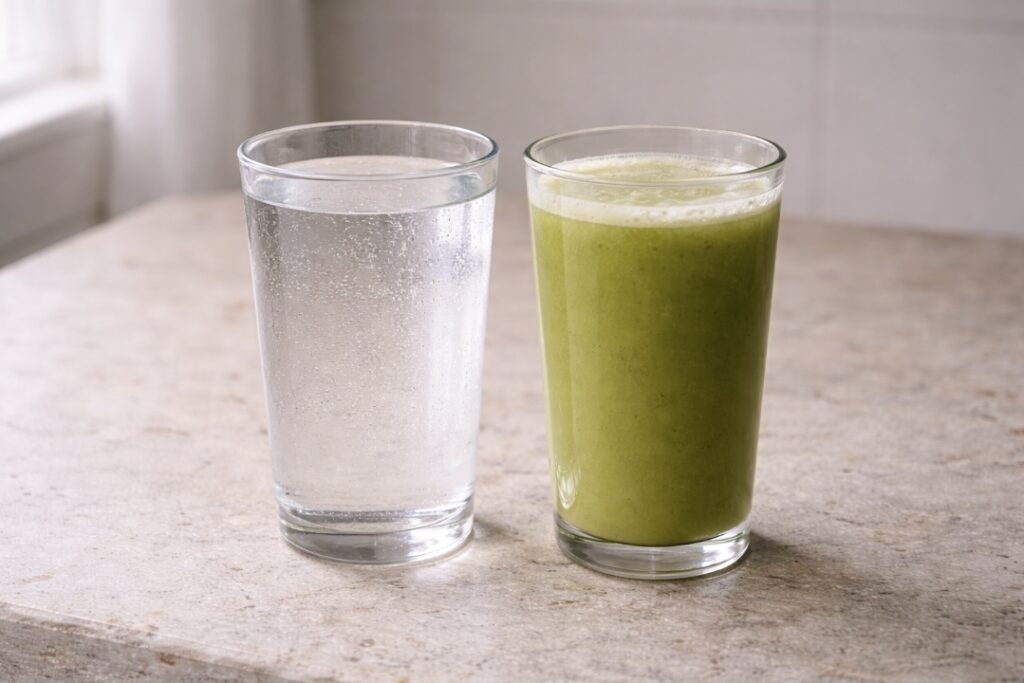
Juice fasting vs water fasting for fat loss can both reduce body fat, but they work in different ways inside the body.
With water fasting, you remove calories completely. With juice fasting, you keep some energy coming in—usually from carbohydrate—but you still remove most food and most protein.
That difference affects how fast stored carbohydrate runs down, how quickly fat use increases, how strongly the body tries to conserve energy, and how much you eat and how much exercise you get while you’re doing it.
Neither approach guarantees better fat loss. Results depend on how long you keep it going, how much juice you consume, and what happens when normal eating resumes.
For the broader overview of juice fasting and weight loss expectations, see Juice Fasting for Weight Loss.
What Each One Means
Water fasting means no calories. No protein, no fat, no carbohydrate. Only water (and sometimes electrolytes, depending on how strict you want to be – or not).
Because there’s no intake, stored carbohydrate usually runs down faster and the body has to rely more heavily on internal fuel sooner.
Juice fasting means liquid calories, usually mostly carbohydrate, with very little protein and very little fat. The details matter because a “juice fast” can range from a few small vegetable juices to multiple large sweet juices per day.
With calories coming in, stored carbohydrate can run down more slowly, or it can still drop quickly if how much you eat stays low enough and activity stays up.
Both generally reduce total calories in. Both can create fat loss. The question is what the body is forced to do while you’re fasting.
What Changes Metabolically
How Fast Glycogen Runs Down
Water fasting usually drains stored carbohydrate faster because there is no incoming carbohydrates at all.
Juice fasting can slow that decline because you’re still feeding carbohydrates into the system, even if how much you juice is low.
If juices are fruit-heavy or frequent, glycogen often stays higher for longer. If juices are mostly vegetable-based and overall volume is modest, glycogen still drops, just not as abruptly as with water.
More stored energy helps you exercise harder and feel better throughout the day. When those levels are low, you tend to get lazy and move less without realizing it.
It also affects how quickly the body has to rely more on fat.
When Fat Use Ramps Up
Water fasting usually pushes the body toward higher fat use sooner because there’s no incoming energy.
That does not mean visible fat loss is instant, and it does not mean the rate stays high for everyone.
You’ll still burn fat on a juice fast, especially if you drink so little that your body has to use its own stores to make up the difference.
For most people, the switch is slower because you’re still eating carbs, so your body just keeps using them for fuel.
In plain terms: water fasting forces the shift sooner; juice fasting often makes that shift more gradual, depending on how much you eat.
One distinction gets missed here.
Burning fat for fuel is not the same as reducing stored body fat.
You might be burning fat even if the scale doesn’t budge. This happens because things like water retention, digestion, and how many carbs you’re eating can make your weight jump around and hide your actual progress.
Muscle Loss Risk
Both methods carry risk of muscle mass because neither provides enough protein.
Water fasting is usually more aggressive because there’s no incoming energy at all, so the body has more reason to conserve, reduce activity, and break down tissue when the fast goes on longer.
Duration, starting leanness, and activity level change or increase the risk.
Since juice has almost no protein, it won’t do much to protect your muscle.
But for some people, having some carbs and calories keeps their workouts from crashing, which helps them stay strong and keep moving during the fast.
That support is indirect: not protein-driven, but tolerance-driven.
There’s also a behavior angle.
When water fasting wipes out energy, you often stop training and stop moving.
When juice fasting feels more easier to handle, you usually keep walking, continue lifting, and maintain a more normal routine.
Metabolic Slowdown Signals
When how much you eat drops sharply, the body often conserves energy. You move less without thinking about it, and many people feel colder and slower.
Water fasting is the most extreme version because the deficit is immediate and complete.
Juice fasting can still be a large enough restriction, but the presence of some calories can soften how abrupt that conservation feels.
It all depends on how much you eat. A juice fast that delivers a lot of carbohydrate may feel easier but also reduces how hard the body is pushed to pull from stored fuel.
A very low-calorie juice fast can feel closer to water fasting, with a smaller buffer.
Hunger and “Can You Stick to It?”
Water fasting often brings hunger waves that can be sharp, especially in the first few days.
Some people feel hunger fade later. Others keep getting hit with it, along with fatigue and reduced focus.
Juice fasting can be a lot easier because drinking something with taste and calories takes the edge off.
For others, sweet liquids just make them want more food, not less.
Hunger changes behavior.
When it stays high, people start bargaining with portions, adding extra juices, or drifting into snacks.
When it’s less extreme, sticking to it is easier and rebound eating is less likely.
Faster Doesn’t Always Mean More Fat Loss
Water fasting can produce faster early weight change than juice fasting.
That does not automatically mean more body fat was lost during that window.
Early scale movement includes shifts in stored carbohydrate, hydration, and digestion, and those can be larger than actual fat loss in the same time frame.
Total fat loss depends on how large a deficit you create and how long you keep it going.
If water fasting is so harsh that you stop early, or it triggers overeating afterward, total fat loss can end up smaller than expected.
If juice fasting is easier to sustain, the deficit across the week can end up larger, even if the first days look less impressive.
Movement matters, too.
Water fasting often reduces day-to-day output more aggressively. People sit more, train less, and move less without noticing it.
Juice fasting can preserve more daily movement, which can improve the final resulting weight loss.
The clean comparison is this: water fasting usually makes your body switch fuels faster, but sticking to it and activity often drop. Juice fasting often shifts fuel use slower, but sticking to it and activity can hold up better.
Who Each Approach Fits Better
This is not about “discipline.” It’s about how your body and behavior respond to restriction.
Two people can try the same method and get opposite outcomes because one can tolerate it and the other can’t.
These profiles are not rules, but they explain why preferences vary.
- High-hunger people: Juice fasting may blunt hunger for some, but sweet and frequent juices can also keep cravings active.
- People with physical jobs or in physical training: Juice fasting often preserves more usable energy and better output; water fasting more often forces a drop in work capacity.
- Leaner individuals: Water fasting can feel harsher and may carry more risk of muscle loss as duration increases; juice fasting can be less punishing but still restrictive.
- People who rebound-eat after restriction: Water fasting can set up a stronger swing into overeating for some; juice fasting can reduce the swing to over-eating if it feels more manageable.
- People prioritizing muscle retention: Neither is ideal without protein, but water fasting usually increases risk with longer duration fasts; juice fasting may be slightly less aggressive for some and preserves the ability to exercise.
None of these points make one method “better.” They explain why outcomes differ even when people think they’re doing the same thing.
Safety Notes Before You Try Either
Fasting is not a harmless experiment for everyone.
If you take diabetes medications or insulin, fasting can change blood sugar quickly and requires medical oversight.
Blood pressure medications and diuretics can also create problems during fasting restrictions because hydration and electrolyte balance can shift.
Kidney disease makes things much riskier, especially with intense fasting or drinking lots of juice from high-oxalate vegetables like spinach.
Pregnancy and breastfeeding are definitely not times to experiment with fasting.
If there is a history of eating disorders, fasting can re-trigger restrictive behavior and rigid thinking even when the original goal is “health.”
In Conclusion
Juice fasting vs water fasting for fat loss is not a matter of willpower.
They create different metabolic environments, and that changes how fast the body shifts fuel use, how hard hunger hits, and how much output drops.
Water fasting often pushes a faster shift toward fat use, but it can also bring a sharper hit to energy and a higher risk of muscle loss as if it goes on longer.
Juice fasting can still produce fat loss, and it may be easier to handle for some, but the shift is often slower and sweet liquids can keep appetite active.
The “better” method is the one you can sustain without a hard rebound afterward that erases the deficit.
Common FAQs
Is juice fasting vs water fasting for fat loss better?
Neither wins by default. Water fasting often forces a faster shift toward using stored fuel, but it can be harder to sustain. Juice fasting often feels more easier to handle, but it depends on how much juice is consumed and how sweet it is. The final outcome usually comes down to sticking to it and what happens after the fast ends.
Does water fasting burn fat faster than a juice fast?
Water fasting usually increases fat loss sooner because no calories are coming in. That does not guarantee a larger amount of body fat lost over the full period. If energy crashes and activity drops, or if overeating follows, the advantage is lost. A juice fast can still lead to fat loss if how much you eat stays low enough, but the shift is less pronounced.
Will juice stop fat burning?
Not automatically. Drinking juice adds carbohydrate, which can slow the shift toward fat use compared to water fasting, especially if carbs are high. If overall calories stay low, your body can still pull from stored fuel. The bigger issue is that sweet liquids keep appetite active, which can increase how much you consume without noticing.
Which is more likely to cause muscle loss?
Neither provides meaningful protein, so both carry some risk. With water fasting it is usually more aggressive and can increase risk of muscle loss as if it goes on longer, especially in leaner or highly active people. Juice fasting may be slightly less punishing for some because it can preserve more exercise tolerance and daily output, but it is not a “muscle-preserving” method in any strong sense.
Which is easier to stick to without overeating afterward?
It depends on the person. Water fasting can create a stronger swing into rebound eating for some people because restriction is absolute. Juice fasting can reduce that urge if it keeps hunger and fatigue more manageable, but it can also keep cravings active if the juices are sweet and frequent. The method that produces the least snap-back behavior is usually the one that feels more sustainable for your appetite and daily life.