

How to Structure Your Day on a Juice Fast
Why the Day Itself Needs a Plan
A juice fast sounds simple until the day actually begins.
You wake up. The kitchen is quiet. Breakfast isn’t happening. Your first question suddenly appears: when should my first juice happen, and how should the rest of the day unfold?
Many juice fasting beginners assume they will simply drink juices throughout the day and adjust as they go. That approach often works for just a few hours. Then normal life interrupts, throwing off your schedule with long calls and unexpected chores. Unexpectedly you miss a drink or you remember later than planned and the afternoon feels disorganized.
The fast itself usually isn’t the issue. You simply never developed a clear and easy to follow routine.
If you create a basic schedule — when juices happen and how to begin your morning — the experience becomes far easier to manage.
This article walks through what a typical day actually looks like during a juice fast and how to settle into a routine that keeps energy steady across the day.
If you’re still in the planning stages of your fast or want the bigger picture first, the Juice Fasting Guide explains how the full process works from preparation through completion.
A Simple Daily Pattern That Works for Most People
Most people end up following a fairly consistent daily flow once the fast begins.
Drink five juices throughout the day, sip water in between, and keep your movements light if you’re up for it.
A common schedule looks something like this:
- 8:00–9:00 am: first juice
- 11:00–12:00 pm: second juice
- 2:00–3:00 pm: third juice
- 5:00–6:00 pm: fourth juice
- 7:30–8:30 pm: final juice
The exact clock times are flexible. What matters is avoiding long gaps between drinks.
Most people feel better when juices land roughly three hours apart. When the gap stretches much longer, hunger and fatigue tend to build quickly.
Ingredient balance also matters here.
Fruit-heavy blends early in the day can produce a quick lift followed by a noticeable drop a few hours later. Lower-sugar combinations help flatten that curve. A useful reference point is the list of low sugar juice recipes for fat loss.
Morning: Getting the Day Started
Mornings often feel different than people expect during a juice fast.
You may wake up less hungry than usual. That’s normal. Overnight the body has already gone several hours without food, and hunger hormones often remain quiet for a while after waking.
Starting with water usually works well. A glass or two helps replace fluid lost during sleep.
After that, the first juice fits naturally into the morning.
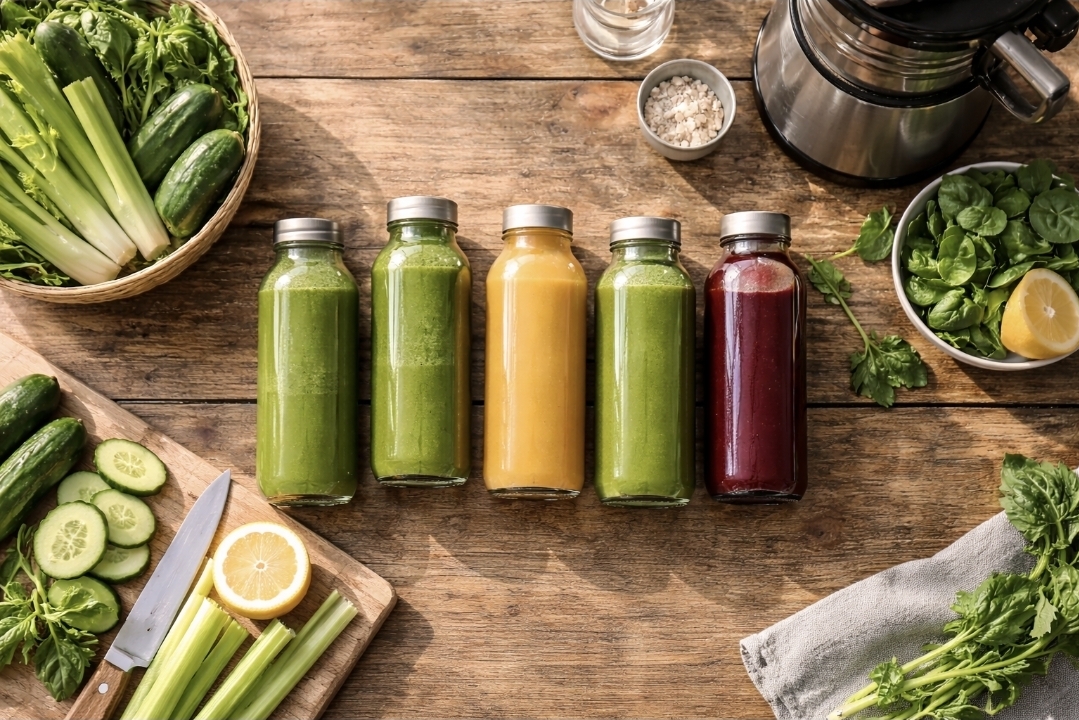
Vegetable-heavy blends tend to feel smoother at this point in the day. Ingredients like cucumber, celery, leafy greens, and a small amount of fruit provide flavor without producing a sharp energy spike.
Should the first juice happen immediately after waking?
Not necessarily. Some people wait an hour or two before drinking anything besides water. Others begin sooner because their schedule requires it. Both approaches work as long as the rest of the day follows a consistent pattern.
If coffee is part of your routine, it usually fits best earlier in the day and without sweeteners or cream. More detail about beverage options appears in what you can drink during a juice fast.
The goal in the morning is simple: avoid rushing the first drink.
Keeping Drinks Spread Through the Day
This is where many beginners run into trouble.
It sounds simple to time your drinks, but unexpected delays can easily push your next juice back by hours. The result is expected: hunger climbs quickly and the next bottle disappears in minutes. At that point the day starts to feel chaotic.
In reality nothing unusual happened. The schedule simply drifted.
Phone reminders help more than people expect. Preparing bottles ahead of time helps even more. When a juice is already waiting in the refrigerator, it’s much easier to keep the day moving smoothly.
The goal isn’t perfection. It’s simply avoiding long stretches that leave you scrambling later.
Why Sugar Crashes Sometimes Happen
A sudden drop in energy during a juice fast rarely comes from fasting itself. More often it reflects what went into the previous juice.
Fruit-heavy blends digest quickly. Blood sugar rises fast and then falls a few hours later, which can produce irritability, hunger, and the urge to drink the next juice early.
Vegetable-dominant juices digest more gradually, which tends to create a smoother energy curve.
Juices also contain less fiber than whole produce, which allows sugars to enter the bloodstream more quickly. That’s why smaller fruit portions and vegetable bases are useful during a fast.

Afternoon Energy Dips
The mid-afternoon slowdown catches many people by surprise. Energy often drops around this time even when the day is going well.
Part of this comes from normal circadian rhythms. Harvard Health explains that the body naturally experiences a dip in alertness during the afternoon hours (Harvard Health).
During a fast that dip can feel slightly stronger because overall calorie intake is lower.
Movement helps more than another drink in this situation. A short walk or a few minutes outside often restores alertness. Sunlight can help as well.
Another common cause of afternoon fatigue is delayed drinks earlier in the day. When the morning juices arrive late, the afternoon gap stretches too far. The solution usually isn’t more juice.
Evening Routine on a Juice Fast
Evenings tend to feel quieter once the final juice is finished.
Hunger often fades and the body begins settling in for the overnight fast.
You’ll find a gentle stroll or some light movement far more inviting than the idea of a punishing gym session.
Sleep sometimes is altered during the first few nights. Lower calorie intake can produce lighter sleep initially. Cleveland Clinic notes that dietary changes can influence sleep patterns and overall energy regulation (Cleveland Clinic).
A calm evening routine helps here. Dim lights. Minimal screens. A final glass of water before bed.
Nothing complicated.
Common Timing Mistakes That Disrupt a Juice Fast
Most people run into trouble because of just a couple of minor, recurring slips.
- Skipping the first juice and compressing the days schedule later
- Drinking two juices too close together
- Using fruit-heavy blends early in the day
- Waiting until hunger becomes intense before drinking
- Drinking excessive water between juices
These simple oversights usually show up as sudden hunger or fatigue.
The fix is just as simple: return to consistent timing.
If the first few juices happen on schedule, the rest of the day usually settles into place.
Some unpredictability during the early part of a fast is normal. The article explaining the first three days of a juice fast describes why those early adjustments occur.
What a Well-Run Day Usually Feels Like
Hunger builds gradually rather than arriving all at once.
Energy rises and falls across the day without sharp swings.
You stop thinking about the next drink constantly.
The routine becomes familiar.
After a few days the day no longer feels planned — it simply feels normal.