
Does Beetroot Juice Improve Circulation? Evidence, Benefits and How It Works
Beetroot juice is one of the few drinks with solid research behind it for improving blood flow. The reason is clear, and the effect is real, but easier to notice in some people than others.
Yes. Beetroot juice can improve circulation. But the rest matters more, because when it works and when it barely does anything are quite different.
What Better Circulation Means
Circulation is how efficiently blood moves through the body — moving oxygen and nutrients where they need to go. When it works well, energy is stable, recovery is faster, blood pressure stays steadier, and your body holds up better when you push it.
When it doesn’t work well, the signs are often easy to miss. Fatigue that builds through the day. Cold hands and feet. Slower recovery after exercise. Performance that feels inconsistent without a clear reason.
Good circulation depends mostly on how well blood vessels open and tighten. That is largely controlled by nitric oxide — which tells blood vessels to relax and widen. That is where beetroot comes in.
How Beetroot Turns Into Nitric Oxide
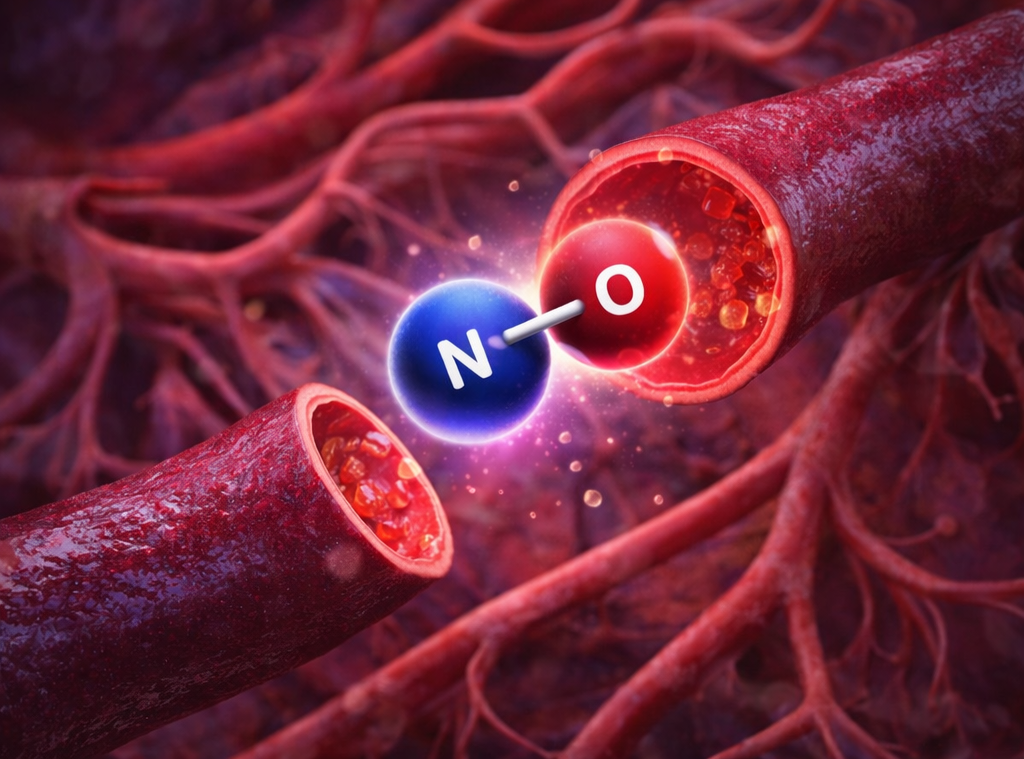
Beetroot is naturally high in nitrates. After you drink it, these nitrates are turned into nitrites by bacteria in the mouth, then into nitric oxide in the blood. Nitric oxide helps blood vessels relax, which reduces strain and allows blood to move more freely.
Here’s what happens: nitrates are absorbed after drinking beetroot juice. Oral bacteria convert nitrates to nitrites. Nitrites convert to nitric oxide. Nitric oxide signals blood vessels to relax. Blood moves more easily.
This is why using mouthwash before drinking beetroot juice reduces the effect — you kill the mouth bacteria that help start the process. It’s also why fresh juice works better here than cooked beetroot, since heat lowers the nitrate content before the body can use it.
What the Evidence Shows
The research on beetroot and blood flow is one of the more consistent food-based findings in this area. A few patterns show up again and again in the research.
Blood pressure responds to beetroot juice in people with higher blood pressure. The drop is modest, not huge — usually by a few points — but more useful when paired with better daily habits. Review papers regularly link nitrate intake to better blood vessel function.
Endurance athletes often perform a bit better using beetroot juice before training. Studies show the body can do the same work with slightly less effort, delayed fatigue, and improved how long they can keep going. The effect is most noticeable in people whose circulation is already a bit below par rather than in those with already good circulation.
Erections depend on the same process. Nitric oxide controls muscle relaxation in the blood vessels, which is necessary for erections. This is why improving blood vessel health through diet can help erections over time — not as a treatment, but as part of better blood flow overall. If you want the ED side of this, see my article on where juicing helps with ED.
When Beetroot Makes a Noticeable Difference
Beetroot juice has the most noticeable effect when circulation is already not working well. Low activity levels, inconsistent diet, early signs of circulation problems, or elevated blood pressure all create conditions where raising nitric oxide levels stands out more.
In these cases, it usually shows up like this. Training feels a little easier to keep going. Energy holds later in the day instead of dropping off. Your body responds more consistently.
When circulation is already strong, the effect is much smaller. The same process still works, but there’s less room for improvement, so the difference is harder to notice.
What Beetroot Juice Does Not Do
It does not reverse damaged arteries or fix serious blood vessel disease. Those conditions require medical care, not more juice.
It does not work immediately. Nitric oxide usually peaks around two to three hours after drinking beetroot juice — which means drinking it right before expecting anything from it usually does nothing you can notice. For timing, see how long beetroot juice actually takes to work.
It does not cancel out bad habits. Smoking, heavy alcohol use, inactivity, and poor sleep all continue to limit circulation regardless of what you drink. Beetroot helps, but it does not overpower everything else.
Note: Consistency matters more than dose.
A moderate amount every day works better than large servings now and then. Most studies use 250–500ml daily. Drinking much more rarely helps and can cause stomach upset.
So, Does Beetroot Juice Improve Circulation?
Beetroot juice improves circulation in a measurable way — through a clear process, with solid research behind it. The effect is gradual, not dramatic, and depends on regular use, not occasional use.
It works best as part of a bigger change in habits. If you want to see how beetroot fits with other ingredients and habits for blood flow, see my guide to juicing for blood flow. For when to drink it, see my timing guide.