

Best Electrolytes for Juice Fasting Headaches: What Actually Works
Electrolyte imbalance is one of the most common and preventable causes of headaches during a juice fast.
Many people assume headaches are simply part of “detox.” The reality is usually more specific.
Headaches tend to show up when sodium, potassium, and fluid balance drop too quickly. That shift can affect blood pressure, nerve signalling, and brain circulation.
If you’ve experienced juice fasting headaches, restoring electrolytes is often the fastest and most reliable lever.
Knowing which electrolytes matter — and how to use them — can be the difference between a miserable fast and a smooth, energising one.
Quick Answer
- Sodium is the single most important electrolyte for preventing juice fasting headaches.
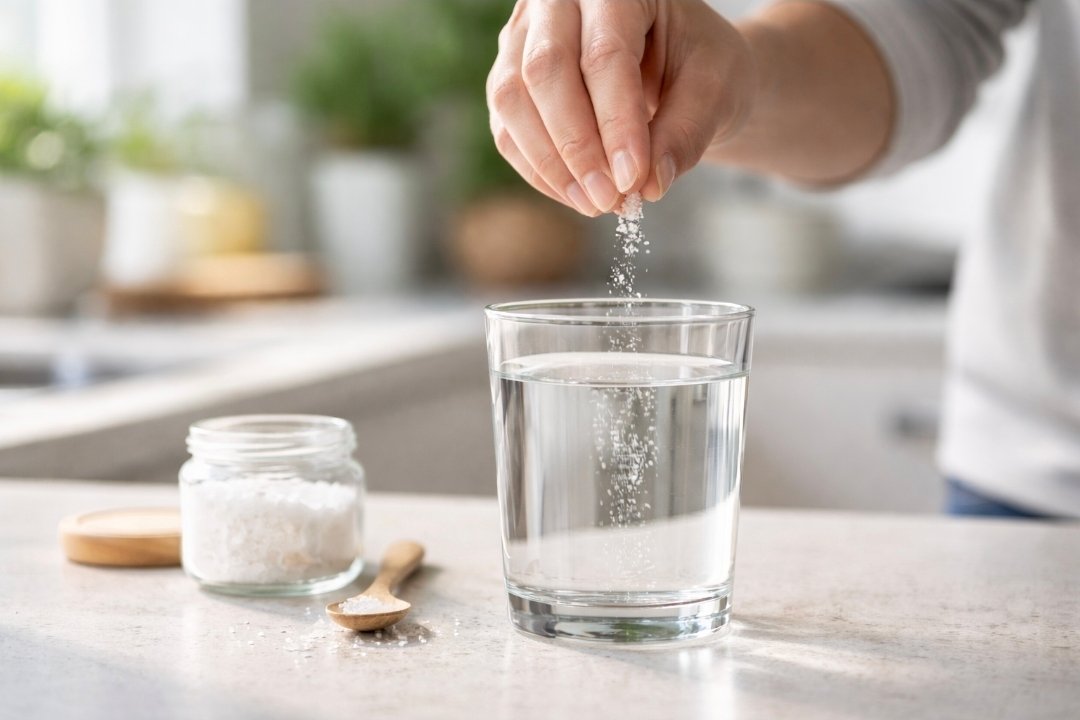
- A pinch of sea salt in water can relieve electrolyte headaches within 20–40 minutes.
- Juice alone is often too low in sodium to maintain proper electrolyte balance.
- Potassium and magnesium also help stabilise nerve function and blood vessels.
- Water alone can worsen headaches if electrolytes are not replaced.
Why Electrolytes Matter During Juice Fasting
Electrolytes are minerals that control fluid balance, nerve signals, and muscle function.
The brain is especially sensitive to electrolyte changes, particularly sodium. Even small shifts can influence blood volume, vascular tone, and how cleanly nerves communicate.
What changes fast during a juice fast
Insulin levels often drop rapidly during a juice fast.
That drop can trigger the kidneys to release sodium and water more quickly than normal — a process called fasting natriuresis.
Insulin normally signals the kidneys to retain sodium. When insulin falls, that retention signal weakens, and sodium loss can accelerate.
That early sodium loss is a common reason headaches begin in the first few days.
(See detailed guide: Juice Fasting Headache Day 2: Why It Happens)
This pattern also fits why headaches during juice fasting often appear between Day 2 and Day 4.
Why Electrolyte Loss Causes Headaches
Electrolytes help regulate where fluid sits: inside cells, between cells, and in the bloodstream.
When sodium drops:
- Blood volume decreases slightly
- Brain perfusion changes
- Nerve signal transmission becomes less stable
- Blood vessels may constrict or dilate abnormally
The result is often a dull, pressure-type headache typical of fasting.
(See detailed guide: How Long Do Juice Fasting Headaches Last)
If sodium loss continues without replacement, symptoms can ramp up.
A common mistake is drinking more water to “flush it out,” which can dilute sodium further and make the headache worse.
Why Sodium Is the Most Important Electrolyte During Fasting
Sodium is the primary regulator of blood volume and circulation.
Without enough sodium, it’s harder to maintain stable blood pressure and steady blood flow to the brain.
The fasting natriuresis effect
During fasting, insulin tends to drop significantly.
Insulin normally signals the kidneys to retain sodium. When insulin falls, the kidneys may excrete sodium at a much higher rate.
This process — natriuresis of fasting — is one of the earliest physiological shifts that can occur during fasting.
Nerves and blood vessels both rely on sodium
The nervous system depends on sodium gradients to transmit electrical signals. Every nerve impulse relies on sodium movement across cell membranes.
At the same time, sodium helps influence vascular tone (how “tight” or “relaxed” blood vessels are) and supports stable circulation.
When sodium falls, people often notice a cluster of changes rather than a single symptom.
- Nerve signalling can feel “slower” or less stable
- Blood pressure may dip slightly
- Brain circulation can feel less steady
- Headache sensitivity increases
That’s why sodium replacement can bring rapid relief when the headache is electrolyte-driven.
Practical intake pattern
Sodium strategies during fasting vary widely.
Many fasting protocols use small, spaced amounts throughout the day rather than large single doses. Timing earlier in the day often helps stabilise circulation and reduce the chance of symptoms building later.
The key point most people miss
During a juice fast, you’re not only “low calorie.” You’re often low sodium too.
Many fruit-forward juices are naturally low in sodium. Even a lot of vegetable juices don’t reliably supply enough to offset fasting-related sodium loss.
Because sodium strongly influences blood volume (how much fluid is circulating inside blood vessels), small drops can change how your brain is perfused.
That’s one reason fasting headaches often feel like pressure, heaviness, or a dull band-like ache rather than a sharp “stab.”
Why insulin matters (high level)
Insulin influences sodium retention by affecting how the kidneys handle sodium.
When insulin is higher (as it tends to be when eating normally), the kidneys are more likely to hold onto sodium.
When insulin drops (as it tends to do quickly during fasting), the kidneys often let more sodium go.
This isn’t “wrong.” It’s a normal adaptation.
But symptoms can show up if sodium loss outpaces replacement.
If you want the bigger picture, this sits under the same umbrella as juice fasting headaches overall: fuel shifting and fluid balance shifting at the same time.
Why sodium often works faster than potassium
Sodium often relieves headaches faster because it can have a more immediate effect on circulating blood volume and fluid distribution.
A small amount may help the body retain more fluid in the bloodstream rather than losing it quickly through the kidneys.
Potassium matters too, but it tends to play a bigger role in longer-term cellular balance and nerve/muscle function.
Real-world version: sodium is often the “fast lever” for a fasting headache. Potassium and magnesium are usually the stabilisers.
Two common “what it feels like” patterns
- Head pressure with lightheadedness when standing up, often paired with a slightly “empty” or drained feeling.
- A dull headache with fatigue and brain fog that improves noticeably after a salty sip or mineral-rich vegetable juice.
Those patterns aren’t diagnostic (and this isn’t medical advice). They’re practical clues.
If a headache improves after a small amount of sodium, electrolyte imbalance moves higher on the list of likely causes.
(See detailed guide: Coffee Withdrawal During Juice Fast)
The Most Important Electrolytes
Sodium
Sodium maintains blood volume, circulation, and nerve transmission.
It is often the fastest-acting electrolyte for relieving headaches.
That’s why juice cleanse headaches frequently improve quickly after sodium intake.
Potassium
Potassium supports nerve signalling and muscle contraction.
It also helps balance sodium levels and stabilises blood vessel tone.
Vegetable juices provide potassium, but potassium alone cannot replace sodium.
Electrolytes help, but consistent juice intake is equally important. The right equipment, like those in this best cold press juicer guide for fasting, ensures you extract maximum minerals from your produce.
Magnesium
Magnesium supports nervous system stability and helps relax blood vessels.
It can reduce headache sensitivity and muscle tension.
(See detailed guide: How to Prevent Juice Fasting Headaches)
Exact Electrolyte Strategies That Work
The most effective approach is consistency, not big doses.
- Add a small pinch of sea salt to water once or twice daily
- Use mineral-rich vegetable juices
- Avoid drinking excessive plain water without electrolytes
- Space electrolyte intake throughout the day
Electrolytes work best when used preventively instead of waiting until symptoms become severe.
A simple way to think about it
You’re trying to avoid big swings.
Big swings happen when you drink loads of plain water, sweat, walk a lot, or start the fast aggressively — and only “react” once the headache is already strong.
Small, steady electrolyte support tends to produce a smoother fast with fewer symptoms.

Example Electrolyte Strategy During Juice Fasting
A structured rhythm helps prevent sudden drops.
This is general guidance, not medical advice, and it’s intentionally conservative.
The aim is stability.
Morning Phase
Morning is when sodium levels are often lowest due to overnight fluid shifts.
Start with a tall glass of water, then use a mineral-rich vegetable juice option soon after.
For many people, celery-based juice is the easiest “fasting-friendly” sodium support.
If you’re prone to headaches, a small pinch of sea salt in water in the morning can help — especially if you wake up with head pressure or feel lightheaded when standing.
Midday Phase
Use midday as your maintenance window.
Have another serving of vegetable-heavy juice and pay attention to how you feel when standing and walking.
If you’re drinking a lot of water because you feel dry or “detox-y,” this is where people accidentally dilute sodium further.
A practical move: pair extra water with mineral intake instead of repeatedly chugging plain water.
If your fast includes activity (walking, light exercise), sodium needs often rise because you lose minerals through sweat.
Afternoon Phase
Afternoon headaches are common while the body is still adapting fuel use and kidney sodium handling.
If fatigue shows up with a dull headache, consider a small electrolyte top-up: vegetable juice plus a pinch of salt in water if needed.
This is the moment where “small and spaced” often beats “wait and suffer.”
If you can’t tolerate salty water, use the natural-source options below.
Evening Phase
Evening is about stability, not stimulation.
If headaches appeared during the day, a final mineral-rich juice can reduce the chance of waking with a headache the next morning.
Magnesium-supportive greens blends may also help reduce tension-type headache sensitivity.
Avoid overhydrating late in the evening. It can dilute sodium and disrupt sleep with repeated bathroom trips.
Symptom-trigger protocol
If a mild headache begins (early pressure or dull ache), act early.
A common “mild headache” approach: sip a glass of water with a small pinch of sea salt, then reassess after 20–40 minutes.
Keep juices vegetable-heavy rather than fruit-only while symptoms are present.
If a strong headache develops (throbbing, worsening dizziness, or you feel unsteady), treat it as a warning sign.
Try a small sodium top-up and rest.
If symptoms are severe, persistent, or paired with red flags (confusion, fainting, chest pain, severe weakness), stop fasting and seek medical advice.
That matches the broader framework in juice fasting headaches and basic safety for any restrictive protocol.
Who should be cautious
More is not always better.
People with kidney disease, heart conditions, uncontrolled high blood pressure, those on diuretics, and anyone advised to restrict sodium should be cautious and consult a clinician before adjusting electrolytes.
Even if you are healthy, avoid “mega-doses.”
Small, spaced intake usually works best because it prevents the crash in the first place.
Best Natural Electrolyte Sources During Juice Fasting
Natural vegetable juices can be effective electrolyte sources.
- Celery juice — highest natural sodium content
- Cucumber juice — excellent hydration support
- Spinach juice — rich in magnesium and potassium
- Tomato juice — contains balanced electrolytes
- Vegetable broths — concentrated mineral support
Celery juice is particularly effective because of its natural sodium concentration.
That makes it a strong option for reducing juice fasting headaches when electrolytes are the driver.
What each option is best at
Different juices lean toward different minerals.
You don’t need lab-perfect numbers. You need practical direction.
Celery vs cucumber (fast relief vs hydration)
Celery juice is usually the most sodium-forward option.
That’s why it often works best for rapid headache relief when the cause is electrolyte-related.
A tall glass can act as a fast “bridge” without feeling like you’re taking a supplement.
Cucumber juice is more hydration-forward. It can feel soothing and helps with fluid intake.
But it usually isn’t as sodium-dense as celery.
If the headache is mainly sodium-related, cucumber alone may not be enough.
In everyday terms: cucumber often helps “dry, thirsty, slightly headachy.” Celery often helps “pressure headache + lightheaded standing.”
Greens blends (potassium/magnesium support)
Spinach and greens blends (spinach, kale, romaine, parsley) tend to be potassium- and magnesium-supportive.
Potassium supports nerve function. Magnesium can help relax blood vessels and reduce tension.
Greens blends are usually not the fastest tool for an acute sodium-style headache.
They’re better as a stabiliser — something you use daily to reduce the chance of headaches stacking up across days.
So what’s best for rapid relief?
If the headache is electrolyte-driven, sodium-forward options (celery juice or a small pinch of salt in water) tend to change symptoms fastest.
Cucumber is a hydration helper.
Greens blends are terrain-building support.
Practical portions that are easy to follow
- Celery juice: a tall glass for relief, or a smaller glass as daily maintenance.
- Cucumber juice: one large cucumber (juiced), ideally paired with other vegetables if you need more mineral density.
- Spinach/greens blend: a generous handful of greens with cucumber or celery to improve taste and mineral variety.
If you can’t tolerate salty taste
Don’t force it.
Dilute salty water more and sip slowly instead of taking it like a “shot.”
Lean harder on vegetable-forward juices: celery + cucumber is often easier than straight celery.
A squeeze of lemon/lime can reduce perceived saltiness for many people without turning the drink into a sugary juice.
If salty water and celery are both intolerable, mineral-rich broths (if your version of a juice fast allows it) are often the most concentrated natural option.
They can be especially useful in the first few days when natriuresis is strongest and headaches are most likely.
Signs Your Headache Is Electrolyte-Related
Electrolyte-related headaches often feel different from other headaches.
They’re commonly “systemic.” You feel underpowered, not just in pain.
Common signs include:
- Headache improves quickly after salt intake
- Dizziness when standing
- Fatigue with headache
- Weakness or low energy
- Brain fog and poor concentration
Why standing dizziness matters
Dizziness when standing can happen because low sodium reduces blood volume, which can lower blood pressure temporarily.
That change is often felt most when you move from sitting/lying to standing.
Why fatigue and brain fog cluster with headaches
Fatigue and brain fog often show up because the brain depends on stable electrolyte levels to function efficiently.
If the system is unstable, focus drops and motivation can flatten.
The speed-of-relief clue
If you take a small amount of sodium and the headache eases within 15–60 minutes, that strongly suggests electrolyte balance and circulation stability were involved.
That tends to look different from caffeine withdrawal headaches, which usually follow a slower curve.
It also tends to look different from sugar crash headaches, which often track swings in sweetness and energy.
Timing across days
A common pattern: Day 1 feels fine. Day 2 brings pressure headache + fatigue + standing dizziness.
That timing fits the early phase of fasting natriuresis.
Why Water Alone Can Make Juice Fasting Headaches Worse
Drinking large amounts of plain water without electrolytes can dilute sodium levels in the bloodstream.
That dilution lowers sodium concentration further and can worsen imbalance.
During fasting, the kidneys may already be excreting sodium more quickly, so the dilution effect can hit harder.
Overhydration without electrolyte replacement is a common reason headaches worsen during fasting.
It’s not just “more water”
The body needs the right ratio of fluid to minerals.
Sodium helps hold water in the bloodstream and helps regulate where water goes between compartments (bloodstream vs cells).
If you drink a lot of plain water while losing sodium, you can end up with fluid that isn’t effectively supporting blood volume.
The result often sounds like: “I’m drinking loads, but I still feel dizzy and headachy.”
Two common real-world scenarios
- “I had a headache, so I drank loads of water to flush toxins. My headache got worse and I felt lightheaded.” This often reflects water dilution on top of sodium loss.
- “I kept refilling my bottle all day because my mouth felt dry, but I got more tired and my head started pounding by afternoon.” Dry mouth can be part of fasting adaptation, but water alone may not fix mineral balance.
Rule of thumb (practical, not medical advice)
- If your headache is paired with standing dizziness, fatigue, or brain fog — and you’ve already been drinking plenty of water — consider electrolytes rather than more plain water.
- If you are genuinely dehydrated (very dry mouth, dark urine, you haven’t been drinking), water still matters. Start there, then reassess symptoms.
Another clue: if you drink water and feel noticeably worse within 10–30 minutes (more lightheaded, more head pressure), sodium dilution may be part of the problem.
In that case, mineral-rich vegetable juice or a small pinch of salt in water is often more useful than continuing to chug plain water.
This is one reason many people report fewer juice cleanse headaches when the fast is more vegetable-forward instead of fruit-only juice plus lots of water.
How Long Electrolytes Take to Relieve Headaches
If electrolyte imbalance is the cause, relief can be fast.
Many people notice improvement within:
- 20 minutes
- 30 minutes
- Up to 1 hour
Rapid improvement is a strong practical sign the headache was electrolyte-related.
Set realistic timing expectations
Sodium-driven relief can be quick in some people, but response time varies.
Some notice a change within 15–30 minutes after a small sodium intake, especially if the headache is mild-to-moderate and paired with standing dizziness.
Others take 45–90 minutes, particularly if they waited until the headache was strong or multiple factors are stacking (low sodium plus caffeine withdrawal plus poor sleep).
If relief doesn’t happen
Don’t assume electrolytes are useless.
First, question the driver. Not every fasting headache is electrolyte-driven.
If your headache is throbbing with nausea or light sensitivity, or it mirrors your typical migraine pattern, electrolytes may not be the main cause.
If the headache feels tight, “wired,” and tracks caffeine cessation timing, withdrawal may be bigger.
If the headache pairs with shakiness, irritability, or a sudden crash after a sweeter juice, a blood sugar swing could be involved.
(See detailed guide: Sugar Crash During Juice Fast)
When it’s probably not electrolytes
Electrolytes are less likely to be the main issue if standing dizziness is absent, salt doesn’t change anything after 1–2 careful attempts, or the headache strongly matches your pre-existing migraine/withdrawal pattern.
In those cases, use the broader framework in juice fasting headaches and address the most likely driver instead of repeating salt.
How to Prevent Electrolyte Headaches
- Start electrolyte intake on Day 1 to reduce the early sodium drop
- Use mineral-rich juices regularly rather than sporadically
- Avoid excessive water intake without electrolytes
- Transition gradually into fasting
(See detailed guide: When to Stop a Juice Fast Due to Headache)
Prevention works best when you prepare before the fast begins.
The day before you start, shifting toward vegetables and reducing highly processed salty foods can make your baseline more stable without shocking your system.
On Day 1, start mineral support early instead of waiting for symptoms. Early stabilisation can reduce the Day 2 headache pattern that catches many people off guard.
Safety Considerations
Electrolyte headaches are usually temporary.
Stop fasting if symptoms include:
- Severe dizziness
- Fainting
- Confusion
- Heart palpitations
This article is informational only and not medical advice.
FAQ
Are electrolytes the main cause of juice fasting headaches?
Electrolyte imbalance is a very common cause, especially in the first few days.
Sodium loss during fasting can change blood volume and circulation. That shift can trigger pressure-type headaches.
Headaches can also be multi-factorial. Caffeine withdrawal and sleep disruption can overlap early on.
The most useful approach is pattern recognition: standing dizziness, fatigue, and quick improvement after sodium often point to electrolytes. If salt does nothing and the headache matches your usual withdrawal pattern, electrolytes may not be the main driver.
How much salt should I take?
Small, spaced intake is usually sufficient. Individual needs vary.
Many people do better with a “pinch, reassess, then repeat later if needed” approach instead of a large dose all at once.
If you have a medical reason to restrict sodium (or you’re on relevant medications), be cautious and consult a clinician.
The goal is balance and symptom relief, not pushing sodium as high as possible.
Can juice alone provide enough electrolytes?
Some juices help, but sodium is often the limiting factor.
Vegetable-forward juices provide more minerals than fruit-only juices, but they still may not offset fasting-related sodium loss for everyone.
Celery-based juices tend to be more supportive than sweeter blends for this specific problem.
If your fast is mostly fruit juice plus plain water, electrolyte headaches are more likely. Mineral-rich vegetable juices (and avoiding overhydration) usually reduces intensity.
Why does salt help headaches quickly?
Sodium can restore blood volume and stabilise circulation.
It can also help steady vascular tone, which affects how blood flows through the brain’s vessels.
If your headache is driven by fasting natriuresis plus water dilution, sodium corrects the imbalance more directly than potassium.
That’s why some people feel improvement within 15–60 minutes. If there is no change after multiple careful attempts, the headache may not be electrolyte-driven.
Can drinking too much water cause headaches?
Yes. Excess water can dilute sodium.
During fasting, kidneys may already be excreting sodium more quickly, so dilution can worsen symptoms more than you expect.
This is why “drink more water” is not always the right fix for a fasting headache.
A better approach is often “hydrate with minerals,” using vegetable juice or a small sodium top-up instead of repeated plain water.
Does everyone need electrolyte support?
Many people benefit from electrolyte support during fasting, but not everyone needs the same amount.
Some can do a short juice fast without noticeable electrolyte symptoms, especially if they are sedentary, sleep well, and use mineral-rich vegetable juices.
Others are more sensitive and develop headaches quickly, especially if they sweat, walk a lot, or drink lots of plain water.
If you have a history of fasting headaches, electrolyte support from Day 1 is usually worth considering. Start small and reassess.
How can I tell if it’s electrolytes or caffeine withdrawal?
Electrolyte headaches often come with standing dizziness, fatigue, and brain fog, and may improve fairly quickly after sodium.
Caffeine withdrawal headaches often have a predictable timing pattern, often peaking 24–72 hours after stopping, and may not respond much to salt.
Withdrawal can also feel more “tight” or “wired” rather than purely drained.
If you stopped coffee at the same time you started fasting, both can overlap. In that situation, managing both (gentle electrolyte support plus a sensible caffeine taper plan) is often more effective.
What if salty water makes me feel nauseous?
That can happen, especially if you drink it too quickly or the concentration is too strong.
Dilute it more and sip slowly, or switch to natural sources like celery + cucumber juice, which often feels gentler.
Adding lemon/lime can make the taste easier to tolerate for many people without turning it into a sugary juice.
If nausea is strong or persistent, slow down and prioritise safety. Sometimes the most effective “strategy” is simply stopping the fast and resetting.
Can electrolytes prevent headaches before they start?
Yes. Prevention is often easier than rescue.
Starting mineral support on Day 1 can reduce the early sodium drop that drives Day 2–3 headaches.
Spacing intake matters: small, consistent support tends to keep circulation steadier than occasional large doses.
Prevention also includes avoiding common mistakes like overhydration with plain water and relying on fruit-only juice.
If you want the wider framework, the main guide on juice fasting headaches connects electrolyte prevention with other common causes.
Prevent Headaches During Your Juice Fast
A structured fasting plan ensures proper electrolyte balance and dramatically reduces headache risk.
Conclusion
The best electrolytes for juice fasting headaches are sodium, potassium, and magnesium.
When electrolytes are the driver, sodium is often the fastest lever. Potassium and magnesium support stability.
Maintaining proper electrolyte balance prevents most fasting headaches.
For a complete overview, visit the main guide on juice fasting headaches.