

Pasteurized Juice vs Fresh Juice for Fasting
Bottled juice becomes more appealing when fresh juicing is inconvenient, for example when you need juice for work or a day away from home. That convenience can make bottled juice tempting, but it is still worth checking exactly what you are getting. The wording on the front often tells you very little about what is actually in the bottle.
A bottle marked “green,” “pressed,” or “100% juice” can still contain several fruit juices, sweeteners, or other added ingredients you were not expecting. Pasteurization adds another consideration when choosing between fresh and bottled juice. If you are still deciding what you plan to drink while fasting, how to start a juice fast is worth a read before you worry about which bottle to buy.
The Short Answer
If the choice is between missing your juice altogether and buying a plain 100% bottled juice, the bottled juice can keep the fast going.
What Pasteurization Changes
Pasteurization uses heat to reduce harmful microbes in juice. Some commercial juices use other approved treatments for the same safety purpose. Pasteurization does not tell you whether sugar or other ingredients were added.
“From concentrate” describes something different. Juice concentrate has had some water removed and can later be reconstituted; concentrate alone does not mean sugar or syrup was added.
“Cold Pressed” Does Not Mean Unpasteurized
“Cold pressed” tells you how the juice was extracted, not what happened to it afterward. A commercial cold-pressed juice may be pasteurized, left unpasteurized, or given another treatment intended to kill many potentially harmful bacteria after pressing.
That is why “cold pressed” should not be used as shorthand for raw juice. “Cold pressed,” “fresh,” and “100% juice” describe different parts of the product, and none of those terms by itself tells you what treatment was used before bottling.
If that distinction matters to you and ultimately affects which bottle you choose, read the actual bottle labeling rather than relying on prominent wording on the front.
Pasteurized Does Not Always Mean Shelf-Stable
Pasteurization also does not tell you whether an unopened bottle can sit in a cupboard. Plenty of pasteurized juices are sold refrigerated and still need to stay cold.
Some commercial juices can be stored at room temperature while unopened, but that depends on the wider manufacturing and packaging method rather than pasteurization alone. Follow the storage instructions printed on the bottle instead of assuming a pasteurized juice is cupboard-safe.
Once a commercial bottle is opened, follow the manufacturer’s refrigeration instructions on the label.
Why Fresh Juice Is Different
With fresh juice, you know exactly what went through the juicer. If you make it mainly with celery and cucumber, you know you have not ended up with apple or another sweeter juice as the main ingredient.
Fresh juice starts settling almost as soon as it is made. A commercial bottle may stay more uniform, but its ingredients or treatment cannot be judged from appearance alone.
Fresh juice is also more perishable, which is why fresh juice storage and how long fresh juice lasts should be given more attention when you make bottles in bulk. Commercial juice gives you a fallback when you cannot make fresh juice at the time you need it.
When Bottled Juice Is a Problem
While shopping one evening I picked up a dark green bottle that looked like the obvious vegetable choice. Apple juice was the first ingredient. Several vegetable juices appeared farther down. Nothing about that made the product fake, but it was not the vegetable-heavy bottle the front label had led me to expect.
A drink made entirely from apple, grape, pineapple, or other fruit juices can contain no added sugar and still be very sweet. The sweetness comes from the juices themselves.
Look more closely at smoothie-style drinks. Puree, dairy, added protein, added fiber, gums, sweeteners, or other ingredients make it a much different kind of drink than plain juice.
When Pasteurized Juice May Be Safer
If avoiding the microbial risk that comes with raw juice is your main concern, pasteurized juice may be the safer choice. If you have already been advised to avoid unpasteurized juice, the food-safety points in fresh juice safety apply directly to that decision.
NOTE: Pasteurized does not automatically mean right for your fast
Someone advised to avoid unpasteurized juice may have a different reason for choosing the treated bottle than someone choosing bottled juice mainly for convenience.
What to Check on the Label
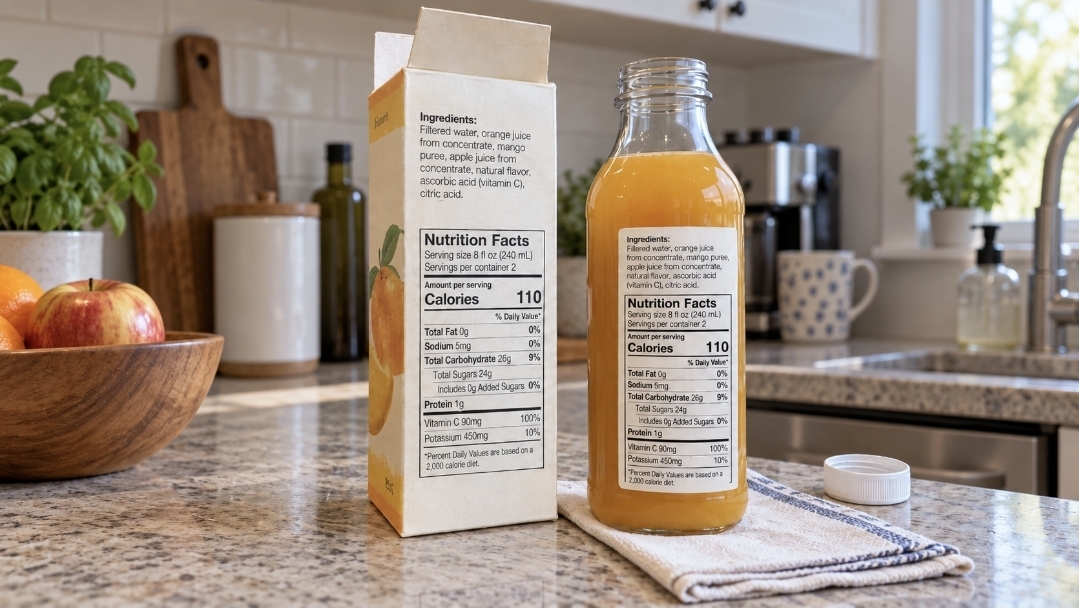
Start with the name printed on the bottle. “100% juice” is different from a “juice drink,” “juice beverage,” or “cocktail.”
On the back label, check:
- which juice appears first in the ingredient list, especially on a bottle presented as vegetable-heavy
- whether the Nutrition Facts panel lists Added Sugars and whether sugar, syrup, corn syrup, or another sweetener appears in the ingredients
- whether the juice is from concentrate, while checking the ingredients separately for added sweeteners
- the serving size rather than assuming the whole bottle is one serving
- whether puree, dairy, added protein, added fiber, gums, or other ingredients make the product a different type of drink
- whether the bottle carries a warning that the juice has not been pasteurized or otherwise treated to control harmful bacteria
If the bottle contains ingredients you were trying to avoid, don’t be afraid to leave it back on the shelf.